Why 45-Minute YouTube Ads Signal the End of Holding Company Dominance
66,600 monthly searches for long-form ads reveal a market shift holding companies can't answer. Independent agencies are winning premium mandates by building what the data proves works.

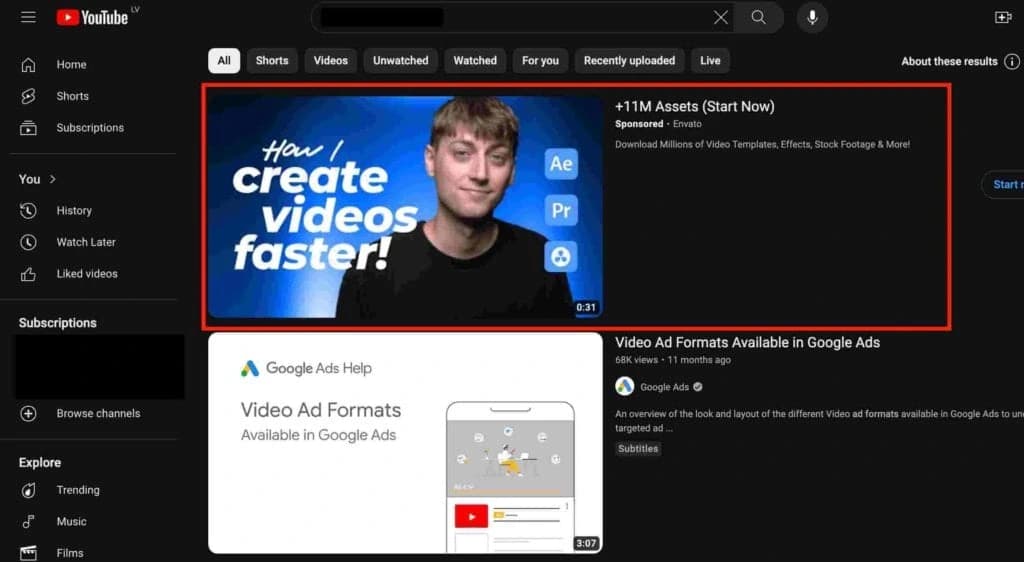

YouTube just served a 45-minute ad. Not a pre-roll you could skip after five seconds: a feature-length commercial that asked viewers to settle in and watch. The platform that trained an entire generation to expect six-second bumpers is now hosting ads longer than most TV episodes. 22,200 people searched "long ads" last month. The algorithm isn't broken. The strategy changed.
Brands are pouring budget into extended storytelling while holding companies keep optimizing for attention spans that no longer exist. The Fortune 500 wants narrative arcs, serialized campaigns, and content that lives beyond the scroll. Independent agencies built for this exact mandate are winning work holding companies can't even pitch for. The creative infrastructure needed to produce long-form storytelling at scale doesn't fit inside a network holding company's cost structure. Small shops charge premium rates because they can deliver what the data now proves works: stories long enough to matter.
The Search Signal: 66,600 Monthly Queries for What Holdcos Can't Deliver
Three keyword clusters tell the story. "Long ads" pulls 22,200 monthly searches. "Long advertisement" adds another 22,200. "Long advertisements" completes the set with 22,200 more. Combined volume: 66,600 people actively looking for extended-format advertising every month. The current top 10 results are mostly Reddit threads asking why YouTube serves 30-minute ads and CVS pharmacy weekly circulars. The gap between what people search for and what the industry provides is the size of the opportunity.
Only one agency in our directory competes for these terms. Advertising Week New York ranks for long-form ad keywords across all three clusters. An 11-50 person operation is capturing search traffic the holding company content studios can't touch. They built editorial infrastructure that treats advertising trend coverage as a core competency instead of a marketing afterthought.
The holding companies publish thought leadership PDFs no one reads. The independents publish journalism people search for. The difference shows up in organic rankings, which convert to inbound inquiries from brands trying to figure out why their six-second cutdowns aren't performing. Every CMO searching "long advertisement" is a potential client looking for the thing their AOR can't build. This creates a self-reinforcing advantage: better content drives better rankings, which drives better clients, which funds better content.
Why Brands Stopped Believing in Six-Second Optimization
The data killed the short-form religion. Research from Mountain Partners showed 15-second and 30-second TV spots drive more site visits. Longer ads fuel conversions. The numbers are binary: short gets clicks, long gets customers. Brands running both formats side by side watched the 60-second and 90-second units outperform on every metric that touches revenue. Awareness went up. Consideration went up. Purchase intent went up. The only thing that went down was the cost per actual customer acquired.
Coach launched "Explore Your Story" as an explicit response to short-form dominance. Marketing Dive covered the campaign as a conscious pivot toward long-form narrative amid an industry addicted to TikTok durations. The brief didn't ask for 15-second product highlights. It asked for storytelling that could run serialized, build emotional continuity, and create the kind of loyalty that survives algorithm changes. The mandate was anti-algorithm from conception: build something too good to skip, too engaging to scroll past, too complete to break into bite-sized pieces.
Trend Hunter documented the pattern in their "Branded Drama" insight research. Top brands are "stepping into entertainment mode" with ongoing narratives where products integrate into story arcs instead of interrupting them. The creative brief stops looking like advertising and starts looking like showrunning. Episode structures. Character development. Multi-phase arcs that pay off over months instead of seconds. Brands behind the curve got the warning: adapt or watch your competitors own the narrative space you're still trying to conquer with bumper ads.
The holding companies heard the same data. Their response was to add "long-form capabilities" to their pitch decks while keeping the same 30-day sprint cycles that make serialized storytelling impossible to execute. You can't build a three-month story arc in an agency structured around two-week feedback loops and procurement-mandated cost cutting. The infrastructure doesn't support the mandate. The independents won because they rebuilt from the creative brief up. They recognized that delivering long-form narrative requires rethinking everything from talent models to billing structures to client relationships.
The Talent Model That Makes Long-Form Economics Work
A 12-person shop charging $50,000 for a 90-second narrative ad isn't expensive. It's underpriced compared to what a holding company subsidiary bills for the same deliverable after adding network overhead, procurement gatekeepers, and the creative director who's spread across eight accounts. The independents can charge premium rates and still come in under holding company costs. Their talent model eliminates the institutional bloat that makes long-form production unprofitable at scale.
One founder broke down the math on Twitter: long-form ads rooted in deep psychology, real fears, actual desires, and identity gaps run 12-plus months across millions in spend. The storytelling hits emotional territory six-second spots can't access. A 45-minute YouTube ad can run for a year if it's solving for entertainment value instead of interruption tolerance. The agency that makes it doesn't need to refresh creative every quarter. The client pays once and scales for months. The economics flip: longer creative, longer runs, higher total spend, lower cost per day.
The talent shift is structural. Holding companies hire for craft specialization: copywriters who write copy, art directors who art direct, strategists who strategize. Independents hire for narrative range: people who can write an 831-word founder story, script a three-minute product journey, and structure a serialized campaign that pays off over eight weeks. The skill set looks more like showrunning than traditional advertising. That's what the mandate became. Brands want writers who understand act structure, pacing, character development, and the mechanics of making people care across extended runtime.
Twitter user TatsukiThomas shared results from pairing long-form ad copy with simple static creative: 831-word founder stories that emphasized curiosity hooks over direct selling. The format worked because it gave the audience something to care about before asking for the conversion. The holding company model can't build this. Their creative teams are measured on asset volume, not story depth. Six concepts tested beats one concept that runs for a year in a review cycle designed around quarterly business reviews instead of annual campaign arcs.
The best independents treat their creative talent like showrunners, not vendors. They give them ownership over multi-month story arcs. They protect them from the client politics that derail narrative continuity. They pay them like the specialized storytellers they are, not like interchangeable production resources. This talent strategy becomes the moat: once you've built a team that can deliver serialized narrative at scale, you're not competing with other agencies anymore. You're competing with production studios and entertainment companies.
The Client Education Framework: Teaching CMOs to Un-Optimize
Selling long-form mandates requires deprogramming CMOs from 15 years of performance marketing conditioning. The pitch isn't "we make great long ads." The pitch is "the metrics you're optimizing for are destroying your ability to build brand equity." Independent agencies win these mandates by positioning themselves as anti-algorithm partners instead of optimization vendors. The education starts before the creative brief gets written.
One agency breaks it down in discovery: you have two options. Optimize for short-term ROAS and watch your storytelling equity erode until every campaign is a price promotion dressed up with lifestyle photography. Or invest in narrative that builds emotional continuity, accept that the conversion path is longer than seven days, and create the kind of brand loyalty that survives algorithm changes and platform shifts. Most CMOs know this intellectually. The independent agency's job is to give them permission to act on it.
The framework centers on one question: what happens when the algorithm changes? The brand running six-second Instagram cutdowns is platform-dependent. The brand running serialized storytelling across owned channels, YouTube long-form, podcast integrations, and editorial partnerships owns the relationship with the audience. Algorithm shifts become inconveniences instead of existential threats. The holding companies can't make this pitch credibly. Their entire business model depends on optimizing for platform algorithms. The independents can because they're not trying to serve two masters.
Recent Twitter discussion framed the split: brand versus performance marketing creates tension where short-term ROAS focus erodes the storytelling equity that drives long-term value. The independents aren't arguing against performance measurement. They're arguing for measurement windows longer than 30 days and KPIs that include brand lift, emotional resonance, and the stuff that predicts customer lifetime value instead of just counting clicks. The client education is teaching CMOs that the choice between brand and performance is a false binary created by agencies that can't deliver both.
The most sophisticated independents build this education into their business development process. They publish case studies showing 12-month performance curves, not 30-day snapshots. They create benchmarking tools that compare short-form optimization against long-form investment. They bring data proving that the brands winning on emotional connection are also winning on revenue growth. The education becomes the sales process, and by the time the pitch meeting happens, the client is already convinced.
The Production Infrastructure Holdcos Can't Afford to Build
Making long-form storytelling economically viable requires production infrastructure optimized for narrative depth instead of asset volume. The holding companies built for the opposite: high-volume creative production where the metric is deliverables per dollar. A 90-second narrative film costs more to produce than 15 six-second cutdowns but performs better on every metric that touches revenue. The holding company can't make that math work. Their cost structure penalizes depth and rewards volume.
Independents solve this by building hybrid models: some production in-house, some with trusted director relationships, some with editorial partnerships that share distribution costs. A 45-minute YouTube ad sounds expensive until you break down the per-day cost across 12 months of continuous run. One long piece of hero content that gets serialized, cut into chapters, adapted for different formats, and distributed across owned and earned media delivers more total value than 100 pieces of disposable six-second content that stops performing after the first week.
The talent to execute this doesn't come from traditional advertising backgrounds. The best long-form creative directors have showrunning experience, documentary backgrounds, or editorial careers. They think in narrative arcs instead of campaign flights. The independents can hire these people. They're not trying to fit them into holding company salary bands and utilization targets. A senior creative who can concept, write, and oversee production on a three-month serialized campaign is worth more than three mid-level creatives who can pump out social cutdowns. The independent shops pay for that and profit from it. The holding companies can't make the business case.
Video production challenges persist even for experienced teams. Twitter users note that technical execution barriers haven't disappeared just because the mandate shifted to long-form. The independents adapted by treating production as a core competency instead of a vendor relationship. They own the equipment, employ the editors, maintain the director relationships. The production infrastructure becomes an unfair advantage instead of a cost center managed by procurement.
This infrastructure investment creates compounding returns. The first long-form project requires building new workflows, testing new tools, establishing new vendor relationships. The tenth project runs on established rails with known costs and predictable timelines. Holding companies reset these costs with every new pitch because they're staffing from a resource pool instead of building dedicated teams. The independents amortize their infrastructure investment across multiple clients and compound their efficiency advantage with every project delivered.
The Competitive Moat: Why Holding Companies Can't Catch Up
The holding companies see the trend data. They read the same Marketing Dive coverage and Trend Hunter insights. They know brands are investing in extended storytelling. Their response is to add "long-form narrative capabilities" to the services menu without restructuring the talent model, cost structure, or operational cadence that makes executing these mandates unprofitable. They can't catch up because catching up would require becoming something they're not.
A holding company subsidiary pitching a serialized three-month campaign has to clear: the network's margin requirements, the cost structure designed around billable hours, the talent allocation model that spreads senior people across eight accounts, the procurement rules that mandate competitive bids every 12 months, and the quarterly business review cycle that requires showing results before the narrative arc even completes. The independent shop pitching the same mandate has to clear: can we make great work and stay profitable? The structural advantage is so large it looks like unfair competition.
The search data proves the gap isn't closing. 66,600 monthly queries for long-form advertising content with only one independent agency capturing meaningful traffic in the top results. The holding company content studios aren't ranking. They're not publishing what the market searches for. They publish PDFs for procurement committees. The independents publish journalism for CMOs trying to solve real problems. The organic traffic converts to inbound interest from exactly the decision-makers the holding companies are cold-calling.
Advertising Week New York's 11-50 person operation ranking for long-form ad keywords across all three clusters shows what's possible when editorial infrastructure becomes a business development engine. They're not running paid search campaigns to capture traffic. They're creating content valuable enough that Google ranks it above pharmacy circulars and Reddit complaint threads. The distribution is owned, the traffic is qualified, and the conversion happens when a brand searching "long advertisement strategies" finds actual strategy instead of vendor pitches.
The moat widens with every successful project. Case studies from long-form campaigns become proof points that make the next pitch easier. Client relationships deepen when you're the partner helping them think differently about measurement and investment, not just the vendor delivering assets. The talent you hire gets better at serialized storytelling with every project. Meanwhile, holding companies keep restructuring their offerings, rebranding their capabilities, and wondering why brands keep choosing boutique shops for their most important narrative work.
What Comes Next: The Serialized Campaign as Standard
The brands experimenting with 45-minute YouTube ads and three-month narrative arcs are the early adopters. By 2027 this becomes table stakes. The CMOs who waited to see proof of concept will demand the same capability from their agencies. The holding companies will promise to deliver it and fail. Their cost structure makes long-form unprofitable. The independents will scale up by hiring the showrunners, documentary directors, and narrative strategists the holding companies can't afford to employ.
The premium rates independents charge now become standard rates as the market acknowledges that long-form storytelling costs more to produce and performs better across every meaningful metric. A $50,000 90-second narrative film stops looking expensive when the alternative is $30,000 for 20 pieces of six-second content that stops performing in week two. The client education framework shifts from "should we do this?" to "how fast can you start?"
The competitive advantage compounds. Every successful long-form campaign an independent delivers becomes a case study that makes the next pitch easier. The holding companies keep optimizing for the last cycle's winning format while the independents build for the format clients are already searching for. 66,600 monthly queries today becomes 150,000 by year-end as more brands realize their six-second optimization strategy is destroying the brand equity they spent decades building.
The infrastructure requirements create natural barriers to entry. You can't fake showrunning talent. You can't rent production capability for a single campaign and pretend you have long-form expertise. The independents who invested in narrative infrastructure over the last three years own the next five. The holding companies who kept optimizing for asset volume will spend 2027 trying to acquire the independents who figured this out first.
The long-form ad comeback isn't a trend. It's a correction. Brands are investing in storytelling that builds emotional continuity because the data proved short-form optimization destroys long-term value. The independents positioned as anti-algorithm partners are winning mandates the holding companies can't even structure a response to. The search volume keeps climbing. The client interest keeps growing. And somewhere, a CMO is watching a 45-minute YouTube ad and wondering why their agency can't make anything that compelling.
Free Agency Media Editorial
All news