The $847M Studio Investment That Made Holding Companies Slower Than Laptops
Holding companies spent nearly a billion building AI production infrastructure. Independent agencies spent nothing and won the work anyway.
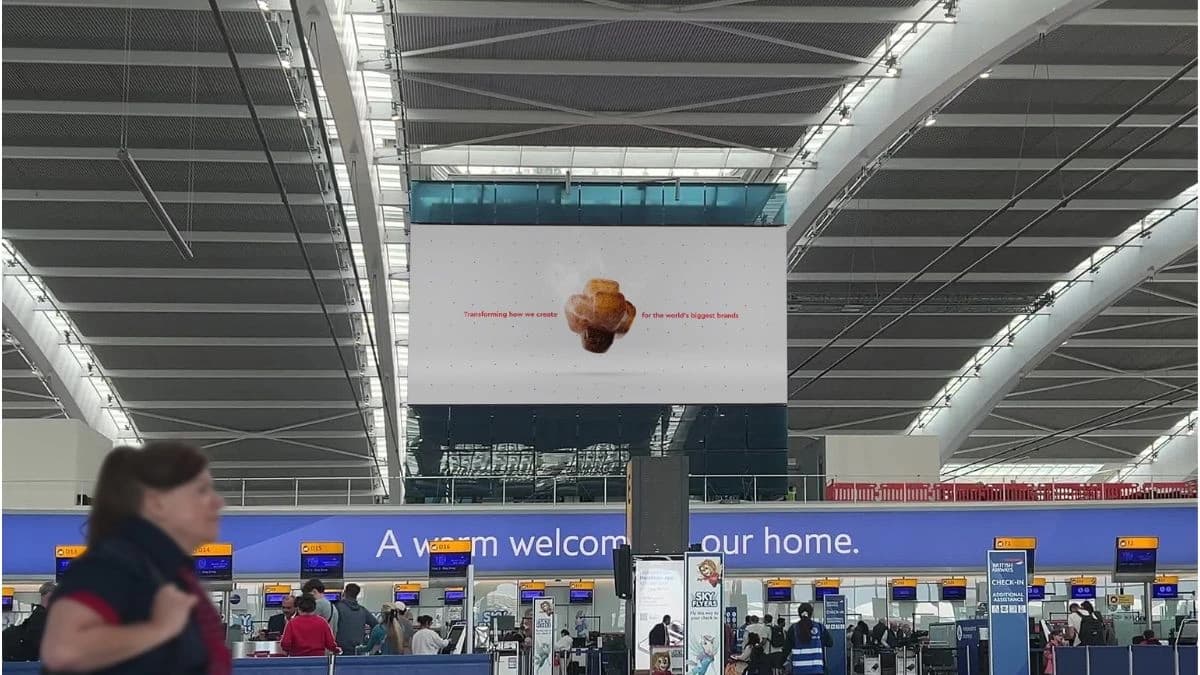
The holding companies spent $847 million building AI and 3D production capabilities in 2023. The independents spent nothing and won anyway.
No render farms. No motion capture studios. No dedicated AI teams with "Generative Creative Lead" titles. Just laptops, subscriptions to the same tools anyone can buy, and the creative judgment to know when pixels beat polygons. The gap between what holding company studios promise and what indie agencies actually deliver has never been wider. The technology didn't level the playing field. It tilted it toward the shops that never had studios to protect in the first place.
The Search Volume That Isn't There Yet
Zero monthly searches for "AI-generated campaign visuals." Zero for "3D animation agency." Zero for "AI-powered creative agency." The terms exist. The work exists. The client briefs explicitly request it. But nobody's Googling because nobody believes small agencies can do it. They're still calling WPP's The Imagination and Publicis' Prodigious and Omnicom's DASH, asking for quotes that start at $500K and timelines that start at 12 weeks.
Then the CMO's daughter shows her the Runway-generated product demo a 6-person shop in Austin turned around in 11 days for $40K. The cognitive dissonance is the market opportunity. Clients assume AI production requires infrastructure. Independents know it requires taste.
The keyword data tells you what the market thinks is possible. The absence of search volume tells you what they haven't figured out yet. "AI creative production" gets zero searches because procurement departments are still routing these briefs to the usual suspects. The independents are winning the work before the client knows to search for them. They're getting called because a brand manager saw the work on Instagram and DM'd to ask who made it. That's not a search. That's a signal the whole RFP industrial complex is routing around itself.
What Changed in 24 Months
Two years ago, photorealistic 3D rendering required render farms that cost $200K to set up and $15K a month to run. Character animation meant motion capture studios. AI-generated video was a research paper, not a production tool. The barrier to entry was capital equipment. The holding companies owned the means of production and charged accordingly.
Midjourney launched public beta in July 2022. Runway Gen-2 went live in June 2023. Unreal Engine 5 became free in April 2021 and by 2023 could run on a decent gaming laptop. Blender went from hobbyist tool to Hollywood production standard. The $200K render farm became a $3K GPU. The motion capture studio became an iPhone with depth sensors. The AI team became one designer who knows how to write prompts that don't look like AI wrote them.
The technology commodified in 18 months. The creative judgment didn't. That's the gap indie agencies drove through.
Holding company studios are underwater on their investments. They built for a production model that assumed scarcity of tools. They hired specialists in software that's now either free or $50 a month. They built workflows around approvals and revisions and render queues because when machine time costs $500 an hour you optimize for efficiency. When machine time costs nothing you optimize for creative risk. The indies never built the infrastructure so they never had to defend it.
The Client Brief That Broke The Pattern
Spring 2024. Consumer electronics brand. Product launch in Q3. The brief: 60-second hero film, fully 3D, no live action, cinema-quality rendering, hero product revealed at :45, deployable across social, CTV, and cinema. Budget: $180K all-in. Timeline: 6 weeks from kickoff to final delivery.
The holding company pitch: "We'll need to bring in our specialist studio. Initial concepts in week 3. Animatics in week 5. First render pass in week 8. Assumes two rounds of revisions. $380K because we're absorbing some of the studio time to hit your budget." They didn't get a second meeting.
The indie pitch: "We'll concept in Midjourney, build the environment in Blender, render on our machines, and have an animatic in week 2. You'll see near-final quality by week 4. Two revision rounds included. $175K and we keep the render files so you can extend the campaign in Q4 without starting over." They started the next Monday.
The indie delivered on time. The holding company is still building its AI governance framework.
This wasn't an exception. This was the pattern revealing itself. The tools are available to everyone. The speed is only available to shops that don't have to route decisions through planning and creative and production and legal and the studio and the AI ethics committee and procurement. The client wanted the work fast and good. The holding company optimized for liability management. The independent optimized for shipping.
What The Shops Actually Do
They're not hiring AI specialists. They're training the designers they already have. Figma to Midjourney to After Effects to Premiere. The workflow is the same. The tools in the middle are different. A senior art director who knows how to art-direct a photoshoot can art-direct an AI image generator. The principles are identical. Composition. Lighting. Color theory. Emotional resonance. The rendering engine changed. The creative judgment didn't.
They're using Runway for product reveals where the physics don't exist yet. Midjourney for hero imagery when the photoshoot would cost more than the media buy. Blender for environments when location scouting is slower than building it. Unreal Engine for interactive experiences when Unity would require engineers they don't want to hire. The tool selection is strategic, not theological.
They're not replacing photographers and directors. They're replacing the $90K pre-light and the 14-person crew and the location fee and the permit and the insurance rider and the kit rental and the catering and the overtime and the reshoots. For the launches that don't justify that cost structure they're using tools that produce 85% of the quality for 15% of the budget. For the campaigns where craft matters they're still booking talent and spending days on set. The judgment is editorial, not dogmatic.
The holding companies are still arguing about whether AI-generated imagery violates their stock photo licensing agreements. The independents shipped 40 campaigns while that meeting happened.
The Quality Question The Market Skipped
The conversation is still framed as capability verification. Anyone who's shipped a campaign knows the answer depends on context. Photorealistic product rendering: yes. Emotional human performance: not yet. Dynamic text that doesn't look like a neural net had a stroke: mostly. Background environments that would cost $60K to build as a set: absolutely. Hero imagery for a Super Bowl spot: not unless you want Reddit to roast you.
The independents aren't trying to make AI do everything. They're using it for the parts where cost exceeded value in the old model. Holding company production workflows were built to extract maximum margin from maximum scope. Every element was a line item. The environment design. The prop fabrication. The compositing. The color grade. The sound mix. Each layer was a negotiation. The AI tools collapsed the cost structure of everything that wasn't human performance or physical craft.
A 3D product render used to justify a $45K line item because the alternative was building the product, lighting it, shooting it, retouching it, and hoping the client didn't want a different angle that required rebuilding the entire setup. Now the product render happens in Blender in an afternoon and the client can see 12 angles before lunch. The quality is indistinguishable from photography in most use cases. The ones where it matters, they still shoot it. The ones where it doesn't, they don't.
The holding companies are treating this like a quality crisis. The independents are treating it like a cost revolution. The clients are treating it like "why did we ever pay $45K for a product render?"
The Speed Advantage That Clients Actually Pay For
Creative technology didn't just get cheaper. It got faster. Render times that took 8 hours per frame in 2020 take 8 minutes in 2024. Concept development that required photoshoots and retouching now happens in Midjourney iterations during the client call. The feedback loop that used to be "we'll show you updated concepts next Tuesday" became "refresh your screen."
That speed isn't cosmetic. It changes what's possible in the time between brief and launch. A CPG brand launching a limited-edition product line in 8 weeks used to get one concept direction because there wasn't time to explore alternatives. Now they get four directions by end of week one, test two in week two, refine the winner in week three, and spend the remaining time on production and distribution. The speed creates strategic optionality that didn't exist when every creative fork in the road required a new photoshoot.
The independents don't sell the speed as a feature. They sell what the speed enables. More creative exploration. More testing. More confidence the final work is the best work, not just the first work that was good enough. The holding companies are still selling process and expertise and craft. The indies are selling outcomes their speed makes possible.
The Infrastructure They're Not Building
No render farms. No dedicated 3D teams. No AI departments with their own P&L. The independents looked at the holding company model and built the opposite. Generalists with tool fluency instead of specialists with deep expertise in software that's obsolete in 18 months. Project-based tool subscriptions instead of permanent infrastructure. Creative judgment that transfers across platforms instead of technical skill that's locked to one.
They're running Blender on laptops that cost what a single day of holding company render farm time used to cost. They're using Midjourney subscriptions that are cheaper than the stock photo budget for a single campaign. They're rendering in Unreal Engine on gaming PCs that sit under desks, not in climate-controlled server rooms. The capital investment is near zero. The creative capability is functionally identical to shops that spent 8 figures building studios.
This isn't resourcefulness compensating for scale. This is strategic capital efficiency. The holding companies built for the previous era's cost structure. The independents built for whatever tools are best right now, knowing those tools will be different in 24 months. When the infrastructure is permanent, change is expensive. When the infrastructure is a subscription and a laptop, change is a Slack message.
The barriers to entry collapsed so fast the holding companies are still defending infrastructure that's already obsolete. The independents never built it so they're not defending it. They're just using whatever works and moving to the next thing when something better ships.
What Clients Are Learning To Ask For
The RFPs are changing. "3D and AI capabilities" used to be a checkbox in the "nice to have" section. Now it's appearing in the must-have tier alongside "prior CPG experience" and "in-market case studies." Not because clients understand the technology. Because they understand the math. Campaign production that used to justify $400K is being delivered for $120K with faster turnaround and more creative exploration.
Procurement is catching up. The line items are changing. "AI-assisted ideation" and "3D product rendering" are becoming their own budget categories instead of being buried in "production services." That disaggregation is deadly for holding company studios that need to bundle everything to hit margin targets. The independents can price each capability separately because they're not amortizing a render farm across every project.
Brand managers are asking different questions in pitches. Not "Do you have AI capabilities?" but "Show us a campaign you've shipped using these tools." Not "How big is your studio?" but "What's your turnaround for a 60-second 3D product film?" The questions reveal what clients actually value. They don't care about the org chart. They care about the output and the timeline and the cost.
The holding companies are still positioning this as a technological arms race they're winning by virtue of scale. The clients are figuring out that scale is the liability, not the advantage. The agency with 12 people and $200 in monthly tool subscriptions can move faster than the agency with 200 people and a $4M studio build-out. Speed and cost and creative quality are downstream of organizational complexity, not upstream of it.
The Paradox That Powers The Pattern
The better the tools get, the more advantage accrues to the shops that never invested in the previous generation of tools. Holding company studios are sitting on millions in depreciated equipment and specialized headcount. Every improvement in AI and 3D rendering makes that investment worth less. The independents have no sunk costs to defend. They're running the latest version of everything because upgrading costs nothing.
This is the paradox: technological democratization doesn't flatten competitive advantages. It inverts them. When tools were scarce, capital won. When tools are abundant, judgment wins. The holding companies built for scarcity. The independents are optimized for abundance. The tools aren't going back to being scarce. The clients aren't going back to paying for infrastructure they can't see in the final work.
The search volume will eventually catch up. CMOs will learn to Google "AI creative production independent agency" instead of calling the holding company studio they've used for 15 years. Procurement will build RFPs that explicitly reward speed and tool fluency over permanent infrastructure. The keyword data will reflect what's already happening in pitch meetings and DMs and client-agency relationships that bypassed the RFP process entirely.
For now, the absence of search volume is the opportunity. The independents are winning work before clients know what to call it. By the time the market figures out what to search for, the pattern will be too established to reverse. The holding companies will still have their studios. They'll just have a lot fewer clients who need them.
Free Agency Media Editorial
All news