How 12-Person Agencies Are Hitting 77% Margins With AI-Powered Stacks
Independent shops under 50 people now deliver enterprise-grade marketing at radically lower costs by replacing headcount with autonomous tools. The economics are reshaping the industry.

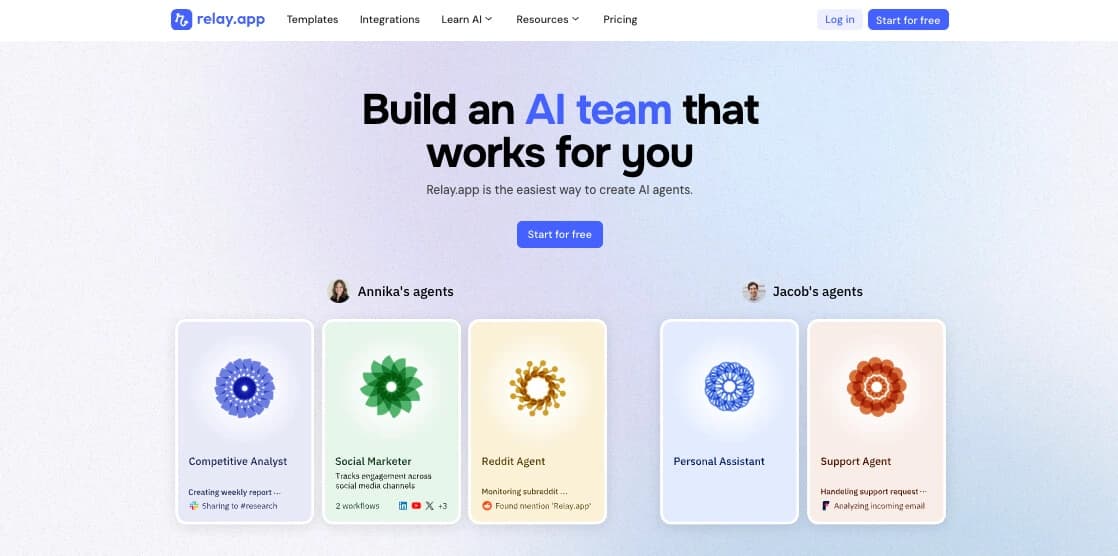

A 12-person shop in Boca Raton is ranking #66 on Google for "internet marketing platforms": a keyword that pulls 8,100 monthly searches and typically lands software companies, not agencies. bfw Advertising isn't selling marketing software. They're selling ideas. But they're showing up in search results dominated by HubSpot, Google Marketing Platform, and Salesforce because they've built a tech stack that makes them function like a platform themselves.
The pattern is spreading. Independent agencies under 50 people are deploying AI-powered workflows that let them deliver enterprise-grade marketing execution at 60%+ margins. The economics are stark. A holding company subsidiary charging $20,000 monthly retainers employs five specialists to service the account. An independent with the right stack delivers identical output for $2,000-3,000 per month with one operator and a suite of autonomous tools. Same deliverables. Same client results. Radically different cost structure.
This isn't about agencies adopting "marketing technology." Every shop has used software since the first Mac landed in a creative department. This is about independents building operational infrastructure that replaces headcount with automation, turning services businesses into scalable systems. The holdcos are still hiring. The independents are integrating Claude for briefing, Midjourney for concepting, and custom dashboards that pull cross-platform campaign data into real-time optimization loops. The margin difference isn't incremental. It's existential.
The Fulfillment Stack: 80% Automation, 20% Human Craft
The core workflow at high-margin independents breaks into three automated layers: research and strategy, creative production, and campaign execution. Each layer runs on tools that cost $50-500 monthly but replace roles that traditionally commanded $75,000-150,000 annual salaries.
Research and strategy starts with AI-powered ICP profiling. Agencies feed Claude or similar LLMs competitor websites, customer reviews, and market positioning statements. The system outputs buyer psychology frameworks, objection hierarchies, and messaging architectures that used to require three-week discovery sprints. One ecom-focused independent detailed their prompt chain publicly in mid-2025: input product URL and target demo, receive 47 ad hook variations matched to specific buyer hesitations. The turnaround dropped from two weeks with a strategist to 90 minutes with an AI agent.
The acceleration is real. What matters is whether the output converts. Early data suggests it does. Performance metrics from AI-generated strategy frameworks match or exceed human-developed approaches in direct response contexts. The system doesn't replace strategic thinking. It compresses the execution timeline. The human still sets objectives and validates outputs. The AI handles the repetitive analytical work that used to consume billable hours.
Creative production moved to autonomous generation workflows by late 2025. Independents aren't using AI to "assist" designers. They're building systems where AI is the designer. Midjourney and Flux generate campaign visuals from text prompts. CapCut assembles video ads from stock footage libraries and AI voiceover. One agency operator reported producing 127 ad variations for a single product launch, A/B testing creative elements that would've required a production team and $40,000 budget under traditional models. Output volume increased 10x. Cost per asset dropped 95%.
The quality question looms over every conversation about AI creative. The answer depends entirely on what you're measuring. If the metric is artistic innovation or emotional resonance, AI-generated work lags human craft. If the metric is performance in paid media environments optimizing to conversion, AI work performs equivalently. The 127-variant test environment creates learning velocity that matters more than individual asset quality. You find winners faster.
Campaign execution runs through custom-built dashboards that connect platform APIs. Independents wire Meta Ads Manager, Google Ads, LinkedIn Campaign Manager, and TikTok Ads into unified interfaces where budget shifts happen algorithmically. When an ad set hits target ROAS on Facebook, the system reallocates spend from underperforming LinkedIn campaigns automatically. No account manager logging into five platforms daily. No manual spreadsheet updates. The client receives a real-time dashboard URL. The agency's operator reviews optimization decisions weekly, not hourly.
The transparency becomes a feature. Clients see exactly where budget flows in real time. They watch the algorithm make micro-adjustments based on performance data. The black box of agency media buying cracks open. Some agencies resist this level of visibility. The AI-stack shops lean into it. The data tells the story better than any status report.
The math behind 60%+ margins becomes obvious here. Traditional agency: $20K client retainer minus $12K in specialist salaries (media buyer, designer, copywriter) minus $2K overhead equals $6K profit, 30% margin. AI-stack agency: $3K client retainer minus $200 in tool subscriptions minus $500 overhead equals $2,300 profit, 77% margin. Lower top-line revenue. Higher absolute profit per client. And the AI-stack shop can service 15 clients with one operator where the traditional shop needs three-person teams for five clients.
The comparison reveals why this shift threatens holding companies more than anyone wants to admit. The traditional model assumes labor scales linearly with revenue. More clients require more headcount. The AI-stack model breaks that assumption. One operator with properly configured systems can handle 10-15 client accounts that would traditionally require 15-20 full-time employees. The economic leverage is unprecedented in services businesses.
The "Agentic Agency" Model: Systems That Run Themselves
The language around these operations shifted in early 2026. Industry operators stopped calling them "AI-assisted agencies" and started using "agentic agencies": shops where AI agents handle end-to-end client delivery with minimal human supervision. The model emerged from ecommerce marketing first, then spread to B2B lead gen and content production.
The structure looks different than traditional agency org charts. There's no creative department because there's a creative system. No media team because there's a media agent. The human operator functions as system architect and client liaison. They design the workflow, train the AI agents on brand voice and performance benchmarks, then let the system execute. Client communication happens through automated reporting dashboards and bi-weekly strategy calls. The agency isn't selling labor hours. They're selling systematic execution.
One operator detailed the economics publicly in January 2026: charge clients $2,000-3,000 monthly for autonomous AI systems handling influencer outreach, ad creative at volume, and compliance documentation. Stack 10 clients and gross $20,000-30,000 monthly. Tool costs run $2,000-3,000 total. The operator works 20-25 hours weekly, mostly on system maintenance and client QBRs. Margin exceeds 90% after accounting for software and overhead. The same client load would require a five-person team and $300K+ annual payroll at a traditional shop.
The lifestyle implications matter as much as the economics. Operators running agentic agencies report working fewer hours while earning comparable or better income than they did running traditional shops. The systems handle execution. The human focuses on strategic decisions and relationship management. It's a fundamentally different way to structure professional services work.
The client experience looks similar to traditional agency service. Briefs come in. Campaigns launch. Reporting happens. But the backend is fundamentally different. When a brief arrives, it flows into Claude for strategic framework development. That framework feeds Midjourney for visual concepting. Those concepts get assembled into video ads via CapCut. The final assets load into platform APIs for deployment. Launch happens 72 hours after brief submission versus two weeks with human teams.
Speed to market becomes the killer feature. In performance marketing, the first mover advantage compounds. The brand that tests new creative approaches or messaging angles ahead of competitors captures attention before the market saturates. A 72-hour turnaround versus 14 days means you're running campaigns while competitors are still in internal review. The velocity advantage accumulates over quarters and years.
AI-generated campaigns hit equivalent performance benchmarks to human-crafted work in direct response. Brand work shows mixed results. Performance campaigns optimizing to CPA or ROAS show equivalent or better results because the AI stack enables testing at scale impossible with human teams. One agency reported running 200+ creative variants in a single quarter where they'd previously tested 12. More variants means faster discovery of winning combinations. Brand work remains split. AI excels at producing volume but struggles with conceptual breakthrough. The Super Bowl spot still needs human creative direction. The 47 variants of that spot for digital activation can run through AI.
The distinction between brand and performance becomes critical. Agencies selling brand strategy and creative breakthrough still require human talent at the center. Agencies selling performance marketing and lead generation can systemize most execution. The market is bifurcating. Premium brand work commands premium fees and requires premium talent. Performance execution becomes increasingly commoditized as AI stacks standardize.
The Competitive Moat: Speed and Iteration Velocity
Holding company subsidiaries aren't adopting these stacks at similar rates. The organizational friction is too high. A WPP-owned agency can't replace its 20-person media team with three operators and AI agents without triggering internal alarms about utilization rates and headcount targets. The holding company model depends on billing hours and maintaining headcount. Automation directly threatens the revenue model.
The incentive structure works against innovation. A holding company agency principal who cuts headcount by 60% through automation doesn't get rewarded for margin expansion. They get questioned about why their office is underutilized and why they're not capturing more market share with aggressive hiring. The system optimizes for scale through labor, not efficiency through technology.
Independents face no such constraints. When bfw Advertising in Boca Raton integrates new AI workflows, they're answering to themselves and their clients. The 11-50 person shop can deploy tools that make them operationally equivalent to 200-person teams without restructuring committees or defending headcount reductions to London. Independence isn't just about ownership. It's about operational flexibility to rebuild the entire service delivery model when economics shift.
The governance advantage compounds over time. Independents can experiment with new tools, fail fast, and iterate toward optimal configurations. Holding company agencies require approval chains, vendor reviews, and enterprise licensing negotiations. By the time the holdco approves a new AI platform, three better alternatives have launched and the independents are already running them in production.
The speed advantage compounds. Traditional agency creative development follows a linear path: brief to strategy to concepting to design to production to deployment. Each stage requires handoffs between departments. Each handoff adds days or weeks. AI-stack agencies collapse the timeline. Brief to deployment runs 48-96 hours because one operator moves through the entire chain with AI agents handling execution at each stage. No handoff delays. No departmental calendars to coordinate. No creative review meetings with eight people debating serif versus sans-serif.
Iteration velocity creates the real moat. When testing cycles compress from two weeks to two days, the agency learns faster than competitors. They identify winning messages, optimal creative formats, and high-performing audience segments while traditional shops are still in round-two revisions on the first concept. Market intelligence accumulates at 10x speed. The AI-stack independent running 50 A/B tests monthly builds pattern recognition about what works that the traditional agency running five tests can't match.
The learning compounds. Each test generates data. That data trains better prompts and refines strategic frameworks. The AI systems improve with volume. A traditional agency's creative director gets better through experience, but that improvement curve is gradual and limited by human capacity. An AI system processing 200 campaign results per quarter learns faster than any individual could. The knowledge capture happens systematically rather than residing in someone's head.
The client pitch becomes straightforward: same quality output, faster turnaround, lower cost. CMOs don't care whether humans or AI generated the ad if the ad hits ROAS targets. They care about speed to market and cost efficiency. An independent that can launch a full campaign in under a week for $3,000 monthly beats a holdco shop quoting six-week timelines and $20,000 retainers. The AI stack isn't a selling point. It's operational infrastructure that enables the client-facing advantages.
The Stack Itself: What Tools Are Actually Running
The specific platforms vary by agency specialization but the architecture follows consistent patterns. Research and strategy runs on large language models, primarily Claude and GPT-4, with custom prompts trained on industry-specific frameworks. Creative production combines Midjourney or Flux for static visuals, CapCut or Runway for video, and ElevenLabs for voiceover. Media execution connects platform APIs to custom dashboards built on tools like Cursor or Retool.
The prompt engineering matters more than the underlying model. An agency using GPT-4 with generic prompts gets generic output. An agency that's invested 100 hours developing prompt chains specific to their vertical gets strategic frameworks that clients can't distinguish from human work. The competitive advantage isn't access to AI. Everyone has access. The advantage is systematic development of proprietary prompting methodologies.
The web3 and blockchain agency stack adds specialized layers. On-chain analytics via Dune, ad networks like Slise and Hypelab, KOL tracking through Protokols. The core infrastructure remains similar but the data sources shift to blockchain-specific metrics. One operator detailed their May 2025 setup: cross-chain wallet tracking, token holder behavior analysis, DAO governance participation scoring. The tools are niche but the workflow mirrors traditional digital agencies. Research feeds strategy feeds creative feeds execution.
Platform choice matters less than workflow design. An agency using Midjourney versus DALL-E makes little difference if the prompting frameworks and quality control processes are weak. The independents winning with AI stacks aren't just adopting tools. They're building systematic workflows where AI outputs feed into human review loops that enforce brand consistency and strategic alignment. The system includes quality gates, not just automation.
The quality control layer is where human expertise still dominates. AI generates volume. Humans curate and refine. An experienced operator can review 50 AI-generated ad concepts in 30 minutes and identify the three worth developing further. That pattern recognition and judgment remains difficult to automate. The system produces options at scale. The human makes the final call.
The newest platforms emerging in early 2026 focus on cross-network attribution and autonomous budget optimization. One tool, Pixel, tracks user journeys across Meta, Google, TikTok, and LinkedIn, then shifts budget toward channels driving actual revenue rather than last-click conversions. The system runs continuously, making micro-adjustments based on real-time performance data. The media buyer's role shifts from manually moving budget between campaigns to setting strategic parameters the AI optimizes within.
Cost structure for a full stack runs $2,000-4,000 monthly for an independent servicing 10-15 clients. Claude API access costs $200-500 depending on volume. Midjourney Pro runs $60. CapCut Pro costs $80. Platform API integrations are free but custom dashboard development requires one-time engineering work, typically $5,000-15,000. The upfront investment pays back in 60-90 days when compared to hiring a single mid-level specialist.
The payback math is compelling. A $10,000 investment in dashboard development and AI configuration costs less than one month of salary for a mid-level media buyer. That investment delivers ongoing capacity to service 10-15 clients without adding headcount. Traditional agency economics require hiring before scaling. AI-stack economics allow scaling before hiring. The cash flow implications reshape how independents grow.
The Margin Reality: Why Independents Keep This Advantage
The 60%+ margin claim isn't theoretical. Multiple operators shared their economics publicly in Q1 2026. The math holds across different agency models and service offerings. The variable is how much human touch the client requires. High-touch relationships with weekly strategy calls and custom reporting drop margins toward 50%. Low-touch delivery with automated reporting and monthly QBRs pushes margins past 70%.
Traditional agency margins cluster around 20-30% after accounting for salary, overhead, and profit-sharing. Software-as-a-service companies run 70-80% margins because they're selling access to systems, not human labor hours. AI-stack agencies land between these models. They're delivering services but the service is largely systematized. The output still requires human oversight and client relationship management but the bulk of execution runs autonomously.
The positioning challenge is real. Call yourself an agency and clients expect human teams. Call yourself a platform and clients expect software licenses. AI-stack independents exist in the gap. They're providing service-level responsiveness with software-level economics. The market hasn't developed clear language for this hybrid model yet. The shops that figure out positioning will capture premium pricing.
Clients buy outcomes, not process. If the AI-stack agency hits performance targets, the client doesn't care that AI generated the ads. But fee pressure is coming. As more agencies adopt similar stacks, pricing will compress. The independents maintaining premium fees will be those adding strategic value on top of efficient execution. The stack enables margin expansion but differentiation still requires human insight.
The race to the bottom looks inevitable in commodity performance marketing. If 50 agencies can all deliver equivalent Facebook ad management with AI stacks, pricing compresses to near-software levels. The agencies surviving that compression will be those who've built proprietary strategic IP or specialized vertical expertise that commands premium positioning.
Holding companies face a different challenge. They can't easily shift to these margins without restructuring their entire business model. A Publicis subsidiary running 25% margins needs those margins to support the parent company's overhead, shareholder returns, and M&A strategy. An independent running 65% margins can reinvest in growth, pay founders well, or undercut holdco pricing by 40% while still maintaining better profitability. The structural advantage sits with the independents.
The data point: bfw Advertising ranking for "internet marketing platforms" at #66 when they're competing against actual software companies. The query intent is users searching for tools to run their own marketing. But an agency showing up in those results signals something shifting. The line between agency and platform is blurring. Independents with sophisticated tech stacks are starting to function like platforms themselves. They're not just using marketing tools. They're becoming integrated systems that clients plug into for systematic execution.
The search presence reveals strategic positioning. bfw isn't accidentally ranking for software terms. They're deliberately positioning as platform-equivalent infrastructure. The SEO strategy signals market positioning. Agencies competing for "marketing agency" keywords fight traditional competitive sets. Agencies competing for "marketing platform" keywords enter different consideration sets with different budget allocations and buying processes.
What Happens Next: Consolidation or Fragmentation
Two opposing forces are building. Force one: the stack makes it economically viable for solo operators to run profitable agencies with 10-15 clients and zero employees. Barriers to entry dropped dramatically. Anyone with $5,000 for initial tool setup and AI training can launch a competitive operation. This pushes toward massive fragmentation. Thousands of one-person "agencies" competing on price and speed.
The creator economy comparison is instructive. YouTube lowered barriers to video production and distribution. The result was millions of channels and a handful of breakout successes earning significant income. The middle compressed. AI-stack agencies may follow similar dynamics. Lots of operators earning $100K-200K annually running lean operations. A smaller group building $1M+ businesses with premium positioning. The traditional $500K-2M agency middle may hollow out.
Force two: clients still value relationship, strategic thinking, and creative judgment that current AI can't replicate. The agencies winning premium clients will be those combining AI efficiency with human strategic direction. This pushes toward consolidation around shops that nail the hybrid model. Not M&A consolidation. More like market consolidation where 200 AI-stack shops launch but only 20 build sustainable businesses above the commodity tier.
The holdcos will eventually adopt these tools. They have to. But they'll do it slowly and half-heartedly because full adoption requires admitting their labor-intensive model is obsolete. Expect press releases about "AI innovation labs" and "next-generation capabilities" while the core business continues hiring account coordinators and assistant media planners. The gap between independent agility and holding company inertia will widen before it narrows.
The innovation theater is already visible. Major holding companies announced AI partnerships throughout 2025. Publicis with Microsoft. WPP with NVIDIA. Omnicom with Adobe. The announcements generate headlines but the operational reality lags. The incentive structure doesn't support aggressive automation. Growth targets require headcount expansion. Margin targets assume current cost structures. Actually deploying AI at scale breaks the model.
The real watch is whether platform companies like HubSpot or Salesforce start offering "agency in a box" products. If a CMO can buy an AI-powered marketing execution system directly from a software vendor for $500 monthly, why hire an agency charging $3,000? The independent agencies building moats around strategic insight and brand understanding survive. Those selling commodity execution via AI stack get disintermediated by platforms.
The 2026 landscape looks like this: thousands of AI-stack independents handling SMB and mid-market clients at high margins and low touch. A smaller group of strategic independents combining AI efficiency with premium creative and strategic services for enterprise clients. Holding companies defending legacy enterprise relationships while their margin structure slowly erodes. And platform companies increasingly offering marketing execution as software, not services.
The middle-market opportunity is enormous. Hundreds of thousands of businesses with $1M-50M annual revenue need marketing execution but can't afford $20K monthly agency retainers. AI-stack independents charging $2K-5K monthly can profitably serve this market at scale. The total addressable market expands because the cost structure finally works at lower client budget levels.
The search volume tells the story. 24,300 monthly searches for "internet marketing platforms" and related terms. Users looking for tools. But some percentage of those searchers will find agencies instead. The agencies showing up in those results aren't confused about what they're selling. They're signaling that the agency-as-platform model is here. The tech stack isn't just operational infrastructure. It's the product.
The convergence is accelerating. Agencies adopting platform-like systematic execution. Platforms adding service layers and consulting offerings. The distinction between buying marketing software and buying marketing services is collapsing. The winners in this transition will be those who recognize that clients don't care about the category. They care about outcomes delivered efficiently. Whether that comes from software, services, or some hybrid model is increasingly irrelevant.
The independents moving fastest have the clearest advantage. They're not defending legacy business models or justifying organizational structures. They're rebuilding from first principles: what's the most efficient way to deliver marketing outcomes in 2026 and beyond? The answer increasingly looks like small teams with sophisticated AI stacks operating at margins that were impossible in services businesses five years ago. The economics have fundamentally shifted. The organizational structures are following.
Free Agency Media Editorial
All news