Independent Agencies and the Celebrity Campaign Claim Nobody Can Prove
Everyone repeats that independent agencies are winning celebrity-driven campaigns. Four names keep surfacing, and none of them can show the work.

Everyone in advertising is talking about celebrity-driven integrated campaigns right now. Almost nobody is naming the independent agency that actually ran one.
Search the phrase and you get roundups. You get toolkits promising indies "the playbook to beat holding companies." You get newsletters celebrating "the year's most inspiring work." What you don't get, roundup after roundup, is a name. A specific shop. A specific rights-clearance process. A specific account of how an independent agency put a global celebrity's face on a brand across a dozen markets and kept the legal, financial, and reputational machinery running underneath it.
That absence is the story. "Independent agencies are winning celebrity-driven, integrated campaigns" has become an accepted premise in industry conversation. It gets repeated in trend pieces, LinkedIn posts, conference panels, treated as settled fact rather than an open question. It isn't settled. The narrative has outrun the evidence, and that gap is worth investigating instead of repeating.
The Four Names That Actually Show Up
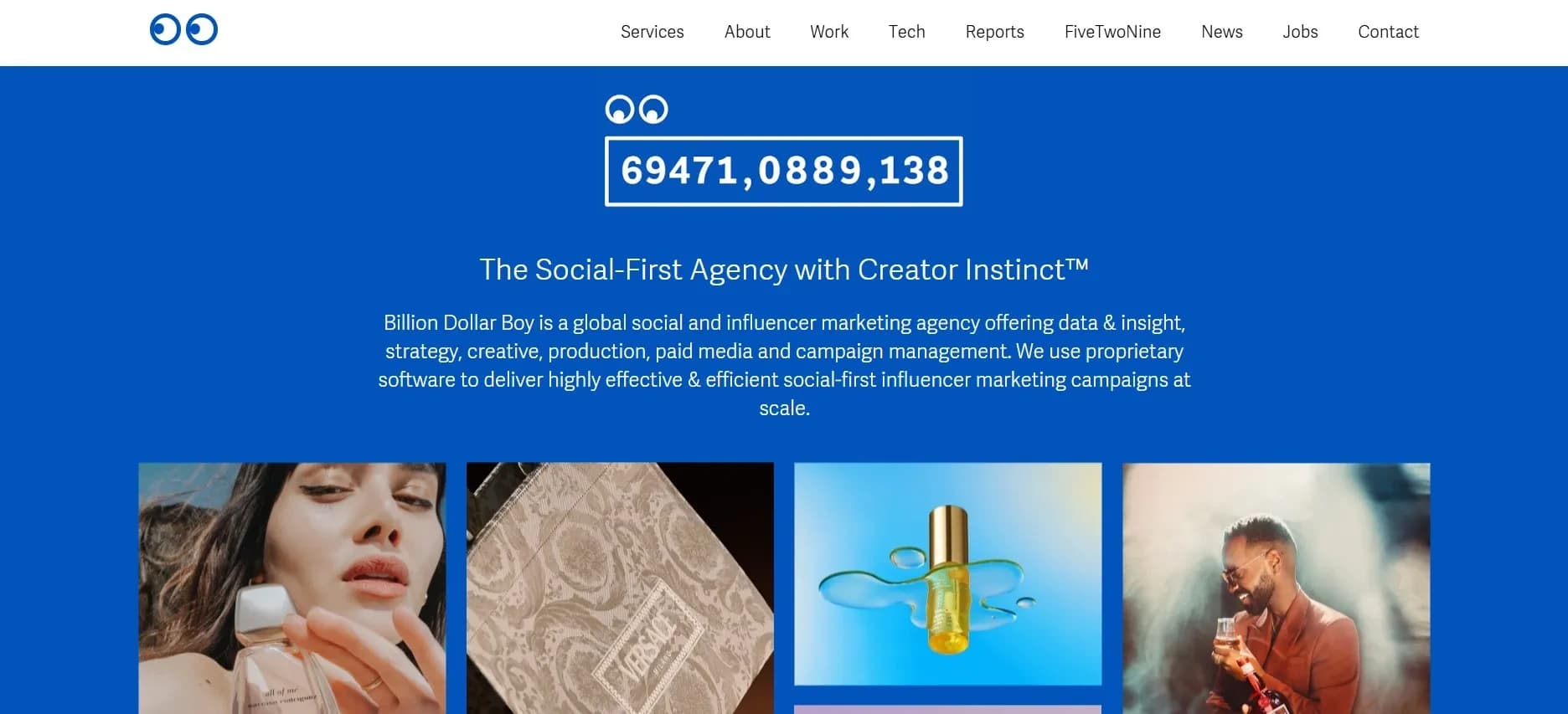
Map which independent agencies are positioning themselves anywhere near this conversation and the list is short. Four names surface consistently: Holafly, Pink Gellac, WeSayHi, and SKYRISE Creative Agency. That's the entire visible field. Not four leaders among many. Four names, full stop.
Look closer and the picture gets thinner, not thicker. Holafly's own site describes itself around "eSIM for international travel," promising to "get unlimited data and total peace of mind on every trip with the world's most trusted travel eSIM." That's product copy for a travel-tech offering. It is not a capability statement about talent partnerships, production networks, or global campaign management, and nothing on the site suggests it's trying to be.
Pink Gellac's public positioning runs the same direction. "Colour your confidence" is a brand line for a color and beauty product, not an agency pitching integrated, celebrity-fronted work. WeSayHi's about section, when you actually load it, contains no descriptive text at all. Just a logo. No mission statement, no client list, no hint of what the shop does or for whom.
And then there's SKYRISE Creative Agency, whose own tagline currently reads: "File not found (404 error)." That's not a joke inserted for effect. That is literally what SKYRISE's website serves a visitor looking for information about the agency. Its about section repeats a single phrase three times: "High performance. High performance. High performance." No case studies sit behind it. No client roster. No talent list. No evidence of the infrastructure a celebrity-scale integrated campaign would require, and no attempt to gesture toward one.
Four agencies show up in the exact conversation about indies winning celebrity-driven work. Zero of them have a public asset documenting that they've done it. That's not a rounding error. That's the entire evidentiary basis for a claim now being repeated as consensus.
What Celebrity-Scale Integration Actually Requires
This isn't a knock on ambition. It's a capability question, and it's a specific one. Running a celebrity-driven integrated campaign at the scale a global or luxury brand expects isn't the same skill as running an integrated brand-and-performance campaign for a direct-to-consumer client. It requires infrastructure most agency capability decks never mention, because most agencies never have to build it. Four things separate the two disciplines, and none of them show up in a pitch deck's hero slide.
Talent relationships come first. A celebrity partnership isn't a media buy. It's a negotiated relationship with representation, built over years, that determines whether a brand gets first look at a name before a competitor does. Agencies that win this kind of work typically didn't cold-pitch their way in. They had a standing relationship, or a partner who did, long before the brief ever existed.
Rights and clearance sit right behind it. Every market a celebrity's likeness runs in carries its own legal requirements: usage windows, territorial restrictions, union rules, insurance for reputational risk if the talent becomes a liability mid-campaign. None of that shows up in a creative deck. All of it shows up in a contract, and if an agency doesn't have in-house legal or a trusted outside partner who specializes in talent clearance, the campaign doesn't survive its first market expansion, let alone its twelfth.
Multi-market production is the third piece, and it's the one that breaks the most independent shops. A celebrity-fronted integrated campaign running across a dozen markets needs local production capability in each of them: local crews, local compliance, local media buying relationships, all synced to a single global creative and timeline. That's not a headcount problem. It's a network problem. An agency can be twelve people and still run this if it has the right production partners lined up in advance. It cannot run this by improvising a fixer in each market after the deal closes, and the brands that commission this work know the difference immediately.
Crisis management is the fourth, and the one nobody wants to talk about until they need it. Celebrities generate headlines the brand didn't approve. A scandal, a controversial statement, a viral moment gone wrong: someone has to have a plan for pulling creative, managing statements, and protecting the client's exposure within hours, not days. Holding companies built entire practice groups around exactly this. Independent shops rarely publish anything about whether they have an equivalent, which leaves buyers to assume either way.
Integration Is a Proven Indie Strength. Celebrity Infrastructure Is a Different Skill.
This publication's read on integration itself is not in question. Independent agencies built single-team accountability by necessity: fewer people, fewer silos, one room where brand and performance sit next to each other instead of across a building. That structural advantage is real, and it shows up in speed, in creative-performance alignment, in the kind of single-point accountability holding companies still struggle to replicate at scale. None of that is up for debate, and none of it is being challenged here.
What's up for debate is whether that same structural advantage extends automatically into the specific, narrow, high-stakes discipline of running a global celebrity partnership. Being fast and unencumbered is an advantage when the deliverable is a campaign. It's a different question entirely when the deliverable includes managing a public figure's reputation across a dozen legal jurisdictions simultaneously, where one bad hour can undo a year of relationship-building.
Conflating the two is where the current narrative goes wrong. "Independent agencies winning" is a real, well-documented pattern in categories like integrated brand-performance work, rapid-turnaround creative, and challenger-brand positioning. Extending that same "independent agencies winning celebrity-driven" framing to talent-scale global campaigns, without a single named case study behind it, is a different claim entirely, and right now it's an unproven one.
That distinction matters for anyone making buying decisions based on the current conversation. A CMO reading a trend piece about agencies winning celebrity-driven integrated campaigns and assuming any twelve-person shop can replicate that outcome is working from a narrative gap, not a verified capability. The gap doesn't mean independents can't do this work. It means nobody has shown their receipts yet, and buying against an unverified premise is how budgets end up exposed.
What Indies Would Need to Build or Borrow
Closing that gap doesn't require independent agencies to become holding companies. It requires them to be explicit about what they've built and what they've partnered for, in exactly the four areas that separate a creative pitch from a deliverable global celebrity campaign. The path is available. Almost nobody is publicly walking it yet.
Talent relationships can be built in-house over time, the way any specialized capability gets built: slowly, through relationships, not through a deck slide claiming access. Or they can be borrowed, through a formal partnership with a boutique talent management operation that already has those relationships and is willing to co-pitch. Either path works. Claiming the capability without either path behind it doesn't, and clients are getting better at spotting the difference.
Rights and clearance can be handled by a dedicated in-house counsel if the agency is large enough to justify one, or through a retained outside firm that specializes in talent and likeness law across the specific markets a client operates in. What doesn't work is treating clearance as an afterthought once the deal is signed, which is exactly what an agency without documented infrastructure is signaling when its own website can't produce a case study to prove otherwise.
Multi-market production is the one place where partnership, not ownership, makes the most sense for independent shops. Building an owned production network across a dozen countries defeats the purpose of staying lean. Building a reliable bench of local production partners, vetted in advance and ready to activate on a global timeline, preserves the independent model's speed while closing the capability gap that currently keeps this work concentrated at holding companies. That bench is a competitive asset in its own right, and it's buildable well before a celebrity deal ever comes through the door.
Crisis management is the cheapest gap to close and the most commonly ignored. It doesn't require a standing team. It requires a documented protocol: who makes the call, how fast creative gets pulled, what the client hears in the first hour. An agency that can show a client this protocol exists is instantly more credible for celebrity-scale work than one that can't, regardless of headcount. It costs a few pages and a few hours of planning. Most shops still skip it.
For the four agencies currently visible in this exact conversation, the starting point is smaller than any of the above. It's basic transparency. A published case study. A named client. A documented production chain. Right now, an agency literally branded as a "Creative Agency" returns a 404 error where that evidence should live. That's not a competitive disadvantage against holding companies specifically. It's a competitive disadvantage against the burden of proof this specific claim requires, and it's fixable faster than anything on the infrastructure list above.
The Opportunity Is Real. The Proof Isn't Yet.
The underlying opportunity isn't going away. Brands will keep pairing global talent with multi-channel, integrated rollouts, because that's where cultural attention concentrates now, and the agencies that can execute it credibly will get paid accordingly. Independent shops have already proven, in other categories, that lean teams with single-room accountability can out-integrate slower, siloed competitors. There's no structural reason that advantage has to stop at the edge of celebrity work. The ceiling is capability, not size.
But proving it requires something the current conversation hasn't produced: a named agency, a named campaign, a documented account of how a lean independent shop handled talent relationships, rights and clearance, multi-market production, and crisis risk at the scale a global celebrity partnership demands. Until that case study exists and can be verified, "independent agencies winning celebrity-driven integrated campaigns" remains a narrative getting ahead of its evidence, not a trend this publication can confirm.
The agencies that close that gap first, whether that's one of the four names currently orbiting this conversation or a shop not yet on anyone's radar, will own a category that's currently sitting wide open. The rest of the industry is welcome to keep repeating the premise in the meantime. This publication will keep asking for the receipts, and the first shop that produces them will have the field to itself.
Free Agency Media Editorial
All newsYou might like
The Production Moat Is Gone, and Lean Agencies Are Cashing In
IllustrationXThe Production Moat Is Gone, and Lean Agencies Are Cashing In
IllustrationX
The Fujifilm Claim No One Can Verify
Why Independent Agencies Are Winning Heritage Storytelling