The New Agency Talent Migration: Small Shops, Marquee Clients
Senior agency talent isn't fleeing holding companies out of desperation. It's moving toward autonomy, equity, and direct client access that only lean, independent shops can offer.


The agencies landing Fortune 500 work right now aren't the thousand-person machines with twelve floors of office space. They're shops with fewer than fifty people, a handful of named partners, and client rosters that read like a holding company's pitch wish list. That's not an anomaly. That's the shape of the industry right now, and it's the direct result of where senior talent has decided to spend its career.
Take BRAINS. The Los Angeles creative shop runs with 11 to 50 employees and counts Amazon, Warner Bros, Michelin, The Coca-Cola Company, and Nike among its client list. Those aren't regional accounts. Those are the five brands every holding company network fights over in every pitch cycle, and BRAINS holds relationships with all of them at a headcount that wouldn't fill a single floor at an agency of record. The firm's own language is blunt about the ambition: "We empower brands to carve out bold impact with transformative creative." No hedging. No "we help brands tell their story." Bold impact, stated plainly.
This is the real story hiding behind the generic "talent exodus" headlines that keep recycling the same tired framing of holding companies as the natural winner. It's not an exodus. It's a migration with a destination, and the destination has specific, nameable advantages. Senior creatives, strategists, and account leads aren't fleeing holding companies because the work got hard. They're moving toward something: autonomy, equity, client proximity, and speed that a layered network structure can't replicate in the AI era. Understanding why requires naming names, citing specifics, and resisting the urge to frame this as a story about smaller agencies overcoming disadvantage. It isn't one. It's a strength story.
Why Senior Talent Is Walking Out of Holding Companies
Start with the historical pattern, because this didn't begin in 2024. One longtime industry observer, posting on X under the handle @bykerseven, described the cycle plainly: "hotshots who quit set up their own shops, some of which became Big Agency in their own right." That's the loop. Talent leaves. Talent builds something smaller and sharper. Some of those smaller shops eventually get big enough to attract acquisition interest, and the cycle resets. What's different about the current wave isn't the pattern itself. It's the leverage senior talent now holds.
Four forces are driving the current migration, and none of them are about survival.
Autonomy. A senior creative at a holding company network answers to account leadership, which answers to a regional president, who answers to a global network chief, who answers to shareholders. Every layer between the work and the client is a layer of dilution. At a shop like BRAINS, with its tight headcount and named founders in Marc Saz and Paolo Bru, that chain collapses to almost nothing. The person who sold the client on the idea is often the person still in the room when it ships.
Equity, or at least the shape of it. Holding company compensation tends to flatten over time: raises, bonuses, title changes, but rarely ownership. Independent shops, by contrast, can offer a stake in what gets built. That's not a minor perk. It's the difference between being paid to execute someone else's growth story and being paid to write your own.
Client proximity. This is the one the data makes undeniable. BRAINS works directly with Amazon, Warner Bros, Michelin, Coca-Cola, and Nike, not as a sub-contracted execution partner buried three tiers deep in a holding company's account structure, but as the shop in the room. Senior talent that spent a decade inside a network knows exactly how rare that proximity is at scale. One voice on X, @Seanfrank, put the flip side of this bluntly: "The best talent is locked up in agencies." The talent is there. What's changed is where that talent wants to be locked up.
AI-era speed. This is the newest and most urgent pressure point. @modernretail flagged what amounts to an industry-wide talent problem: AI is eliminating the entry-level work that used to train future agency leaders, and agencies are struggling to build a replacement pipeline. That's a holding-company-scale problem, because holding companies built their talent development model on junior staff cutting their teeth on exactly the kind of repetitive execution work AI now handles in seconds. Smaller, independent shops don't carry that same structural dependency. They can restructure around AI tools immediately because they don't have a decade of entrenched process to unwind first.
Put those four forces together and you get a senior creative or strategist who looks at a holding company org chart and sees friction, looks at an independent shop's client list and sees proximity, and looks at the AI disruption curve and sees an opportunity to move faster somewhere smaller. That's industry talent migration, not an exodus. The distinction matters because exodus implies running from something. This is running toward something specific.
The Case for Proximity: What a Shop Like BRAINS Offers
Here's where the abstraction has to get concrete, because "autonomy" and "proximity" are easy words to say and hard to prove. BRAINS proves it with a client roster and an award shelf.
Amazon. Warner Bros. Michelin. Coca-Cola. Nike. Those five names alone would anchor a holding company's annual report. At BRAINS, they anchor a shop built around Content Marketing, Design, Creative Services, and Branding & Identity, recognized by Ad Age, AIGA, and the Webby Awards. That's not a regional creative shop picking up overflow briefs. That's a firm doing recognized, awarded work for the exact brands every senior agency hire wants on their résumé, at a size where the work doesn't disappear into a credits list fifty names long.
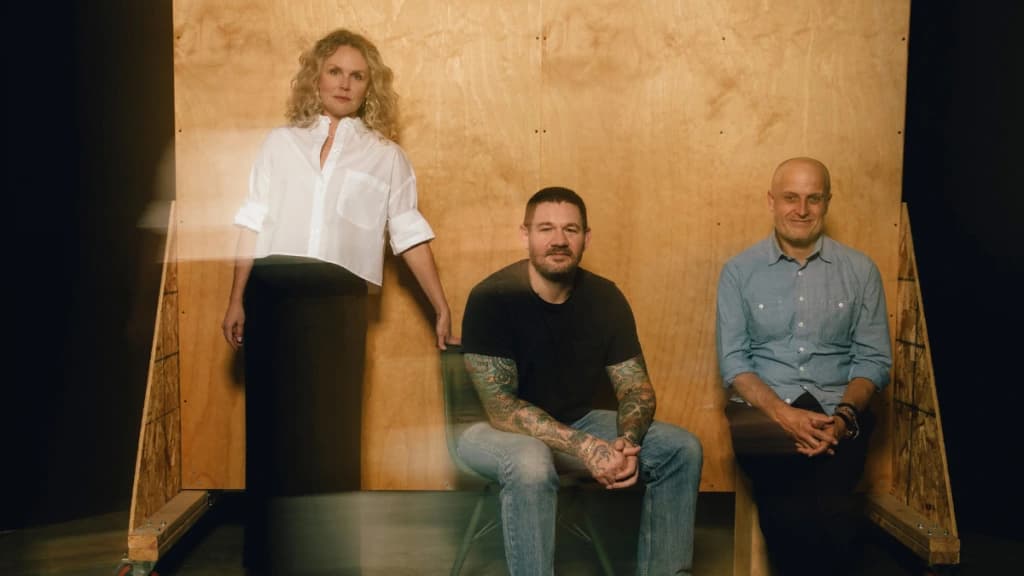
This is the proximity argument made literal. A senior hire joining BRAINS isn't joining to eventually work on Nike. They're joining to work on Nike now, likely within a structure small enough that their name is attached to the outcome rather than buried in a department. The firm's leadership structure reflects that same flatness: Marc Saz as Co-Founder and Owner, Paolo Bru as Founder, Wayne Pi**n listed as Pub Owner. Three named people running point on a shop that's landing global brand work. That's the opposite of a sprawling network org chart. It's a short list of names you can actually find.
This is also why framing independent shops as disadvantaged fails to describe what's actually happening. There's nothing disadvantaged about a sub-50-person shop holding Coca-Cola and Nike simultaneously. That's the weight class. Independence isn't the handicap here. It's the operating model that made the client list possible in the first place, because a holding company layer cake doesn't move fast enough to win briefs the way a focused, named-leadership shop does.
The sentiment matches the data. @ilia_sky, commenting on the broader agency landscape, noted that "Independent agencies that move fast still have the edge on taste and talent. For now." The "for now" is doing real work in that sentence. It's an acknowledgment that this isn't a permanent, guaranteed advantage. It's a window, open right now, that independent shops are actively exploiting while holding companies figure out how to respond. BRAINS, with its five marquee clients and sub-50 headcount, is a live example of a shop inside that window rather than theorizing about it.
@wwpartners made the underlying philosophy explicit back when the independent movement was still gaining steam: "creativity doesn't rely on size, it relies on talent," and the follow-on point that independents can "put people over profits" in a way a shareholder-driven network structure often can't. That second point is the one that should worry holding company leadership the most. It's not a creative argument. It's a retention argument. If the independent model structurally allows a founder to prioritize a person's growth over a quarterly margin target, that's a recruiting advantage no counteroffer memo can fully erase.
The Third Option: Why Going Solo Isn't Always the Answer
Here's the part the generic migration narrative usually skips: the choice senior talent faces isn't a clean binary between "stay at the holding company" and "join an independent shop." There's a third door, and it's the one more people are testing first: going solo.
@beastoftraal's reflection on eight years of independent work after leaving full-time roles captured both sides of that door honestly: freedom and inbound work on one side, the discipline required to sustain it on the other. That second half is the part that gets lost in the romanticized version of "going independent." Freelancing isn't just autonomy without the org chart. It's autonomy without the infrastructure, too. No creative director to sharpen a concept against. No new business team generating the next brief. No shared credibility that comes from a client roster with Amazon and Nike already on it.
@MrnllMtt described a version of this that's more calculated than romantic: elite talent "reverting to independent craftsmanship" while treating a corporate job as "non-dilutive funding" for building a personal practice on the side. That's a real strategy, and it's growing. But it's also a strategy with a ceiling. A solo operator building a personal digital estate on nights and weekends is optimizing for independence from everyone, including collaborators. At some point, the brief gets too big for one person to carry alone, and that's exactly the moment an independent shop becomes more attractive than permanent solo status.
This is the opening indie founders need to understand clearly: the competition for senior talent isn't only against WPP, Publicis, and Omnicom. It's against the appeal of going fully solo. An independent shop that offers the autonomy of solo work, client proximity to brands like the ones on BRAINS's roster, and the backup of a real team and real new business pipeline, is positioned to win talent away from both directions at once. It beats the holding company on freedom. It beats the solo path on infrastructure and credibility. That's not a marginal advantage. That's the entire pitch.
The Playbook: What Founders Need to Offer to Win This Talent
If the forces pulling senior talent toward independence are autonomy, equity, client proximity, and AI-era speed, then the founders who win the next wave of migration independent shops are competing for will be the ones who build those four things into their actual offer, not just their recruiting pitch.
Make the equity conversation concrete, early. Senior hires coming from a holding company have spent years watching title changes substitute for ownership. An independent founder who can articulate a real path to equity, profit share, or a defined growth stake removes the single biggest reason a senior hire might default back toward a bigger, "safer" network job instead.
Sell the client roster honestly, not aspirationally. BRAINS doesn't need to oversell its pitch to candidates. Amazon, Warner Bros, Michelin, Coca-Cola, and Nike do the selling. Founders without a roster like that yet need to be honest about where they are and specific about where they're headed, because senior talent leaving a holding company has already sat through enough inflated new business decks to spot a vague pitch instantly.
Build the growth path, not just the job description. The AI disruption flagged by @modernretail cuts both ways. Yes, it's eliminating the entry-level work that used to train future leaders. But it also means independent founders need to design a different kind of growth path, one built on strategic and creative judgment rather than execution hours. A senior hire needs to see how they grow inside a 15-person or 40-person shop, not just what they'll be doing in month one.
Compete on culture as a retention tool, not a recruiting slogan. @wwpartners's framing of independents putting "people over profits" only works as a competitive advantage if it's operationally true, not a line in a careers page. That means real decisions: staffing ratios that don't burn senior talent out covering junior gaps, leadership that's actually accessible (the way a three-named-founder structure like BRAINS's naturally allows), and a culture that treats the work itself, not just the account, as the reason people stay.
Move at the speed independence allows, visibly. The entire premise of the independent advantage is speed: faster decisions, faster pitches, faster adoption of new tools. Founders need to make that speed visible to candidates during the hiring process itself. A holding company interview process that takes eight weeks and five rounds is itself evidence of the bureaucracy a candidate is trying to escape. An independent shop that moves fast on the hire is proving the pitch before the candidate even says yes.
None of this requires a founder to out-resource a holding company. It requires out-executing one on the four specific things senior talent has decided actually matter: ownership, access, proximity to real brand work, and speed. That's a competitive fight independent shops are built to win, not one they're hoping to survive.
Where This Goes Next
The migration independent shops are benefiting from right now isn't a temporary correction. It's a structural shift tied to three things that aren't reversing anytime soon: AI compressing the execution layer that used to justify large agency headcounts, senior talent having more leverage than at any point in the holding company era, and client proximity becoming a recruiting asset in its own right rather than a nice-to-have.
@ilia_sky's caveat is worth repeating here: independent agencies have the edge on taste and talent "for now." That window stays open only as long as independent founders keep doing what shops like BRAINS are already doing: landing real brand work, naming real leadership, and giving senior talent a reason to walk toward something instead of just away from something else.
The holding companies aren't standing still, and some will restructure to compete for this same talent. But restructuring a global network takes years. Building the kind of offer an 11-to-50-person shop can build, with direct equity, direct client access, and direct speed, takes a founder's decision and the will to execute it. That asymmetry is the whole story. Industry talent migration isn't a crisis for independents to survive. It's the advantage they were built to exploit, and the shops that understand that fastest are the ones that will be naming the next five-year client list instead of reading about it.
Free Agency Media Editorial
All newsYou might like
The New Agency Talent Migration: Small Shops, Marquee Clients
BRAINSOctagon Game Studio and the Wreck-It Ralph Campaign That Never Happened
Octagon Game Studio and the Wreck-It Ralph Campaign That Never Happened
SRH's Tagline Turns a Homepage Line Into a Public Scoreboard
SRH