What 72andSunny's Stagwell Stake Reveals About Agency Independence
72andSunny won a major industry title while partly owned by Stagwell. The real story isn't its independence status. It's what the agency protected to get there.
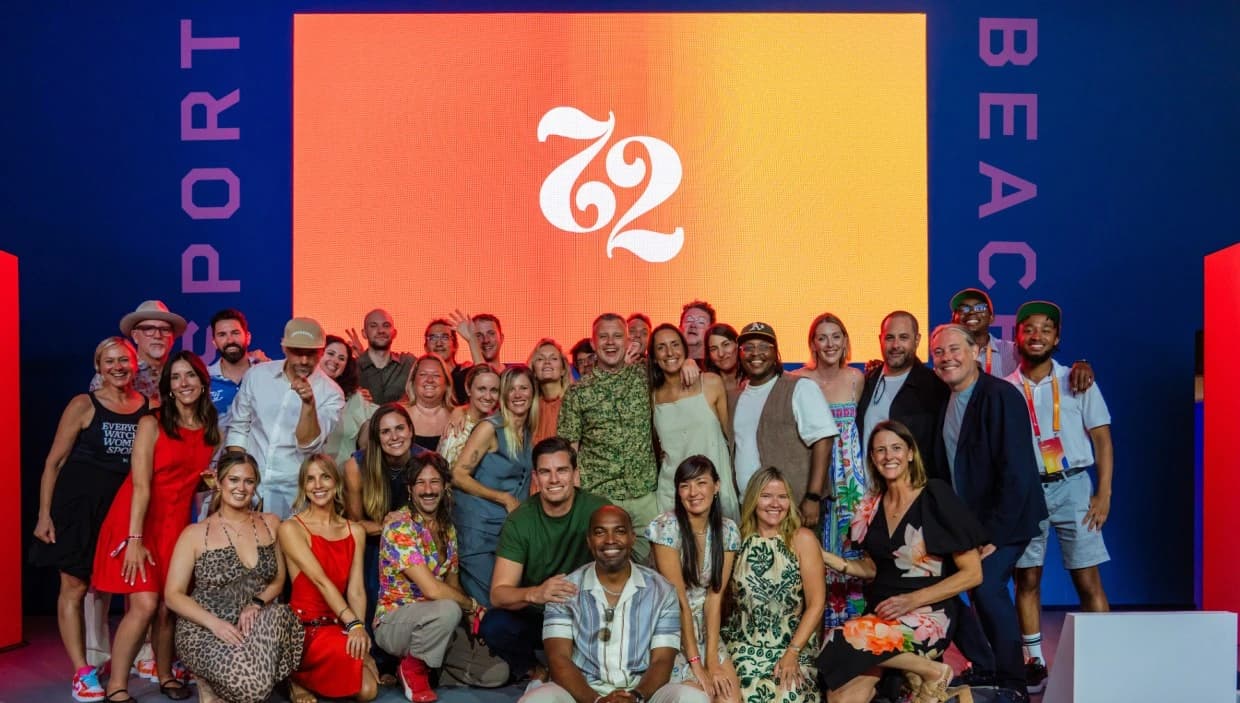



The 2026 Ad Age Sports and Entertainment Agency of the Year sits on a Stagwell balance sheet. That's not a scandal. It's the single most useful data point in the entire "independent agency" conversation, and almost nobody is writing about what it actually means.
Search "72andsunny agency" and you'll get seven results before you hit anything resembling analysis: the agency's own homepage, an Instagram bio, a Wikipedia stub, a LinkedIn company page, a Fisher Partners real estate case study about their Brooklyn office, a Facebook page, and Stagwell's own corporate site listing 72andSunny as one of its agencies. Six of those seven sources are self-description. The seventh is the holding company itself, quietly confirming what the other six never mention: 72andSunny isn't fully independent. It hasn't been for years. And it just won one of the industry's most-watched titles anyway.
That's the paradox worth sitting with. Not "is 72andSunny independent," which is a yes/no question the search results can't answer. The real question is what founding decision let an agency built on a non-traditional, flat management structure keep its creative identity intact after a holding company bought a piece of it. That question has an answer, and it's more useful to a founder weighing their own equity decisions than any listicle ranking "top independent agencies" could ever be.
The Search Results Tell You Everything, Except What Matters
Here's what 6,720 monthly searches across the "specific independent agency" keyword cluster actually represents: people typing agency names directly into Google, not "best advertising agencies near me." That's high-intent, insider-level search behavior. Someone searching "72andsunny agency" already knows who 72andSunny is. They're not discovering the shop. They're trying to understand it: its structure, its ownership, its trajectory.
Zero publishers are answering that question. Zero competing sites in this cluster are doing anything beyond aggregating directory listings and Wikipedia summaries. The keyword "agency profiles" alone pulls 320 searches a month, and the content sitting on top of it reads like it was written for search engines, not for the media directors, in-house CMOs, and rival founders actually typing the query. That's the gap. Not a content gap in volume. A content gap in insight.
The cluster itself is a tell. Fourteen other names sit alongside 72andSunny in the same search data: Yellowhammer Creative, Champagne Creative Group, Creative Collective ATX, Ascend Creative, Lighthouse Creative, MCM Creative, HI Agency, Hook Marketing, Lemon Lime Agency, Focus Agency, RGI Creative, ABC Creative, Robert Half Creative Group, and Ogilvy Marketing Agency. That last one is instructive by contrast. Ogilvy is a legacy holding company shop, and it sits in the exact same search cluster as fourteen independent or independent-adjacent names. That tells you something the industry rarely says out loud: buyers, journalists, and rival founders searching by agency name don't pre-sort by ownership structure. They're all trying to answer the same question about each of these names: what's the deal here? Who owns what? What bet did this shop make that the others didn't?
Nobody's answering it. That's the opening.
A 2004 Bet on Flat Structure Over Top-Down Command
72andSunny's founding story starts in 2004, credited to John Boiler, Glenn Cole, Robert Nakata, and a fourth founding partner, according to the agency's own Wikipedia entry. The detail that matters isn't the year. It's the structural bet baked into the agency from day one, documented not by the agency's own marketing but by a third party: a Fisher Partners case study on the agency's Brooklyn office, which describes 72andSunny as "a non-traditional advertising agency that eschews the top-down management model."
That's a founding decision, not a branding line. A flat structure isn't a personality trait you bolt on later. It's an operating system you build at inception, and it shapes every hire, every account structure, every client conversation for the next two decades. Compare that to the standard holding company model, where creative decisions route through layers of account management, finance, and legal before a client sees anything. 72andSunny's founders bet that removing those layers would produce faster, sharper creative output. Two decades later, the agency is still operating out of a Brooklyn DUMBO office designed around that same non-hierarchical philosophy, still running global creative work out of Los Angeles, Amsterdam, and Sydney, and still winning industry recognition built on creative output rather than account scale.
The 2026 Ad Age Sports and Entertainment Agency of the Year title is the payoff of that bet, not a reversal of it. Structure survives ownership changes. That's the lesson independent founders keep missing when they treat "independent" as a binary label instead of a set of operating decisions made at founding and defended at every inflection point after.
The Stake Nobody's Diagramming
Here's where it gets uncomfortable for anyone who wants a clean "independent vs. holding company" story. Stagwell's own site lists 72andSunny among its agencies, describing it as "a modern, full-service creative agency that works with some of the most progressive and innovative brands." That's Stagwell's language, on Stagwell's domain, about an agency that still markets itself everywhere else as a global creative company, not a Stagwell subsidiary.
Stagwell holds a minority stake in 72andSunny. That single fact reframes everything else in the search results. The agency's own homepage doesn't mention Stagwell. The Instagram bio doesn't mention Stagwell. The Wikipedia page frames the founding story with zero reference to the capital structure that exists today. Six sources tell the independence story. One source, the investor itself, tells the ownership story. That's not deception. That's the reality of how minority stakes work in this industry: capital comes in, creative identity stays largely intact, and the public-facing brand keeps operating like nothing changed, because for the day-to-day creative process, not much did.
This is the tension every founder eventually has to negotiate, and it's more nuanced than the binary "sold out or stayed pure" framing that dominates industry gossip. A minority stake isn't an acquisition. Stagwell doesn't run 72andSunny's creative reviews. It doesn't dictate the agency's flat structure. What it does is provide capital, distribution, and access to a network of Stagwell-adjacent resources, in exchange for a slice of the upside and governance rights that never show up in a Wikipedia infobox.
The playbook here isn't "avoid all holding company capital." It's "know exactly what you're trading, and structure the deal so the trade doesn't touch the thing that made you valuable in the first place." 72andSunny's founders built a non-traditional management model in 2004. Whatever the Stagwell deal terms actually say, the agency's public identity, its award recognition, and its creative reputation in 2026 all still trace back to that original structural bet, not to anything Stagwell added. That's the version of independence that survives a minority stake: the operating philosophy stays the founders' property even when a piece of the equity doesn't.
Fifteen Names, 6,720 Searches, and the Fully Independent Counterexample
Now put 72andSunny's model next to what's actually happening on X right now, because the contrast is sharper than any case study could manufacture on its own.
Maxwell Finn, posting as the voice behind "Unicorn Marketers," has been making a viral case for the opposite end of the independence spectrum: solo operators with zero holding company relationship, zero minority stake, zero account management layer at all. His argument, which pulled significant engagement across likes, replies, and bookmarks, is built around a specific structural claim: one-person ownership means no delays, no account managers routing decisions, intense client vetting before engagement, AI-driven toolkits replacing traditional agency overhead, and client-owned assets instead of the agency retaining creative IP. It's the most extreme version of the independence bet available: not just no holding company stake, but no team layer between founder and client at all.
Kevin Sinclair's shared Buffer case study offers a more operational version of the same thesis: a boutique independent agency managing 23 social media profiles simultaneously, without the overhead structure a holding company shop would require to run the same workload. No account director tier. No multi-market reporting chain. Just direct execution at a scale that would normally require a much larger team under a traditional agency model.
@agencynewlevel's framing cuts at the same idea from the client side: ditching "cookie-cutter" mass marketing in favor of deep business analysis, flexible budgeting, and real KPIs instead of vanity metrics, specifically for Web3 and crypto clients who need speed a bigger shop's approval chain can't deliver. And a 2024 report from MarTechSeries, citing FreeWheel data, found 24% growth in CTV programmatic impressions driven specifically by independent agencies, evidence that the speed advantage isn't just a talking point. It shows up in adoption curves for new channels, where independents move before the bigger shops finish their internal sign-off process.
Here's the pattern across every one of these examples, from Maxwell Finn's solo model to 72andSunny's minority-stake global network: the actual differentiator was never headcount, and it was never the presence or absence of holding company capital. It was speed of decision-making relative to structure. A twelve-person solo-operator model gets speed by having no layers at all. 72andSunny gets a version of the same speed by preserving its flat, non-traditional management structure even after taking on outside capital. Different scale, same underlying bet: protect the decision-making structure, and the rest of the business model is negotiable.
What the Next Founder Should Steal From Both Playbooks
This is the part the "top 10 independent agencies" roundups never get to, because they're built to rank agencies, not to explain the decision architecture underneath them.
If you're founding an agency today, or running one that's fielding its first holding company inquiry, the 72andSunny and solo-operator contrast gives you an actual framework instead of a vibe. The question isn't "should I stay independent." The question is "which specific structural elements of my agency actually produce the work, and can I protect those elements through whatever capital or ownership change comes next."
For 72andSunny, that element was the flat, non-hierarchical management model documented as far back as their Brooklyn office design. Twenty-two years after founding, four founders in, one minority stake from Stagwell later, and one Ad Age Sports and Entertainment Agency of the Year title on the board, that structural bet is still the throughline. The capital changed. The structure didn't.
For the solo operators Maxwell Finn is describing, and for whatever boutique shop is running 23 client social profiles off a Buffer dashboard, the protected element is even more radical: there's no layer to protect because there's no layer to begin with. That's a different bet, riskier in some ways, but it's coherent. It optimizes entirely for speed and founder-level quality control, at the cost of the scale a Stagwell relationship or a global office network can provide.
Neither model is the "right" independence. That's the mistake baked into most industry commentary on this topic: treating independence as a purity test instead of a design decision. 72andSunny took capital and kept its structure. The solo operators kept everything and scaled nothing beyond what one founder can personally oversee. Both are legitimate answers to the same underlying question: what do you protect, and what do you trade, to keep producing work good enough that clients keep choosing you over the alternative down the street.
The search data backs this up in a way the industry hasn't fully reckoned with yet. Fifteen agency names sit in a single keyword cluster pulling 6,720 monthly searches, and zero competing publishers are analyzing any of them beyond surface-level directory content. That's not a gap in interest. Buyers, media directors, and rival founders are actively searching these names by hand, one at a time, looking for exactly the kind of structural insight this piece just laid out. The agencies themselves aren't publishing it, because it's not in their interest to diagram their own capital structure for competitors. The holding companies aren't publishing it, because minority stakes are quieter when nobody's asking questions about them. And the trade press covering this space has mostly defaulted to press-release rewrites instead of asking the one question that actually matters: what did this specific agency protect, and what did it trade, to get here.
That question doesn't have a single right answer. It has fifteen different answers sitting in this keyword cluster alone, and thousands more across the wider independent agency landscape. The next wave of agency profiles worth reading won't rank shops against each other. They'll do what this piece just did with 72andSunny: take one agency, one founding decision, one inflection point, and follow the thread all the way to what it actually protected. That's a replicable exercise, not a one-off case study. Every name in that 6,720-search cluster has its own version of the 72andSunny question waiting to be asked. Somebody's going to have to start asking it, one named agency at a time, instead of writing another list.
Free Agency Media Editorial
All newsYou might like

TRAINOR's 41 Years Complicate the Death-of-Full-Service Debate
TRAINOR
The One-Sentence Test Agencies Give Clients but Fail Themselves
SRH
The One-Sentence Discipline Small Agencies Use to Win Pitches
SRH