The Cheapest Marketing Keyword Nobody's Agency Owns
1,920 monthly searches want the cheapest digital marketing agency. Zero agencies rank for it. Here's what that gap reveals about a commoditizing industry.

Zero Agencies Compete for the Search Terms Selling Their Own Category
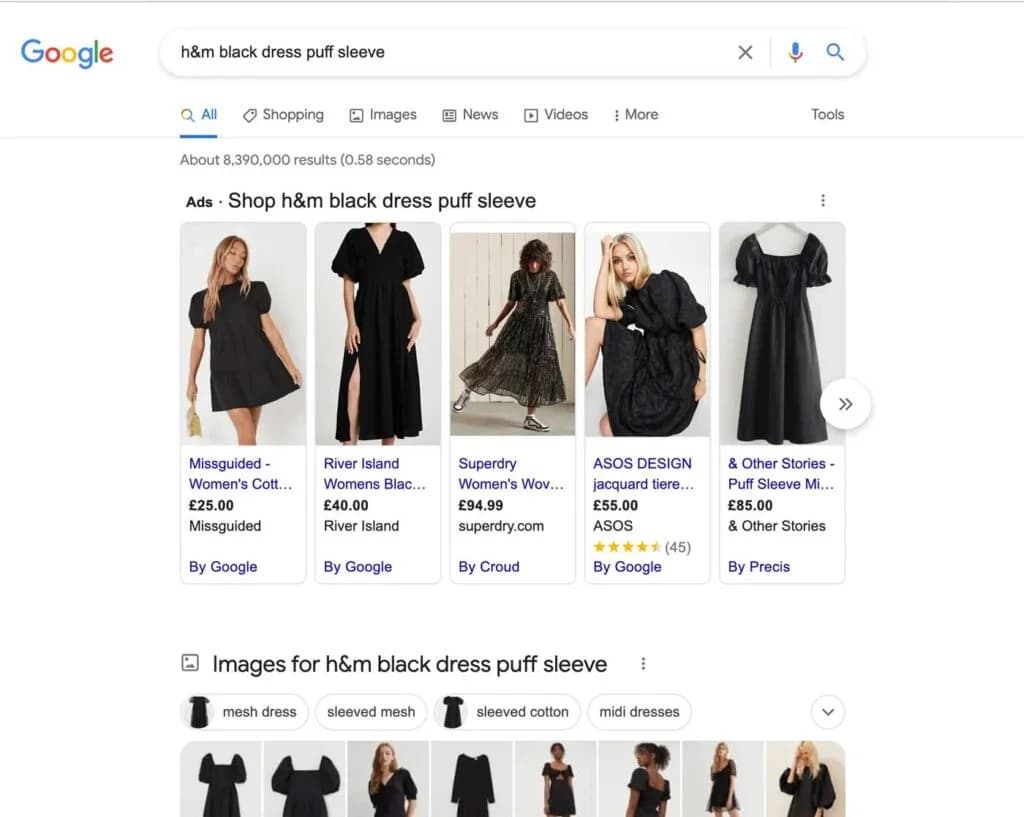
"Cheapest digital marketing agency." "Affordable digital marketing agency." "Cheap digital marketing agencies." Stack the cluster together and you get 1,920 monthly searches from small business owners actively looking to spend less. Not one independent agency ranks for it. The keyword volume is real. The buyer intent is real. The competing agencies: zero.
What ranks instead is a content ecosystem built to sell access to agencies, not agencies themselves. Lyfe Marketing's "affordable digital marketing services" page takes the top spot. ClicksGeek runs a listicle titled "9 Best Affordable Digital Marketing Services for Small Businesses in 2026" and puts itself at number one on its own list. TechnologyAdvice, a lead-gen publisher, ranks fourth with a piece noting that "most digital marketing agencies usually start at $1,000 a month." Semrush's own agency directory shows up at position six, listing 70 New York shops "starting from $1,000." Webbook Studio, a content site, published a comparison article in April titled "Affordable marketing agencies for small businesses on a budget."
This is the tell. The cheapest tier of the industry has become a top-of-funnel content war fought by aggregators and directories, not a service differentiation war fought by agencies. Thrive Agency is the only operator in the top 10 speaking in its own voice, advertising a $500 starting rate and month-to-month contracts on its Chicago page. Everyone else in the SERP is a middleman monetizing the search, not the client relationship.
That gap is the story. When 1,920 monthly searchers want the cheapest option and the market hands them directories instead of differentiated agencies, it means the low end of digital marketing has been fully commoditized into a lead-generation product. And when a category gets commoditized that hard, the players who actually deliver the service either get squeezed into invisibility or find a way out. Right now, on this keyword set, they're getting squeezed.
The $499 Floor and Why It Keeps Dropping
Scroll X and the pricing conversation looks nothing like the SERP. Exultant Digital is running $499 a month for fully managed Google and Meta ads, zero contracts, framed as limited "beta spots." Adrian Kuleszo is pitching $5,995 a month "lite" packages built for early-stage startups, no contract, pause anytime. Two different price points, same underlying signal: the retainer floor that TechnologyAdvice pegs at "$1,000 a month" for a standard agency engagement is being undercut by half, sometimes by 20x, and the undercutting is happening in public, on social feeds, as a sales tactic.
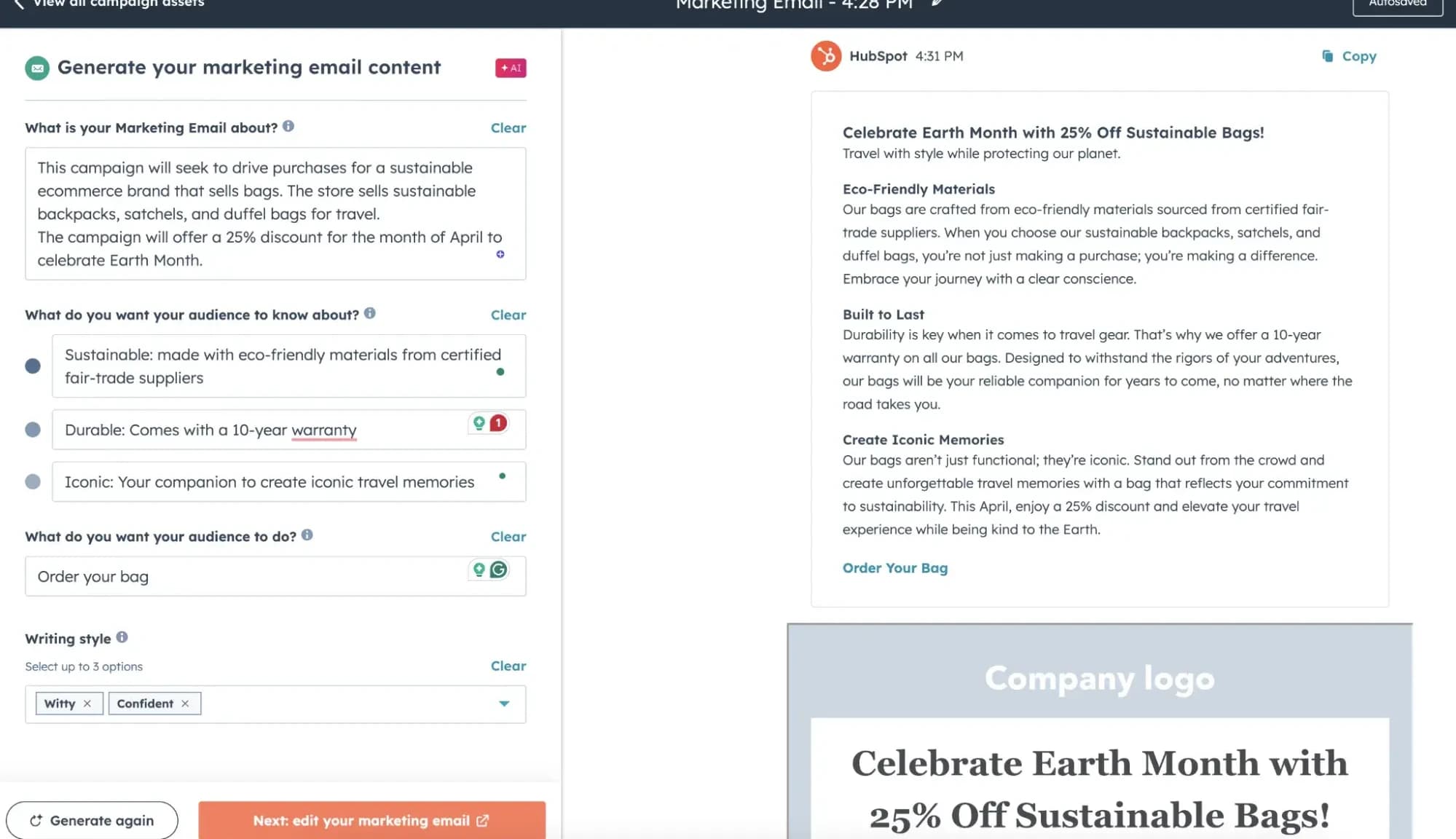
The mechanism is AI tooling, and the math being pitched is aggressive. One widely shared post from 0xNoryxx claims 5 AI agents can replace a 14-person marketing team, saving $4.5M a year at enterprise scale, or roughly $23,000 for a solo operator, running on approximately $200 a month in tooling costs. Sohmehta is marketing an "Ad Agency in a Box" built inside Claude AI for under $100 a month, positioned explicitly against "traditional $15k retainers." Whether or not every number in these threads survives scrutiny, the direction is unmistakable: the cost of producing a competent digital marketing output, ad copy, campaign structure, basic creative, has collapsed toward zero marginal cost per unit.
Video used to be the moat. Aiwithmano's posts describe AI tools generating professional-looking ads and video assets without a photoshoot, without a crew, in minutes, for a few dollars. Noorlewisx frames AI video tools as roughly ten times more affordable than traditional production. Stack that against Kaya's positioning in the usekaya.com "Top 5 Affordable Startup Marketing Agencies" roundup: $3,000 a month for paid ads plus AI-powered recommendations, and you can see the market repricing in real time. Three years ago, $3,000 a month bought you a junior media buyer and a spreadsheet. Today it buys AI-assisted optimization layered on top of human oversight, and it's being marketed as the premium option in a field where $499 a month is now the entry price.
This is the actual disruption. It's not that AI tools are replacing strategists. It's that AI tools have deleted the cost floor that used to separate "cheap" from "unsustainable." A shop can now credibly offer $499 a month and still turn a margin, because the execution layer, ad copy variations, basic creative iterations, reporting dashboards, costs a fraction of what it did when a human did every rep by hand. The keyword data backs this up structurally: "budget digital marketing" pulls 40 searches a month on its own, a small but telling signal that buyers are no longer just searching for "affordable." They're searching with the specific vocabulary of budget-tier positioning, a phrase that didn't have commercial weight five years ago.
What "Cheap" Actually Costs the Client
Not everyone on X is celebrating the price collapse. One post from OMD Global lays out the counterargument directly: hiring the lowest-priced agency typically means sacrificing strategy, consistency, experience, and business understanding, and it usually comes paired with high staff turnover. That's not a competitor taking a shot. That's a warning about the mechanics of what a $499-a-month retainer has to look like on the inside to stay profitable.
Here's the arithmetic nobody puts in the sales deck. A $499 monthly retainer generates roughly $6,000 in annual revenue per client. Even with AI compressing execution time, that revenue has to cover account management, ad platform fees, tool licensing, and profit margin. The only way the math works at scale is volume: dozens of clients per account manager, templated strategy applied across accounts regardless of vertical, and junior staff churned through fast because the work is repetitive and the margins don't support senior talent. That's the turnover OMD Global is flagging, and it's structural, not incidental. It's the business model.
Contrast that against Polsia's post describing a $2,500-a-month full-stack operation, social, ads, SEO, and content, run in a "freelance-style" structure and targeted specifically at local shops that "traditional agencies overlook." That's a materially different price point and a materially different promise. It's five times the Exultant Digital number, but it's positioned around a specific underserved segment rather than a volume play against the broadest possible search term. The difference between $499 and $2,500 isn't just dollars. It's the difference between a commoditized SKU and a defined service built for a defined client.
Cleverly's positioning tells the same story from another angle. The usekaya.com roundup lists Cleverly starting from $891 a month, specifically for LinkedIn. Not "affordable digital marketing." Not "budget marketing." LinkedIn. A single channel, a single audience, a price point that's nearly double Exultant Digital's Google and Meta package but justified by specificity rather than scale. That's the pattern worth watching: agencies that survive the low-end squeeze aren't the ones racing Exultant Digital to the bottom on price. They're the ones picking a lane specific enough that "cheapest" stops being the relevant comparison.
The Directory Economy Has Already Priced the Category
Go back to the SERP and the pricing signals sitting inside it are more useful than most agencies realize. TechnologyAdvice states plainly that "most digital marketing agencies usually start at $1,000 a month," treating that number as the market's baseline. Semrush's directory, ranking 70 agencies in New York alone, repeats the same $1,000 floor. Thrive Agency's Chicago page undercuts both at $500, paired with month-to-month flexibility as the actual differentiator, not the price itself.
Three different sources, three references to price, and they collectively establish something an individual agency can't establish alone: a market-wide anchor point. Buyers searching "cheapest digital marketing agency" aren't wondering if $1,000 a month is expensive in the abstract. They're comparing it against a directory that just told them 70 agencies exist at that price, a listicle that just told them 9 options exist below it, and a Chicago shop offering half that number with no contract. The anchor is set before an independent agency ever gets a chance to make its pitch.
This is what commoditization at the low end actually looks like in practice. It's not that quality has disappeared. It's that price transparency has compressed the negotiating room a generic-positioned agency has to work with. When ClicksGeek can rank a listicle that puts itself at number one, and Lyfe Marketing can rank a service page optimized for the exact phrase a buyer typed, the independent agencies who could do the actual work well are competing for attention against content operations built purely to capture that search intent. Zero agencies show up organically in that fight right now. That's not because independents can't do $500-a-month work competently. It's because nobody's built the content and positioning to own that specific search the way Thrive Agency has claimed its corner of it.
Three Moves for Agencies Watching the Floor Drop
The instinct when a price floor collapses is to either chase it down or ignore it entirely. Neither works. Chasing it down means competing against $499-a-month AI-tooled operations that were built from day one to run at that margin, structurally advantaged in a race an agency with senior talent and real overhead can't win. Ignoring it means ceding 1,920 monthly searches worth of buyer intent to directories and aggregators who don't do the work at all. They just monetize the click.
The first move is upmarket specificity. Cleverly's $891-a-month LinkedIn-only positioning and Kaya's $3,000-a-month AI-plus-human paid ads package both prove the same point: a defined niche commands a defined premium over generic "affordable" positioning, even when the raw price sits well above the $499 floor. An agency doesn't need to out-cheap Exultant Digital. It needs to be unmistakably the answer to a narrower question than "who's the cheapest," the way Cleverly is unmistakably the answer to "who runs LinkedIn campaigns."
The second move is bundling strategy with execution instead of selling either separately. Adrian Kuleszo's $5,995-a-month "lite" package aimed at early-stage startups works because it's framed as a complete system, not an à la carte service. No contract, pause anytime, but the deliverable is positioned as full-service rather than a single channel or a single tactic. That's a materially different sale than $499 for managed ads. It's a strategic partner price, not an execution-only price, and it holds up against AI-tooled competitors precisely because AI can execute a campaign but it can't yet own a client relationship, interpret a business's specific constraints, or make the judgment calls that justify a strategy fee sitting on top of the execution fee.
The third move, and the one most independents are underbuilding right now, is constructing an actual AI-powered low tier without inheriting the turnover problem OMD Global is warning about. The tools exist. Aiwithmano's posts about generating professional ad creative in minutes for a few dollars and noorlewisx's framing of AI video at roughly a tenth of traditional production cost both point to the same opportunity: an agency can build a genuinely low-cost tier using the same tooling the $499-a-month operators are using, without stripping out the senior oversight that keeps the work from collapsing into templated mediocrity. Polsia's $2,500-a-month full-stack model aimed at local shops "traditional agencies overlook" is close to this blueprint already. It's not the cheapest option in the market. It's a deliberately positioned mid-tier that uses lean, AI-assisted operations to hit a price local businesses can afford, while still being built around actual service rather than volume churn.
Where the Squeeze Actually Lands
None of this means the $499-a-month tier disappears. Exultant Digital's beta pricing and the broader wave of AI-tooled budget agencies are solving a real problem: a huge number of small businesses have never been able to afford a $1,000-a-month retainer, and now some of them can afford something. That's not a threat to independent agencies doing differentiated work. It's a different market entirely, one where the client's ceiling was never going to be an agency worth naming, and where the alternative wasn't a $2,500-a-month relationship. It was doing nothing at all.
The actual squeeze lands on agencies sitting in the middle with no specific reason to exist. Generic positioning around "affordable digital marketing," the exact phrase Lyfe Marketing and Webbook Studio and TechnologyAdvice have already claimed in the SERP, is the position getting hollowed out from both directions. Below it, AI-tooled operators are proving they can hit $499 a month and survive on volume. Above it, Cleverly and Kaya are proving that specificity, whether it's a single channel or an AI-plus-human hybrid, commands a real premium buyers will pay.
The 1,920 monthly searches for "cheapest digital marketing agency" aren't going away, and neither is the 40-person monthly search volume for "budget digital marketing," a term specific enough that it signals buyers who've already priced out the generic options and are hunting for something with a defined cost structure attached. What's going to change is who answers those searches. Right now it's directories and listicles, content built to capture intent rather than fulfill it. The independent agencies who build a genuine low-cost tier on AI tooling, price it honestly, staff it without the churn OMD Global is warning about, and market it directly against that exact keyword cluster get to walk into 1,920 monthly searches where the current answer is a middleman. That's not a defensive move. That's a category nobody's claimed yet, sitting in plain sight in the search data, waiting for an agency willing to name its price and mean it.
Free Agency Media Editorial
All news