Why Independent Agencies Are Winning Heritage Storytelling
Small shops from Riyadh to Philadelphia keep claiming the industry's biggest heritage and cultural storytelling wins, and the reason is structural, not stylistic.

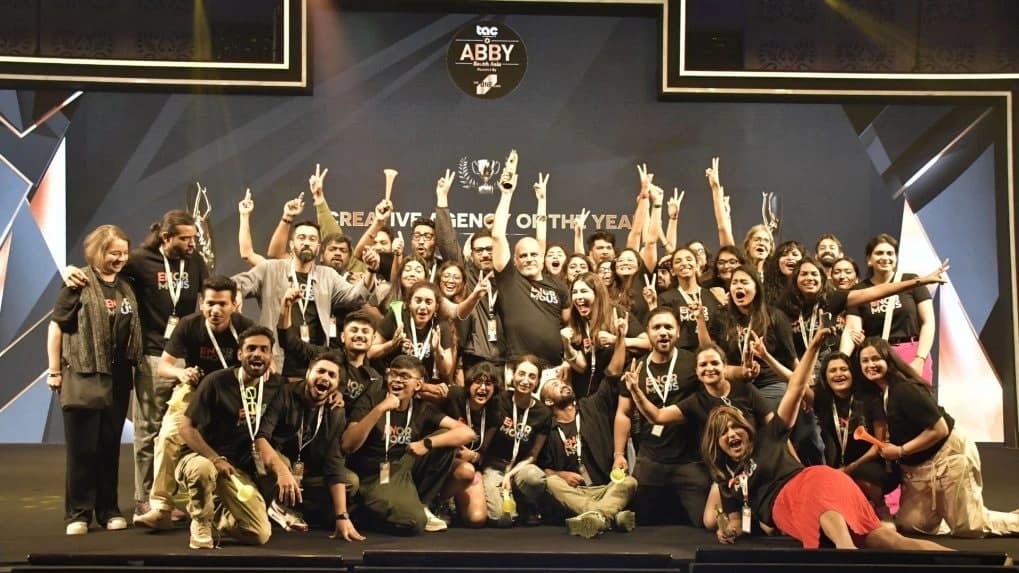

The most decorated heritage storytelling work of the last few years isn't coming out of a network holding company. It's coming out of shops you could fit around a single conference table. Coffee and TV carries Cannes and D&AD recognition on its own board. Rootz Communications runs strategic communications for five major clients across Saudi Arabia's telecom, banking, and government sectors out of a single regional operation. Cut It Short, founded in 2024, less than two years old, already has a Campaign credit to its name. None of these are network subsidiaries. All of them are doing work that depends on knowing a culture from the inside, not briefing a planner who read about it.
That's the paradox worth sitting with. Heritage and cultural storytelling sounds like the kind of category a 3,000-person network should dominate: deep pockets for archival research, global account infrastructure, decades of brand history on file. Instead, the briefs keep landing with independents. Not because indies are a convenient alternative when the network slot is full, but because the structure of a heritage brief and the structure of an independent shop are built from the same material.
Why Cultural Fluency Doesn't Scale Through Account Layers
A heritage brief is not a volume brief. It's not "produce 40 assets across 12 markets by Q3." It's "understand what this place, this community, this history actually means to the people who live inside it, and don't get it wrong." That second kind of brief rewards proximity. It punishes distance. And distance is structurally built into the network model: the account director reports to the account lead, who reports to the regional lead, who takes the brief from the client, who may or may not sit anywhere near the culture in question.
Rootz Communications is the counter-model. A strategic communications and PR agency operating in Saudi Arabia, its own language describes "a consistent, structured approach that scales reliably across complex environments." That's not marketing copy for a general audience. That's a direct answer to the actual challenge of cultural storytelling in a market like the Gulf, where the environment is complex, the stakeholders are varied, and reliability across that complexity is the product being sold. Rootz runs work for Xiaomi and OPPO, consumer electronics brands that need to land culturally in a market very different from their home markets. It runs communications for Riyad Bank, an institution whose heritage and trust signals matter as much as its product features. It handles Al Jawazat and Zain, government and telecom accounts where cultural missteps carry real reputational cost, not just a bad ad cycle.
Five clients. One structured approach. No account layer standing between the strategist who understands the market and the client who needs that understanding translated into communications that land. That's not a workaround for lacking network scale. That's the actual advantage. A network trying to replicate Rootz's output would need a planner, a strategist, an account lead, and a regional director to all agree on what "culturally fluent" means for a Saudi audience before a single asset gets made. Rootz skips the agreement process entirely, because the fluency already lives in the room.
Archival Depth Is a Function of Who's Allowed to Go Deep
Visit Philadelphia's own positioning makes the case for what cultural storytelling looks like when it's built on specificity instead of generality. The city, per its own language, "is where America began." It's where the Founding Fathers made history. It's America's first UNESCO World Heritage City. And its storytelling doesn't stop at the monuments: it's Betsy Ross and Ben Franklin, yes, but it's also pretzels and cheesesteaks, diversity and innovation sitting next to street food. That combination, the sacred founding myth braided with the unglamorous daily texture of a place, is what separates real heritage storytelling from a Wikipedia summary with better typography. Visit Philadelphia's work has carried recognition from Campaign and AdWeek, which means the industry has already validated that this granular, specific, slightly unglamorous version of heritage storytelling outperforms the sanitized version.
The structural point is this: that kind of granularity takes time, and time is the one resource network account structures are built to minimize. Every hour a strategist spends in a city archive, or sitting with a local historian, or walking a neighborhood to understand what a cheesesteak actually means to civic identity, is an hour not billed against a scoped deliverable. Big network overhead doesn't tolerate that math. Independent overhead does, because the independent shop isn't paying for five layers of account management on top of the people doing the actual research.
This is the quiet mechanism behind why indie shops championing heritage keep winning these briefs: lower overhead doesn't just mean lower cost, it means more of the budget and more of the hours go directly into the research that makes cultural storytelling credible instead of decorative. The agencies competing in this space right now, Coffee and TV, Cubery, Rootz, Brandish, Cut It Short, and the cultural storytelling work exemplified by accounts like Visit Philadelphia, share a structural trait more than a stylistic one. The money goes into the work, not into the layers that approve the work.
Measuring the Work Is Part of Championing Heritage
Cubery's own tagline does something unusual for a positioning statement: it names the thing most agencies treat as a given. "Create a Culture of Creative Effectiveness." Not "we make great creative." Not "we tell stories that matter." A culture of effectiveness, stated directly as the product. Cubery carries Campaign recognition, which places it in the same evidentiary bucket as the other shops in this piece: a shop small enough to be opinionated about what effectiveness actually means, rather than defaulting to the industry's default metrics.
That distinction matters for cultural storytelling specifically, because cultural and heritage work is notoriously hard to measure through conventional funnel metrics. A campaign about a region's folklore or a brand's founding story doesn't convert the way a product demo converts. It builds something slower: recognition, trust, the sense that a brand understands where it came from and who it's talking to. An agency whose entire stated purpose is building a culture around measuring creative effectiveness is structurally positioned to defend heritage work against the client-side instinct to kill anything that doesn't show immediate performance lift. That defense is itself part of championing heritage work: not just making it, but building the internal case for why it deserves to exist in a media plan dominated by performance marketing.
Independent shops have an easier time holding that line because the person defending the work to the client is often the same person who made the case for it internally. There's no layer between the strategist's conviction and the client's ear. Cubery's framing suggests a shop built around exactly that proximity: creative effectiveness as a culture, not a quarterly report generated three departments removed from the work itself.
Community-Level Storytelling Lives Where Networks Can't Afford to Go
Brandish's own language points at something networks structurally avoid: "uncovering the number 1 pick of amateur sports organizations." That's not a Fortune 100 account. That's grassroots. Community-level. The kind of brief that a global network's new business team would flag as too small to pursue, because the margins don't support the overhead.
But amateur sports organizations are exactly where cultural storytelling lives at its most concentrated. A local league, a regional club, an amateur circuit built on decades of community identity, carries heritage in a form that is more authentic than a Fortune 500 brand's corporate founding myth. It's heritage that exists because people showed up to the same field every weekend for twenty years, not because a brand team decided to activate a "legacy narrative" for Q3. Brandish carries Campaign recognition for work in this space, which confirms the industry sees real craft value in storytelling built at community scale, not just enterprise scale.
This is the point that generic heritage marketing guides consistently miss: the richest cultural material often sits at the smallest scale, in the communities too niche for a network account team to justify pursuing. Independent shops don't have a minimum account size that makes a brief "worth it." If the story is good and the client relationship is real, the brief gets done. That's not a limitation of indie economics. That's indie economics working exactly as designed: lower overhead means the shop can say yes to work a network would pass on, and that work turns out to be some of the most culturally specific storytelling in the entire industry.
Heritage Storytelling Doesn't Move at One Speed
It would be easy to assume cultural storytelling only means slow, archival, reverent work. Coffee and TV's own trophy case, Cannes and D&AD recognition alongside Campaign credits, suggests the kind of craft-first, long-considered production that heritage storytelling traditionally implies. That's one speed of this work, and it's a speed that rewards patience, research, and a shop willing to sit with a brand's history long enough to find the detail that makes it land.
Cut It Short represents the opposite velocity, and it belongs in the same conversation. Founded in 2024, its own description is blunt: "Fast edits. Bold text. Maximum aggression. Stops the scroll cold." Already carrying a Campaign credit less than two years into existence. That's not heritage storytelling in the archival sense. But cultural storytelling today doesn't only mean "the story of where we came from." It also means "the story of what matters to people right now, delivered in the three seconds before they scroll past it." A culture's relationship to its own present moment is as much a heritage signal as its relationship to its past. The speed at which a shop like Cut It Short can turn around culturally resonant, aggressively paced content is its own form of cultural fluency: understanding not just what a culture values, but how fast that culture expects to receive it.
Put Coffee and TV's Cannes-level craft next to Cut It Short's two-year-old, Campaign-recognized velocity, and you get the actual range of what championing heritage and cultural storytelling looks like at the independent level. It's not one style. It's not one speed. It's a spectrum of shops, each small enough to specialize in exactly the register a given brief requires, from archival reverence to scroll-stopping immediacy, without needing to retrofit a one-size-fits-all network process to either extreme.
The Pattern Is a Strategy, Not a Trend
Six agencies. Different markets, different scales, different formats. Rootz running structured communications across Saudi Arabia's most complex sectors. Visit Philadelphia building a civic identity out of Founding Fathers and cheesesteaks in equal measure. Cubery building an internal culture around proving creative effectiveness. Brandish going deep on amateur sports organizations networks would consider too small to bother with. Coffee and TV carrying Cannes and D&AD weight through sustained craft. Cut It Short proving that two years is enough time to build a reputation for cultural speed if the instinct is sharp enough.
None of this is coincidence, and none of it is a passing creative fashion. It's a structural outcome of how independent shops are built. Lower overhead means more budget reaches the research. Founder-level proximity means the person who understands the culture is the person making the call, not a committee three layers removed from it. Smaller client rosters mean a shop can say yes to the amateur sports league or the single-market communications account that a network would consider too narrow to pursue profitably.
That's the part the generic heritage marketing guides keep missing. They treat cultural storytelling as a creative technique: use your archives, find your founding myth, make the customer the hero. All true, and all beside the point. The real question isn't how to write a heritage campaign. It's who is structurally capable of writing one well, repeatedly, across formats and markets, without the account layers diluting the fluency along the way. Right now, the answer keeps coming back the same way: the shops small enough to stay close to the culture they're telling stories about.
Expect that pattern to keep showing up in the next round of awards shows and new business wins. Expect more clients with genuine heritage, civic identities, regional footprints, community-rooted histories, to go looking for the shop that can sit inside that culture rather than survey it from thirty thousand feet. The networks aren't going to solve their account-layer problem by hiring better planners. The independents don't have to solve it at all. It was never their problem to begin with.
Free Agency Media Editorial
All news

