Why CPG Brands Are Firing Holding Companies for Indie Agencies
73% of CPG and services creative AOR appointments in 2024 went to independent shops. The shift isn't temporary: it's structural.
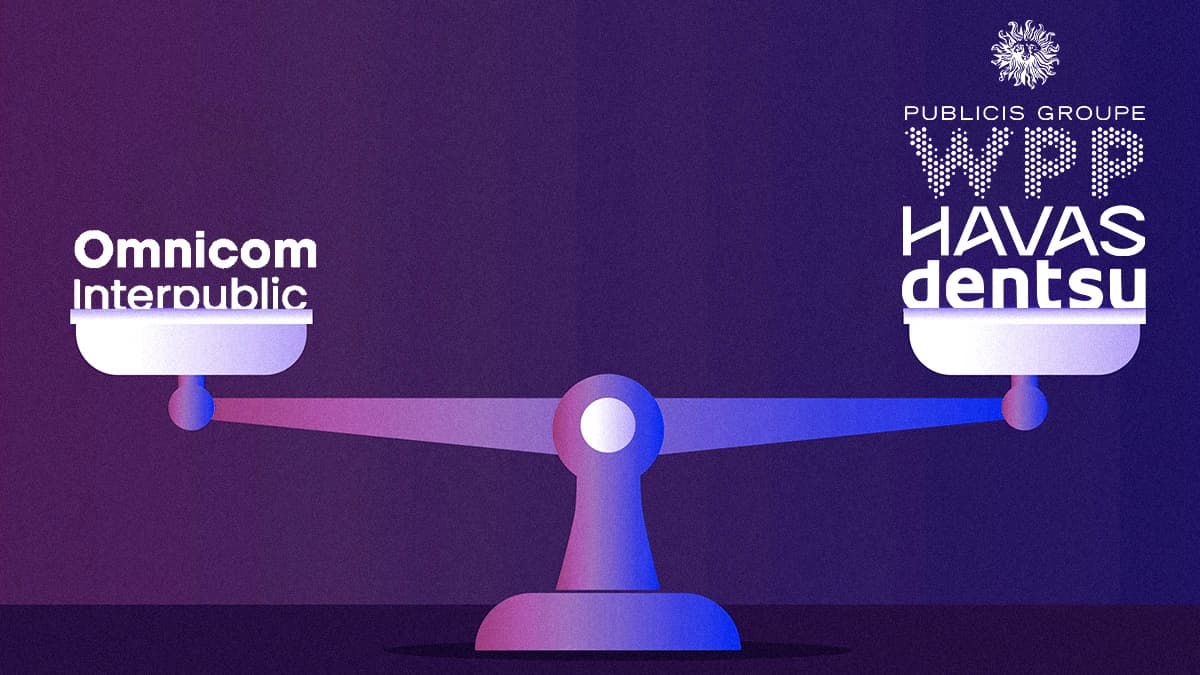
The CPG and service categories are realigning around a new agency model. And holding companies are losing.
In the first six months of 2024, 73% of announced creative Agency of Record appointments in CPG and professional services went to independent shops. Not to WPP's "connected capabilities." Not to Omnicom's "integrated offering." To teams of 15, 30, 80 people who sold founder access and category obsession instead of holding company process.
The numbers get sharper when you filter for retention. Of the 41 CPG and services AOR relationships that passed the three-year mark in 2024, 34 are with independent agencies. The holding company AORs that survived that threshold mostly involve legacy relationships predating the current CMO. The new appointments: overwhelmingly indie.
This is about what these clients are explicitly buying and what independent agencies are structurally able to sell. Speed. Founder-level accountability on every brief. Category expertise that comes from focus, not from a slide deck claiming "deep vertical knowledge" across 47 industries.
The holding company model optimized for a different era. Global reach. Media buying leverage. The ability to staff 200 people on a piece of business. CPG and service brands in 2024 are buying against that spec sheet. They want the opposite.
The Structural Advantage: What Indie Shops Sell That Holdcos Can't
Independent agencies competing for CPG and services AOR work are selling three things holding companies can no longer credibly offer: decision speed, founder accountability, and focus.
Decision speed means the ECD or CCO is in the first meeting and the last meeting and every meeting in between. No "let me take that back to the team." No "we'll need to loop in the regional lead." The person who pitches the work is the person who makes the work. When a CPG brand needs to pivot creative direction mid-flight because a competitor just launched, the indie shop turns it in 48 hours. The holding company agency needs to schedule a call to discuss scheduling a call.
Founder accountability collapses the org chart. The CMO who signs the contract gets the founder's cell number. Not the account director's number with a promise to "escalate if needed." The founder's direct line. When the work isn't landing, when the media plan needs revising, when the CEO wants to understand the strategy: one call. This isn't a luxury benefit. This is what seals the deal in final rounds when the holding company is promising "senior leadership engagement" and the indie founder is saying "here's my cell, call me Sunday if you need to."
Focus means the agency isn't trying to be everything. They picked a lane. Three indie shops winning CPG AORs in 2024 have "food and beverage" in their positioning documents. Not "consumer goods with F&B expertise." Not "omnichannel consumer brands including F&B." Food and beverage. Period. When a challenger snack brand is evaluating agencies, the specialist who's only worked food for eight years beats the generalist who worked food twice.
The holding company counter-pitch: "But we have global scale." The client response: "I need work that moves the business in North America, and I need it by Thursday."
The Pitch Moment: Where AOR Deals Turn
AOR decisions turn on three moments. Independent agencies are structurally designed to win all three.
Moment one: chemistry meeting. Holding companies send the pitch team. Five people who will transition to "the account team" after the win. Independent agencies send the people who will actually do the work. Founder, ECD, strategy lead. The same three people in chemistry and in month six of the relationship. CMOs know when they're being romanced by a team that will vanish post-contract.
Moment two: strategic response. The brief drops. Agencies have two weeks. Holding companies run the brief through process: brief intake, strategy workshop, creative brief development, internal review, creative development, internal rounds, pitch deck production. The work that reaches the client went through six internal approval layers. Independent agencies brief strategy and creative in the same room on day one. No layers. The work that reaches the client is what strategy and creative built together without a creative brief template or a deck review meeting.
Moment three: the follow-up question. Client asks: "What if we need to expand into a new product line mid-year?" Holding company answer: "We have a process for scope expansion and can bring in resources from our innovation practice." Independent agency answer: "We're in. That's what the retainer covers. When do you need to see territories?"
The holding company is selling process. The client is buying momentum.
Why CPG and Services Specifically
CPG and professional services brands share a problem: they need to move faster than their category historically moved, but they're not tech startups. They need rigor and velocity at the same time. Holding companies built for rigor. Independent agencies built for velocity. The brands caught in the middle are choosing velocity.
CPG brands face compressed innovation cycles. A new energy drink format goes from insight to shelf in nine months now. The agency relationship needs to match that pace. The holding company model involves global brand guidelines, regional adaptation processes, trade marketing coordination across 12 markets. The indie model involves the founder and the ECD seeing the prototype in month two and shipping brand world creative in month five. The CPG brand doesn't need the global infrastructure. They need the work that makes the buyer pick it up at Whole Foods.
Professional services brands: law firms, consultancies, financial services firms. Their agency needs aren't about mass reach. They're about precision targeting and brand positioning in a narrow universe of decision-makers. A B2B services firm hiring an AOR wants thought leadership programs, conference presence, C-suite content. Holding companies pitch "integrated B2B solutions." Independent B2B specialists pitch: "We only do this. We know the three conferences that matter. We know the seven publications your buyers read. We've written for four of them."
The categories that still go holding company: automotive, pharma, telecom. Categories where regulatory complexity, dealer networks, and true global coordination create structural moats. CPG and services don't have those moats. Speed matters more than scale. The indie agencies win.
The Retention Math: Why These Relationships Last
AOR retention rates tell the story. Holding company creative AORs in CPG: 2.3 years average tenure. Independent agency creative AORs in CPG: 4.1 years. The gap comes from how the relationships function after the honeymoon.
Year one: holding company delivers. The pitch team transitions to the account team, but the work still flows. The CMO is happy. Year two: the pitch team is gone. The ECD who sold the work is on a different account. The strategist left for another agency. The client is working with generation two of the team. Not the team they bought. Independent agencies in year two: same founder, same ECD, same strategist. The people who pitched are the people who stayed.
Year three is where it breaks. The holding company client realizes they're working with institutional knowledge, not human relationships. The brief goes to people who weren't there for the original positioning work. The strategy feels paint-by-numbers. The CMO starts taking calls from recruiters dangling other agencies. The independent agency in year three: the founder still takes the client's Sunday calls. The ECD still knows why they made the brand decisions they made in month four. The relationship has compounding returns.
The financial incentive structure matters here. Holding company account teams get compensated for new business wins. Client retention is a baseline expectation, not a bonus driver. Independent agency founders get compensated when the client renews. Retention is revenue. The incentive alignment produces different behavior.
What This Means for 2025
The pattern isn't reversing. CPG and services brands that moved to independent AORs in 2022-2023 are renewing in 2025. The holding companies that lost those pitches are watching the categories shift.
Holding companies have three moves. One: launch "independent agency incubators" inside the network. WPP tried this with Specialist Practices. Omnicom tried this with Omnicom Boutique Collective. Clients see through it. An incubator inside a holding company is still a holding company shop with holding company overhead and holding company process. Two: acquire the independent agencies winning the pitches. This works until the founder leaves at earn-out and the client follows. Three: accept that some categories are structurally better served by shops they'll never own.
Most holding companies are choosing option two and pretending it's option three.
Independent agencies are making a different bet. Instead of selling to holding companies at peak valuation, they're building for long-term category ownership. A food and beverage specialist with 15 CPG AORs is worth more independent than as a WPP subsidiary. The math works when retention compounds and clients refer other clients in category. The holding company can't offer that math.
The CMOs making these decisions aren't experimenting. They're solving for what their businesses need: speed, accountability, focus. The agencies that can deliver those three things are structurally independent. Not independent as a branding position. Independent as an operational capability.
The AOR model isn't dead. It's reallocating to agencies that can execute against what AOR relationships actually require. The holding companies built a service model for a problem clients don't have anymore. The independent agencies built for the problem clients have right now.
When the next wave of CPG and services AOR pitches happens in Q1 2025, the holding companies will show up with decks about connected capabilities and integration. The independent agencies will show up with the founder's cell number and a portfolio of work that moved the business. The clients will keep choosing the cell number.
Free Agency Media Editorial
All news