Independent Agencies Are Winning Programmatic DOOH With Three-Person Teams
The tech stack that cost holding companies $400K annually now costs $60K. Small shops are running campaigns across 50,000 screens without owning infrastructure.
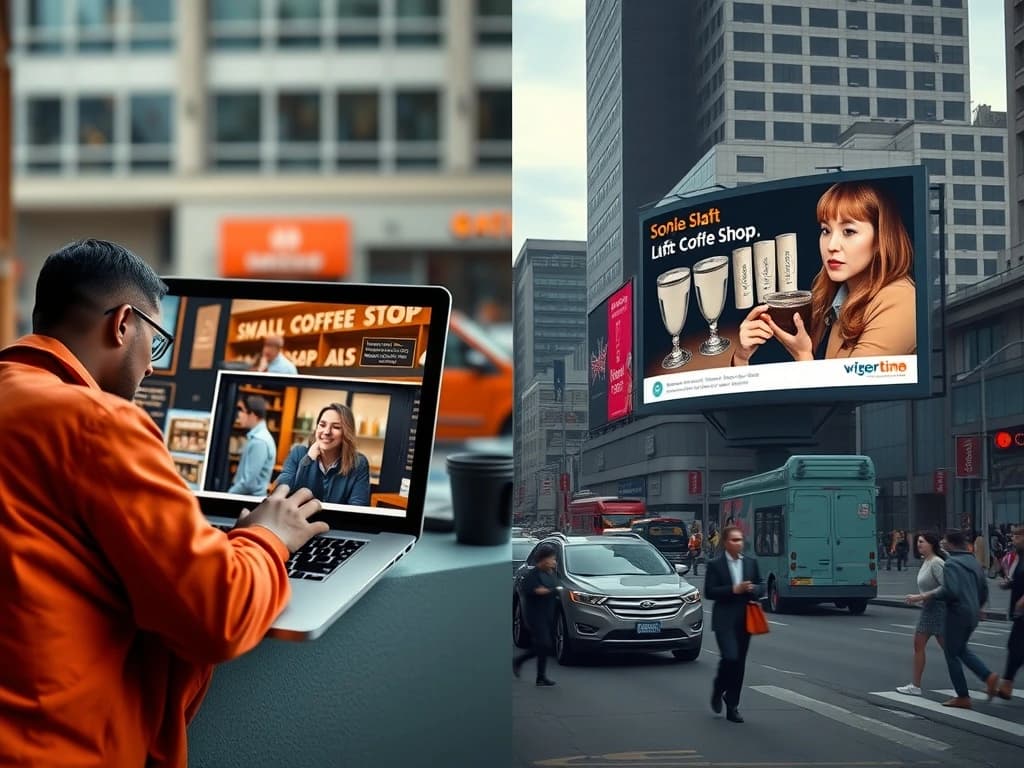


The holding companies spent $2.3 billion building programmatic DOOH infrastructure over the last five years. Independent agencies are accessing the same tech for $5,000 a month. The democratization happened so fast that the industry conversation hasn't caught up to the market reality. Small shops are running campaigns across 50,000 digital billboards in 30 cities without owning a single screen or employing a single media planner with a holding company pedigree.
The pattern is hiding in plain sight. Search volume for "independent agency DOOH" sits at zero. Nobody is looking for what's already happening. The conversation moved from "can small agencies do this?" to "who do we hire to execute it?" without the industry press noticing the transition. The question isn't whether independents can compete in programmatic out-of-home. The question is why holding company media desks are losing pitches to shops that didn't exist three years ago.
The Tech Stack Leveled the Field
Programmatic DOOH democratization didn't come from a single platform breakthrough. It came from vertical integration of formerly separate tools into accessible suites that require expertise, not infrastructure. The stack that cost $400,000 in annual licensing fees in 2019 now costs $60,000. The team that required 12 specialists now requires 3 smart generalists who can read campaign data and optimize in real time.
The vendor landscape shifted. Vericast, Broadsign, Vistar Media, Place Exchange, and Hivestack built self-service platforms that put Fortune 500-caliber DOOH buying power into shops with 15 people and a Slack channel. The barrier to entry dropped from "build a media desk" to "learn the platform." Independent agencies already knew how to learn platforms fast. They'd been doing it with Meta, Google, TikTok, and programmatic display for years. DOOH was just one more dashboard.
That speed advantage compounded. The client education requirement became the actual competitive wedge. Holding company media desks sell DOOH as a line item in a broader plan. Independent agencies sell it as a distinct channel with unique attribution models, creative requirements, and audience targeting capabilities that require explanation. The shops that win aren't the ones with the biggest media budgets. They're the ones that can walk a CMO through why a campaign triggered billboards within 500 meters of 47 Whole Foods locations when weather data showed temperatures above 75 degrees qualified as strategic thinking, not gimmickry.
The creative component separated competent execution from winning work. DOOH creative isn't display creative at larger dimensions. It's environmental. Contextual. Momentary. The format demands motion, brevity, and visual clarity that translates across screen sizes from 6x3 foot bus shelter displays to 50x20 foot highway spectaculars. Independent agencies with in-house creative teams already structured for rapid iteration had the advantage. They could build, test, refine, and ship DOOH creative in the same sprint cycle they used for social and display. The holding company model briefed the media team, waited for creative from a separate department, and iterated through three approval layers. It couldn't match the velocity.
That velocity gap widened with every campaign cycle. While holding companies moved creative through departmental handoffs, independent shops were shipping their third variation and reading performance data. The learning curve compressed. The optimization cycles accelerated. The client saw results in weeks, not quarters.
The Pitch Dynamics Inverted
The traditional media pitch followed a predictable structure. Holding company presents scale: access to X million screens, buying power across Y markets, existing relationships with Z vendors. Independent agency presents agility: faster timelines, direct client access, integrated creative and media strategy. DOOH inverted that dynamic.
Scale became a commodity. Every agency with a Vistar Media login has access to the same inventory. The pitch shifted from "how many screens can you access?" to "how intelligently can you target and optimize?" Buying power stopped mattering when the platforms equalized pricing across agencies regardless of volume. A 10-person shop placing $200,000 in DOOH spend pays the same CPM as a holding company desk placing $20 million.
That pricing parity changed everything. The vendor relationships that mattered weren't with screen owners. They were with data providers. Independent agencies built direct partnerships with location data companies, weather APIs, mobile attribution platforms, and foot traffic measurement tools. The integration work connecting campaign triggers to real-time data feeds became the differentiator. Holding companies had vendor relationships managed at the network level with annual contracts and quarterly business reviews. Independent shops had vendor relationships managed by the person actually building the campaigns, who could call the data partner directly when something needed custom configuration.
Client education became the entire pitch. The DOOH conversation requires explaining programmatic mechanics, attribution models, creative specifications, and measurement frameworks that most clients encounter for the first time. Holding company media leads present decks. Independent agency leads present working sessions where the client learns the channel while building the strategy. The approach that wins isn't "trust us, we're experts." It's "let's learn this together, and here's how we'll measure what works."
That collaborative approach builds client confidence faster than expertise claims ever could. When the client understands the mechanics, they understand the results. When they understand the results, they increase budgets. The education investment pays off in retention and expansion.
The Work Proves the Model
The campaigns running right now show what's possible when creative and media strategy integrate from the start. A DTC skincare brand triggered digital billboards in 12 cities to display different creative based on local UV index data. High UV days showed sun protection messaging. Overcast days showed hydration messaging. The campaign ran for six weeks across 2,400 screens with 847 different creative variations. Attribution data showed a 34% lift in online purchases within 72 hours of exposure in test markets compared to control markets. The agency that executed it has 11 people.
A regional QSR chain ran DOOH creative that changed based on proximity to competitor locations. Billboards within 800 meters of a major competitor's drive-thru showed direct competitive messaging. Billboards outside that radius showed brand-focused creative. The campaign required real-time location data integration with programmatic bidding logic that triggered creative swaps based on GPS coordinates. The attribution model tracked mobile device IDs exposed to the creative and measured store visits within seven days. The results showed 23% higher visit rates from devices exposed to competitor-proximity creative versus brand-focused creative. The agency has 8 people and launched 18 months ago.
A B2B software company targeted digital screens in 6 airports, 14 conference centers, and 31 co-working spaces in markets where their ideal customer profile over-indexes. The creative ran only during business hours on weekdays. The targeting logic excluded weekends and holidays. The measurement framework tracked LinkedIn profile views, website visits, and demo requests from companies headquartered in the markets where the campaign ran. Attribution showed a 56% increase in demo requests during the campaign period versus the prior quarter. The agency that built it has 14 people and no dedicated media department.
These results aren't outliers. They're the new baseline. The agencies shipping this work didn't get there through media buying relationships or screen ownership. They got there through technical fluency with programmatic platforms and creative teams that understand environmental context. The competitive advantage isn't access. It's execution speed and attribution sophistication.
The Overhead Arbitrage Is Real
Holding company media desks operate with cost structures built for a pre-programmatic era. The teams are large because the workflow assumes manual insertion orders, vendor negotiations, and campaign trafficking that requires human intervention at every step. Programmatic DOOH eliminated 70% of that work. The holding companies still carry the headcount.
Independent agencies built their operations assuming programmatic infrastructure from day one. The team structure reflects it: one strategist who understands audience targeting and attribution, one campaign manager who builds the buys and optimizes based on performance data, one creative lead who ships motion assets built for environmental context. Three people can execute what used to require 12.
The client sees it in the fee structure. Holding company DOOH campaigns typically carry 15-20% margin on media spend plus hourly fees for strategy and creative. Independent shops charge flat monthly retainers that include strategy, creative, campaign management, and reporting. The math works because the overhead is a fraction of the holding company model. A $50,000 monthly DOOH budget with a $15,000 retainer gives the independent shop better margins than the holding company gets on $200,000 in spend.
The velocity advantage compounds. Independent agencies ship campaign optimizations in hours, not days. Creative iterations happen in Slack threads, not email chains through three departments. Performance data flows directly to the people building the campaigns, who can adjust targeting, creative rotation, or bidding strategy without waiting for approval. The client feels the difference. Campaigns improve week over week instead of quarter over quarter.
That operational efficiency creates pricing power. Independent shops can undercut holding company fees while maintaining healthier margins. They can reinvest those margins into platform expertise and creative capabilities. The cycle reinforces itself. Better work at lower prices attracts better clients. Better clients fund better capabilities. Better capabilities win more competitive pitches.
The Forward Signals
The search volume tells the story the industry isn't saying out loud yet. Zero searches for "independent agency DOOH" means the conversation hasn't reached the discovery phase. Clients aren't looking for small shops that do programmatic out-of-home because they don't know small shops can do programmatic out-of-home at holding company scale. The market opportunity is hiding in the gap between what's possible and what's understood.
The platform vendors are accelerating the democratization. Vistar Media, Broadsign, and Place Exchange are actively recruiting independent agencies into their ecosystems. The vendor incentive structure rewards agencies that innovate on the platform, not agencies that spend the most. A small shop that builds a novel attribution model or creates a new audience targeting approach gets featured in vendor case studies and promoted to other clients. The traditional holding company advantage built on volume matters less than technical creativity.
The creative formats are evolving faster than the industry conversation tracks. Dynamic creative optimization, weather-triggered messaging, location-based personalization, and real-time data integration are table stakes for competitive DOOH now. The agencies winning are the ones treating DOOH as a programmable medium, not a static billboard that changed from print to digital. That mindset favors small teams with integrated creative and media capabilities over large teams with departmental silos.
The measurement frameworks are maturing. Mobile device ID tracking, foot traffic attribution, brand lift studies, and online conversion measurement give DOOH the accountability that outdoor advertising never had. The agencies that can explain the attribution model and optimize based on performance data have the advantage. Independent shops built their entire value proposition on measurable performance. DOOH just became another channel where that expertise applies.
The client sophistication is increasing. CMOs who spent the last five years learning programmatic display and social advertising are ready to learn programmatic DOOH. They understand audience targeting. They expect real-time optimization. They want integrated creative and media strategy. The holding company pitch of "trust us, we'll handle the complexity" loses to the independent pitch of "let's build this together and measure what works."
The programmatic out-of-home market will grow to $8.1 billion by 2028, according to MAGNA Global projections. The growth won't come from holding companies building bigger media desks. It will come from independent agencies making the channel accessible to clients who would never have considered traditional outdoor advertising. The democratization already happened. The industry is still catching up to what that means for who wins the work.
The shops that win the next five years will be the ones that understood this shift first. They're hiring now. They're building platform expertise. They're integrating creative and media from the start. They're teaching clients how programmatic DOOH works while executing campaigns that prove the model. The holding companies will still have the scale. The independent shops will have the velocity, the margins, and increasingly, the clients.
Free Agency Media Editorial
All news