The Creator Commerce Gap No Independent Agency Has Claimed
Brands are building creator pipelines in-house and AI tools are faking UGC for free. The agencies that survive won't be the fastest. They'll be the ones selling a system instead of a service.

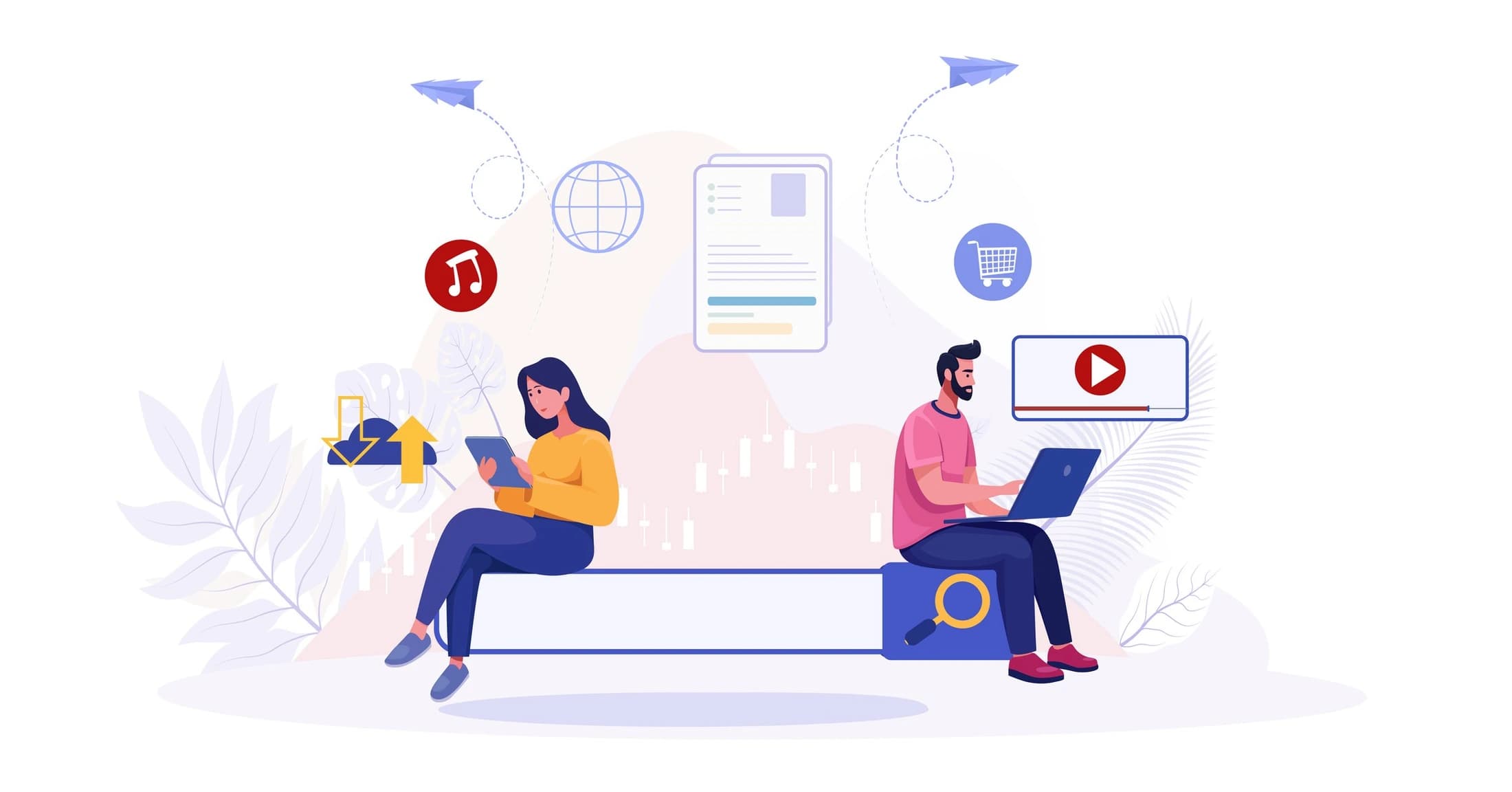

Type "creator commerce agency" into Google right now and you'll find a shopping-funnel SaaS product, a creator marketplace with 270,000 registered profiles, and three separate blog posts still trying to define what "creator commerce" even means, one from 2022, one from 2023, one republished in 2025. Of the first nine organic results, exactly two are agencies. Zero are independent shops positioning themselves as the systems layer between brands and creators. That's the gap, and it's a bigger story than any single agency winning a UGC brief.
The influencer economy generates real search interest, if a modest one: "influencer economy" as a standalone term pulls 110 searches a month, a number that undersells how much money is actually moving through the category. But the eight-keyword cluster FAM tracks around this space, "creator commerce agency," "influencer marketing indie," "UGC production agency," "creator-driven campaign," "performance creative agency," and the rest, currently returns a combined search volume of zero. Not low. Zero. The conversation is happening everywhere except in the query bar. That mismatch is the tell: this market is moving faster than the vocabulary describing it, which means whoever builds the category language first controls the positioning. Right now, almost nobody in the independent agency world is trying.
Two Forces Squeezing the Middle
The story everyone wants to tell is indies beating holding companies at creator content. That story is true, and small. The real story is that independent agencies sit in a vise between two forces that don't care whether an agency is independent or not, and both are disintermediation engines aimed at the same target: the agency itself.
The first force comes from inside the brand. Jesse Pujji has been documenting this on X for months: brands doing $50 million and up in revenue where 50 to 60 percent of their winning ads now come from creators the brand has "never met," sourced, briefed, and managed through structured programs run by a single marketing assistant. Not a creative team. Not an agency of record. One person, a framework, and a pipeline of creators the brand found itself. Pujji's posts describe these programs outperforming traditional creative teams on ROAS and new-visitor acquisition, which means the brands running them aren't cutting agencies because the work is worse. They're cutting agencies because the work is comparable and the overhead is gone.
Unilever's move backs this up at a scale most independent shops will never touch directly, but it sets the tone for everyone downstream: reports circulating on X describe the company shifting roughly half its ad budget toward 300,000 social media influencers, away from traditional corporate advertising entirely. When a company running Dove, Axe, and Hellmann's reallocates that much spend toward direct creator relationships, every mid-market brand watching takes note. The lesson isn't "influencers work." Everyone already knew that. The lesson is "we don't need an intermediary to make it work."
The second force is newer and moves faster. A post from the account compoundordie captured it bluntly: traditional ad agencies are facing disruption from individuals with zero film experience, armed with simple AI tools, quietly capturing brand ad budget through AI-generated UGC ads. This isn't hypothetical. AI UGC tools now let a solo operator produce the same "authentic, phone-shot, unpolished" aesthetic that used to require an agency's creator network, production coordination, and rights management. The thing that made UGC valuable, the appearance of a real person saying real things, no longer requires a real production process to fake convincingly. That collapses the cost floor for exactly the kind of work most UGC-focused agencies built their business on.
Squeeze from the top: brands building in-house creator pipelines. Squeeze from the bottom: AI tools letting anyone fake the format. The agencies caught in the middle, doing exactly what they did in 2022, sourcing creators and shipping briefs, are the ones getting compressed from both directions at once.
What Separates a Vendor From a System
Here's where the agencies actually winning this moment diverge from the ones about to get disintermediated, and it isn't speed or authenticity. Every agency in this space claims to be fast and authentic. That's table stakes, not differentiation.
The agencies with defensible positions have stopped selling UGC as a deliverable and started selling the system that produces UGC repeatedly, at scale, with measurable performance attached. That's a different business. A brand can build an in-house team to manage a rotating set of creators. What's much harder to replicate in-house is a sourcing methodology tested across dozens of brands, a briefing framework that consistently produces winning creative instead of one-off hits, and a performance optimization loop that tells you which creator archetypes convert for which product categories before you spend the money to find out.
Domenic Iandolo's account of his own agency's pivot is a useful data point here, even at small scale. He started offering UGC collaborations in 2023, upsold the service to hundreds of e-commerce brands, and added over $60,000 in revenue that year from that single line, positioned alongside paid media and community management rather than as a standalone commodity. The number itself is modest. The structure is the point: UGC as one module inside a larger retained system, not a one-off production job priced by the video.
Mikayla Groody, co-founder of the411agency, makes the same case from a different angle, positioning her shop as "built by creators" with firsthand experience across creation, strategy, and campaign management, specifically framed around what actually drives views and conversions for app growth. That's not a UGC vendor pitching turnaround speed. That's an agency claiming domain expertise a brand's internal marketing assistant doesn't have and can't easily hire for, because the expertise lives in pattern recognition across many campaigns, not in any single creator relationship.
This is the dividing line. A UGC vendor sells output: five videos, ten videos, a rotating creator roster. A systems builder sells the thing that makes output repeatable and improvable: sourcing infrastructure, briefing frameworks tuned by category, and a performance layer that turns creator content into a testable, optimizable media channel instead of a one-time creative bet. Brands can build the first in-house with a single hire. They cannot easily build the second without years of cross-brand pattern data an agency accumulates by working with dozens of clients at once.
What the Search Results Actually Show
Go back to that "creator commerce agency" SERP, because the gap in it shows exactly where the opportunity sits. Creator.co ranks second with its "data-driven influencer search engine" and marketplace of 270,000-plus registered creators, essentially productizing the sourcing function that used to require an agency's relationships. LoudCrowd and ShopLTK show up with explainer content defining "creator commerce" as a category, content that's been republished and updated since at least October 2023 without the term ever stabilizing into common usage. Avenuez runs a listicle, "13 Best Creator Commerce Agencies for DTC Brands," published in mid-2026, that functions as the only piece of content in the entire top nine actually trying to route traffic toward agencies rather than software.
Only two operating agencies crack that page organically: New Engen, describing itself as a "creative-led digital marketing agency connecting content, media, creators, affiliate, and measurement," and Public Label, whose blog post "Creators as Commerce" argues that commerce creators need to be fluent in performance, not just content. Both are making the systems-builder argument in their own language. Neither dominates the page. The infrastructure platforms do.
That's the real signal buried in a zero-volume keyword cluster: the SaaS layer has already claimed the discovery real estate around "creator commerce," while the agency layer, the part of this market actually doing the strategic thinking brands can't replicate with software alone, hasn't shown up to fight for that language yet. Whoever moves first on owning "creator commerce agency" as a category, rather than ceding it to marketplaces and definitional blog content, captures search demand that's about to exist even though it barely does today. A hundred and ten monthly searches for "influencer economy" looks small until you remember that term didn't exist in common usage five years ago and now anchors billion-dollar budget reallocation decisions at companies the size of Unilever.
The 404 That Explains the Risk
Here's the part of this story that isn't hypothetical. Sodaspoon Marketing, listed under sodaspoonmarketing.com, currently returns a Netlify 404 page. "Site not found." The kind of broken link that happens when a domain lapses, a hosting migration goes wrong, or a business quietly stops maintaining its front door to the internet.
We don't know which of those explains it, and we're not going to guess. What we can say is what's verifiable: an agency's web presence in this exact category, at this exact moment, has gone dark. In an industry where the entire pitch to brands is "we can manage your digital presence and creator relationships better than you can," a dead website is not a small operational hiccup. It's the most literal possible illustration of the disintermediation risk running through this whole piece: an agency that exists as a vendor relationship rather than a system a client depends on is exactly as durable as its own uptime.
That's not a knock on any specific agency's work. It's a data point about the category. When the differentiator is speed and output rather than infrastructure and process, the agency's own resilience mirrors the fragility of the service it sells. A brand running a Pujji-style in-house creator program doesn't notice if its agency's website goes down, because it was never depending on that agency for anything it couldn't eventually build itself. A brand depending on an agency's sourcing methodology, briefing system, and performance optimization loop notices immediately, because that infrastructure isn't sitting on a marketplace or a single Netlify deploy. It's embedded in how the brand runs its whole creator program.
Where the Winners Actually Sit
Line up what's happening across this space and a pattern holds. New Engen and Public Label show up in organic search because they're making an infrastructure argument, not a speed argument. The411agency, per Groody's own framing, sells category expertise built from creator-side experience rather than agency-side process. Domenic Iandolo's $60,000 UGC upsell worked because it was bundled into a broader retained system alongside paid media, not sold as a standalone commodity that any AI tool or in-house hire could eventually replicate. Every one of these examples points the same direction: durability comes from owning a repeatable system, not from owning a fast turnaround time.
The agencies most exposed to disintermediation are the ones still selling exactly what a single marketing assistant with a spreadsheet and a Meta Ads account can now do in-house, or what an AI tool can now fake convincingly enough to capture the same budget. If your pitch in 2026 is "we find creators and produce content quickly," that pitch was strong in 2022 and is now competing against a $50 million brand's internal hire and a stranger with a laptop and an AI generator. Neither of those competitors needs your relationships. Both of them need exactly what you're not currently selling: a system that tells them which creators, which briefs, and which performance signals actually move revenue, tested across enough brands and enough spend to be trustworthy.
This is where independence actually functions as an advantage rather than a workaround. A single brand's in-house UGC operation, however well run, only ever sees its own data. It optimizes against its own campaigns, learns from its own wins and losses, and stays blind to what's working three doors down in the same category. An independent agency running creator programs across a dozen accounts sees pattern data no single brand's marketing assistant ever will. That cross-account intelligence, not headcount, not speed, not even authenticity, is the asset a brand cannot build internally no matter how good its one hire is. It's also the asset that no AI generation tool can fake, because AI tools produce content, not accumulated performance judgment.
What This Looks Like Going Forward
The influencer economy isn't consolidating toward holding companies, and it isn't consolidating toward pure in-house operations either, whatever the loudest posts on X suggest in either direction. It's splitting into two tiers, and the split is happening faster than the search data currently shows. On one side: brands and AI tools handling the commodity layer, the high-volume, low-complexity UGC that doesn't require pattern recognition across accounts to produce, the kind of content a marketing assistant or a generation tool can now output convincingly enough to run in a feed. On the other side: independent agencies that have repositioned as the systems layer, selling sourcing infrastructure, briefing frameworks, and performance optimization as a retained capability rather than a per-video production service.
The zero search volume sitting behind terms like "creator commerce agency" and "UGC production agency" won't stay at zero. It's a leading indicator of a category still forming its vocabulary while the actual budget shift, the kind Unilever is making at a half-billion-dollar scale, has already started moving. Whichever agencies build genuine infrastructure now, and claim the language for it now, capture the search demand and the client trust before that demand curve turns upward. Whichever agencies keep pitching speed and authenticity as their whole differentiator will find themselves in a bidding war against a single marketing assistant on one side and a free AI tool on the other, and neither of those competitors sleeps, negotiates rate cards, or needs a functioning website to keep operating.
Independent agencies don't capture the influencer economy's next phase by outrunning holding companies. They capture it by building the one thing neither an in-house hire nor an AI generator can replicate: judgment, accumulated across enough brands, enough briefs, and enough performance data to know what works before the money gets spent. That's not a survival strategy. That's the strategy that turns a UGC vendor into infrastructure a brand can't afford to walk away from, which is the only position in this market that a 404 page can't take down.
Free Agency Media Editorial
All news