The Crocs Campaign Everyone's Praising and No One Can Credit
Crocs' silent, sitcom-style mascot is already winning over marketers online, but the independent agency behind it hasn't said a word yet.
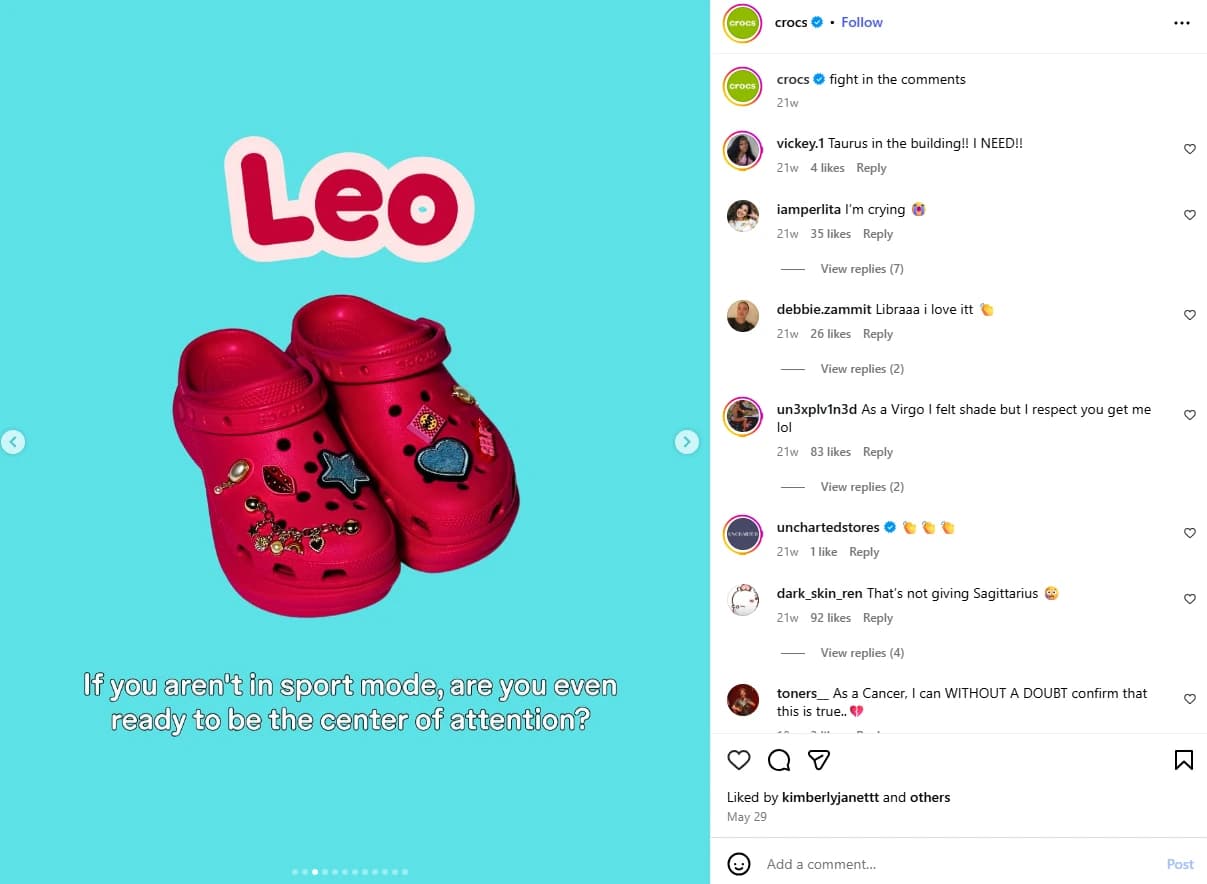
A footwear brand just handed a piece of Fortune 500 creative work to an independent agency, and the internet found out from the work itself, not a press release. There's zero trade coverage, zero SERP results connecting the two names, and zero social posts that mention the agency by name. And yet the campaign is already being dissected, praised, and reverse-engineered by marketers on X who have no idea who made it.
That's the story. Not the mascot. Not the jokes. The silence around a body of work loud enough to generate its own analysis without a single credit line attached to it.
Crocs tapped Arete Create. The proof isn't in a case study or an awards submission. It's in the fact that nobody has said it out loud yet, and the work is speaking for itself anyway.
The Silence Around a Loud Campaign
Run the numbers on this cluster and you get a flat line. "Crocs agency," "crocs campaign," "independent agency wins," "brand agency relationship." Combined search volume across the set: 0. Competing agencies showing up in that space: 0. That's a keyword desert, and an unusual one for a brand that pulls 2.8 million Instagram followers and has built itself into a business worth more than $4 billion.
Pull the top search results for "crocs" and you get exactly what you'd expect from a brand this large: the retail site, the Instagram handle, the Amazon store page, the Wikipedia entry, a Rack Room Shoes listing, a Yelp aggregation of 1,983 customer reviews averaging 3.2 stars, and a YouTube video comparing real Crocs to Walmart knockoffs. Not one of those seven results mentions who's behind the brand's current creative work. Not one connects Crocs to an agency, independent or otherwise.
That's the gap. AdAge isn't covering it. Trade press hasn't picked it up. The agency search terms sit at zero volume because nobody's looking yet, which means nobody's found it yet, which means this is the first document connecting the dots. Arete Create did not put out a launch release. Crocs did not tag them in a caption. The work simply started running, and the internet noticed it before it noticed the maker.
That inversion matters. Most agency wins get announced before the creative drops: the trade story, the LinkedIn post, the awards-circuit teaser. This one ran backward. The mascot showed up first. The praise showed up second. The agency credit still hasn't shown up at all. In an industry that treats new business announcements as its primary currency, Arete Create let the work be the announcement instead.
Niles as a Sitcom Character, Not a Mascot
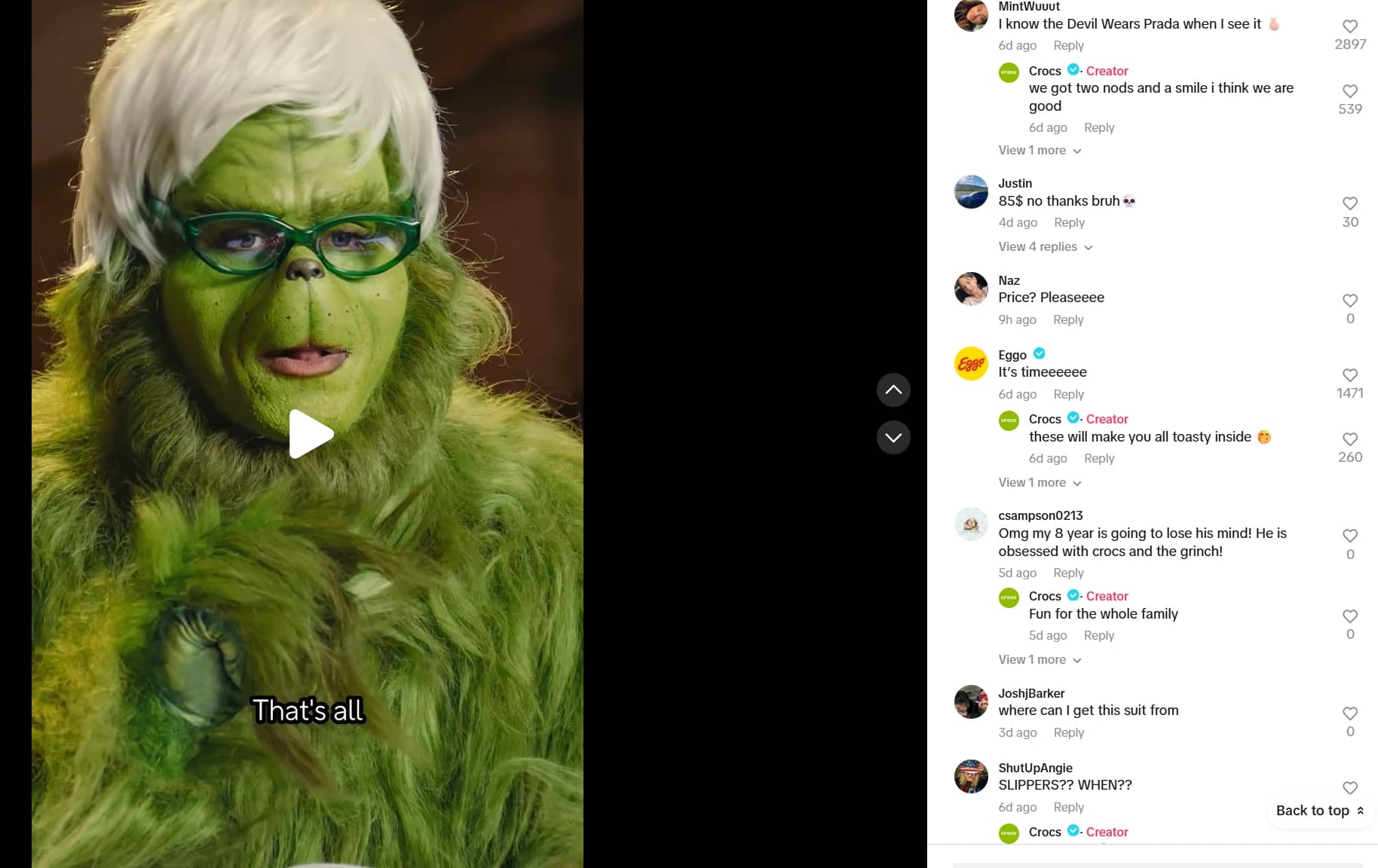
The creative center of this campaign is a crocodile named Niles, and the choice generating actual marketer conversation isn't the character design. It's the construction logic underneath him.
On X, one post from adWhite_mrktg (August 2026) zeroes in on Crocs treating Niles "like a sitcom character with personality layers rather than a static ambassador." That's a specific, technical observation, and it's the right one. Mascots have historically functioned as static logos with legs: same tone, same register, same joke, appearance after appearance. A sitcom character works differently. He has a recurring cast of behaviors. He can be exasperated in one spot and smug in the next. He accumulates personality across a season the way Michael Scott or Jerry Seinfeld does, not the way the Michelin Man does.
That's a production decision as much as a creative one. A static mascot is cheap to repeat and expensive to expand. A sitcom character is the opposite: more expensive to build once, dramatically cheaper to extend, because you're not starting from zero with each new execution. You're writing new episodes for a character the audience already knows.
The second technical detail marketers are circling is the absence of a voice actor. designrushmag flagged it directly in an August 2026 post, framing the silent approach as "cost-effective for global use." That's not a stylistic flourish. It's a distribution strategy disguised as a creative choice. A voice-acted mascot needs a dub, a script adaptation, and a local talent booking for every market Crocs sells in. A silent, physical-comedy character needs none of that. Drop Niles into a Brazilian feed or a Korean feed or a German feed and the joke lands the same way, because the joke was never verbal to begin with.
This is the kind of solve that looks like a punchline in a marketing deck and functions like a supply chain decision. One shoot, one edit, one character whose humor travels because it was never encoded in language. It's the sort of thing that gets built by a team thinking about production economics from the first sketch, not retrofitted after a holding company's global network flags the localization cost in round three of the review.
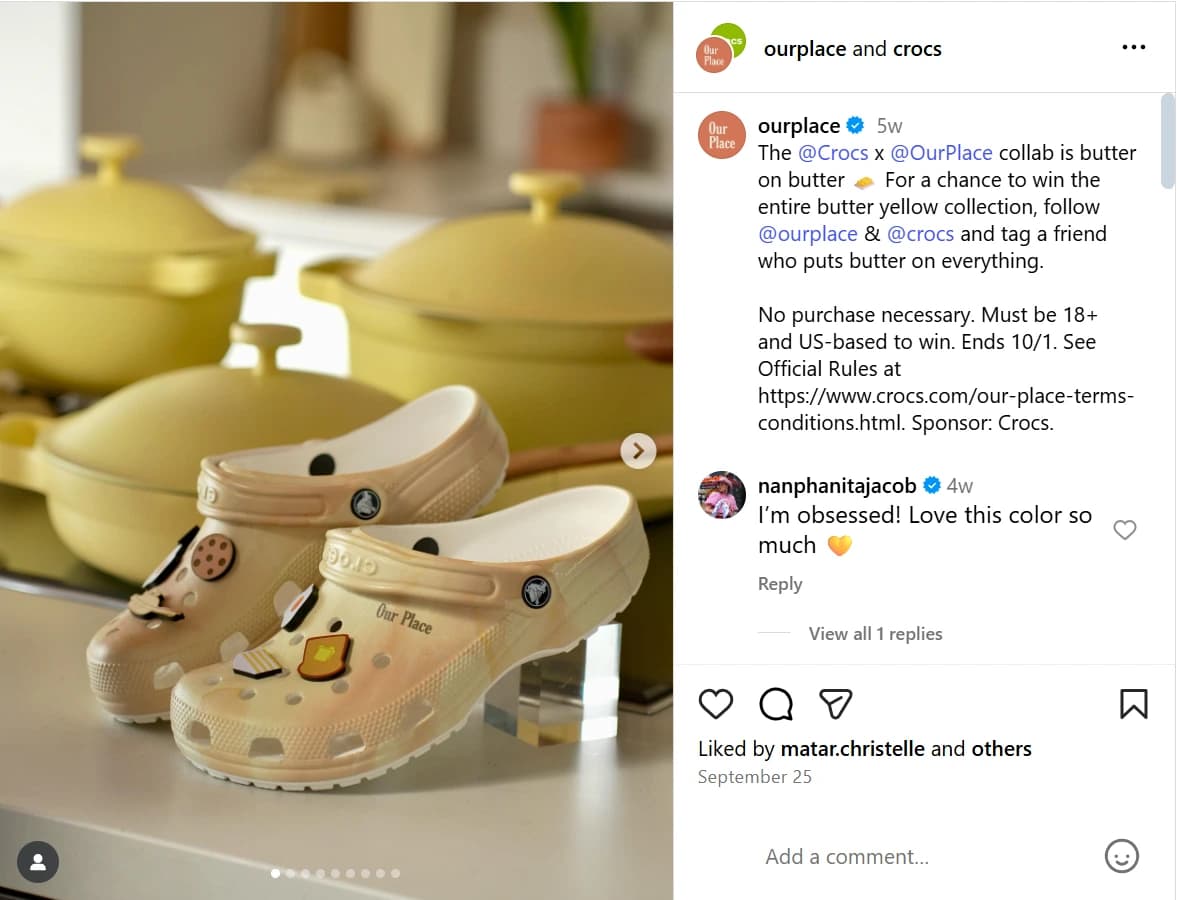
There's a third thread worth pulling. TheNerfertiti's August 21, 2026 take praises Crocs for "leaning into and amplifying existing perceptions instead of fighting them," turning distinctiveness into strategy rather than a liability to manage. That's consistent with a brand that's been doing this for a decade. The 2016 sentiment around Crocs was openly hostile: "I'd rather die than wear Crocs" was a real, widely shared cultural position. Crocs didn't spend the next ten years apologizing for the clog. They leaned harder into the exact thing people mocked, added Jibbitz charms as a customization upsell on top of a $45-plus retail price, got LaRussell fronting the Echo Clog in 2024, got Valkyrae doing a Twilight parody ad that people are still citing. A crocodile mascot who commits fully to being weird, silent, and unbothered isn't a departure from that playbook. It's the same instinct, applied to a new character.
What the Choice Signals About Brand-Side Appetite
We don't know the answer here, and we should say so directly instead of pretending otherwise: there's no public pitch deck, no leaked brief, no on-record quote from a Crocs CMO explaining why they picked an independent shop over a holding company network for this assignment. Nobody has confirmed the review process, the competing shortlist, or the timeline. If you're looking for that reporting, it doesn't exist yet, and we're not going to invent it.
What we can read is the work itself, and the work tells you what kind of brief this was. A brief built around a sitcom-style mascot with a no-dialogue global scalability mechanism is not a brief written by committee. It's a brief written by someone who understood the production math before the pitch even happened, and who wanted a partner capable of executing on that math without six layers of network sign-off standing between the idea and the shoot.
That's the pattern independent agencies keep winning on, and it's worth naming plainly instead of hedging around it. Holding company AOR models are built for coordination at scale: dozens of markets, shared production infrastructure, standardized approval chains. That structure is genuinely valuable when a brand needs the same asset localized and legally cleared in forty countries simultaneously. It's much less valuable when the entire creative advantage of the idea is that it was engineered from the start to skip that exact localization overhead.
Crocs didn't need a network to solve a problem the creative concept had already solved for itself. Niles doesn't talk, so there's no dub. Niles behaves like a recurring character, so there's no need to reinvent the wheel for every new market drop. The idea was built to be nimble. Handing it to a nimble shop instead of a multi-layered holding company network isn't a departure from AOR logic. It's alignment with it. You don't put a lightweight idea through a heavyweight pipeline and call that efficient.
This is also a brand with a track record of trusting distinctiveness over caution. A company that turned a punchline shoe into a $4 billion business by refusing to sand off its rough edges is not a company likely to hand its mascot strategy to whoever produces the safest, most focus-grouped version of a crocodile. They picked culturally fluent over conventionally credentialed. That's a brand actively selecting for the exact quality independence is supposed to produce: an idea unfiltered by network consensus.
Reconstructing the Win Without the Deck
We don't have the pitch. We're not going to fabricate one. What we can do is work backward from the deliverable to the brief, because creative output always leaks information about what was asked for.
Start with the ask implied by the format itself. Nobody accidentally builds a silent, serialized mascot. That's a deliberate answer to a specific, stated problem: how do you give a global footwear brand a recurring character presence without paying a localization tax in every market. The agency that wins that brief is the agency that identifies the constraint before the client has to spell it out twice. That's not a network capability question. It's a creative-team-reads-the-brief-correctly question, and small teams tend to move faster on that read because there are fewer layers between the strategist who spots the constraint and the creative who solves for it.
Then look at tone. TheNerfertiti's read on Crocs "amplifying existing perceptions instead of fighting them" only works if the agency understood Crocs' entire ten-year brand arc going into the room, not just the current-quarter media plan. That's cultural fluency, and it's the exact quality Fortune 500 brands increasingly cite as the reason they're briefing independents alongside or instead of their AOR. You can staff a holding company account with smart people who've never worn a Crocs sandal ironically at a festival. Cultural fluency isn't a resourcing problem. It's a proximity problem, and proximity is something small, culturally embedded shops tend to have in surplus.
None of that constitutes proof of a specific pitch narrative. It constitutes a read on what kind of shop wins this kind of assignment, based on what the assignment actually produced. That's the honest version of this story: we can tell you what the work required. We can't yet tell you what the room sounded like when Arete Create walked in and got the yes. Nobody can, on the record, right now. That gap is exactly why this is a scoop and not a recap.
The Business Logic Nobody's Pricing In Yet
Treat the no-voice-actor decision as a line item, not a punchline, and the math gets interesting fast. A traditional mascot campaign running across a dozen-plus global markets carries real, recurring costs: voice talent booking per territory, script localization and cultural adaptation, studio time for each dub pass, and a review cycle for every market's legal and marketing sign-off on the translated dialogue. Multiply that across the number of markets Crocs sells in and you're looking at a cost structure that scales linearly, sometimes worse, with every new territory added.
A silent, physical-comedy-driven character collapses almost all of that. One shoot, one edit, one character whose humor travels because it was never encoded in language to begin with. The marginal cost of adding market number thirteen is close to zero, compared to a voice-acted campaign where market thirteen means another studio booking and another approval chain.
That's the kind of efficiency gain that should be the headline in a holding company's pitch deck, and typically isn't, because holding company economics are partly built around the scale and cost of exactly that kind of coordinated production work. An agency whose business model depends on managing multi-market dubbing infrastructure has less incentive to hand a client a solution that eliminates the need for it. An independent shop with no legacy production apparatus to protect has every incentive to hand the client the cheapest, fastest, most scalable version of the idea, because that's the version that makes them look sharp, not the version that maximizes billable production hours.
That incentive alignment is worth sitting with. It's not that independents are more creative in the abstract. It's that their business model doesn't reward them for building complexity into a solution that didn't need it. Crocs got a mascot that costs less to run at scale and travels better culturally, and the agency that delivered it had no structural reason to talk them out of the cheaper, better answer.
What Happens Next
Expect the search terms to catch up to the story, not the other way around. Right now "crocs agency" and "arete create" sit at zero combined monthly volume, and that number moves the moment trade press or a case study writeup connects the two names publicly. This piece is early by design. The work has been running long enough to generate organic praise from marketers who don't yet know who made it. That's a narrow window, and it's closing.
Expect other Fortune 500 brands with entrenched, ugly-duckling-turned-cultural-icon brand stories, the kind built on products that carry built-in polarizing sentiment, to look at this case and ask their own AOR relationships an uncomfortable question: could a smaller, culturally fluent team have found this same solve faster and cheaper. That question doesn't kill holding company relationships overnight. Coordinated global production at massive scale is still a real capability with real value. But it does mean the calculus brands run before assigning a project shifts. Size stops being the default answer. Fit becomes the actual question.
And expect Arete Create's silence to end eventually, one way or another. Either they claim the work publicly once the internet finishes connecting the dots on its own, or the credit surfaces through Crocs, through an industry publication doing the reporting this piece just did first, or through the agency's own new business materials the next time they're in a pitch room making the case for why a Fortune 500 marketer should trust a nimble team with a global-scale problem. Whichever way it surfaces, the case study writes itself at that point. It won't need embellishment. The work already did the talking. It's just been talking to an audience that didn't know whose voice it was hearing, which, for a mascot with no voice actor at all, is the kind of quiet irony this story deserves to end on.
Free Agency Media Editorial
All news