The CTV Advertising Category No Independent Agency Has Claimed
Zero independent agencies rank for 'CTV advertising agency.' Platforms and directories own the search results, and that's a vacancy, not a void.

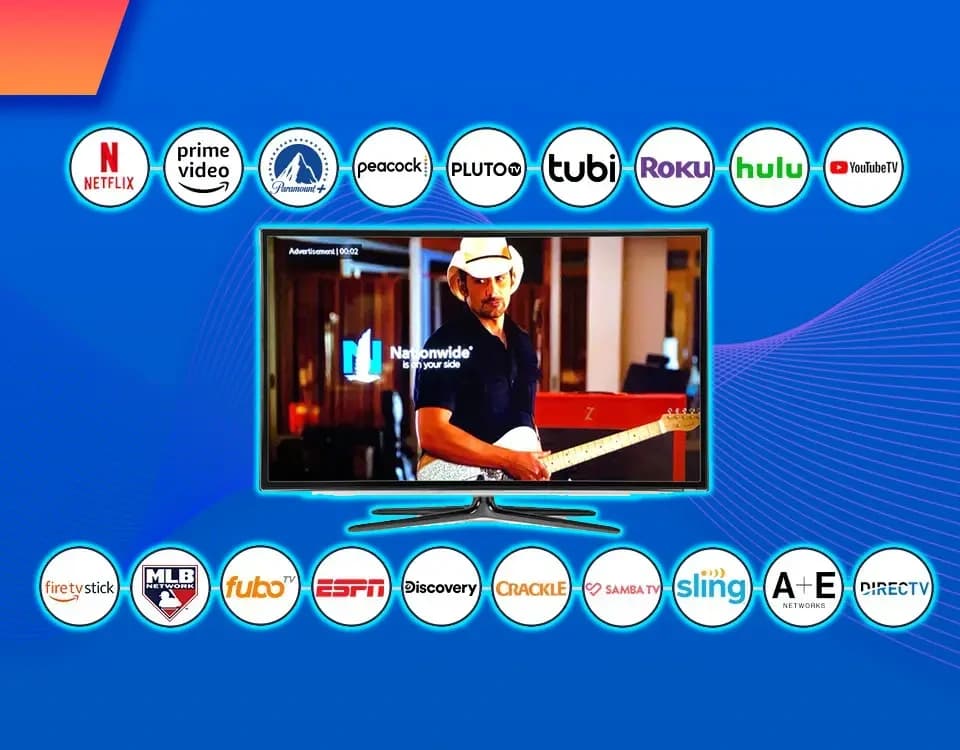
CTV advertising has a search problem nobody in the category wants to name: right now, zero independent agencies rank in the top ten results for "ctv advertising agency." Not one. The keyword cluster pulls 580 monthly searches, "video advertising agencies" alone accounts for 390 of them, and every single result answering that demand is either a platform selling DSP access or a directory selling agency listings by the click. CTV Media, Strategus, Clutch, Optimal, Paramount's own Ads Manager, The Trade Desk, Viant, Brill Media, Simpli.fi. Nine names, zero agencies making the case for CTV as a strategic capability. The category that's supposed to be the fastest-growing line item in the modern media plan is being defined entirely by the companies that sell the pipes, not the shops that build the strategy running through them.
That's not a small gap. That's a vacancy sitting in plain sight while every practitioner on X is having the exact conversation the SERP refuses to host: how do you measure this thing without lying to yourself, how do you avoid becoming a margin-stacking reseller, and how do you build a CTV offering that survives contact with a CFO's second-quarter budget review. The agencies willing to answer those questions in public, with named clients and real numbers, are going to own this search category. Right now nobody is even trying.
The SERP Sells Inventory, Not Strategy
Look at what's actually ranking. Position six is The Trade Desk's own CTV page. Position seven is Viant. Position nine is Simpli.fi, publishing an explainer dated January 13, 2026, titled "What Is CTV Advertising?" These are demand-side platforms answering a query about hiring an agency by explaining what the acronym means. That's not an accident of SEO. That's the entire category ceding the definition of "CTV advertising agency" to the vendors selling the programmatic pipes underneath it.
Position five is Paramount's Ads Manager, built explicitly for indie agencies. That one's worth pausing on, because it's the most honest signal on the page: a major media company decided the fastest way to win independent agency budgets was to build self-serve tools rather than wait for holding company procurement to notice them. More on that later. But positions three and eight are the real tell. Clutch is a directory listicle ranking "highly reviewed" CTV companies by review count. Brill Media is a resource page ranking "best" CTV advertising companies. Neither one is an agency demonstrating capability. Both are aggregation plays monetizing the fact that buyers don't know who to call.
Strip it down and six of the nine results are platforms selling inventory access or explaining their own product. Two are directories monetizing confusion. One is CTV Media, an agency actually positioning itself around data-driven media solutions, and it's sitting at position one almost by default, because nobody else showed up to contest it. That's the whole story of this SERP: a search result that describes a product category instead of a service category, because the agencies who should be answering it haven't bothered to build the content, the case studies, or the point of view that would let them compete for it.
The Reseller Trap Independent Agencies Need to Avoid
Here's the uncomfortable part. A lot of agencies currently offering CTV are doing exactly what that SERP suggests: buying access to Trade Desk, Viant, or Simpli.fi inventory, marking it up, and calling the markup a service fee. That's not a CTV practice. That's arbitrage with a deck.
You can see the promotional version of this playing out on X in real time. Agencies like 44i, Inc., Acorn To Oak Media Group, and PrimediaNetwork are actively pitching CTV as a bolt-on across local TV, cable, and OTT: precise targeting, measurable results, high viewability, quick activation. All true. All also table stakes. None of it differentiates one reseller from another, because the pitch is describing what the platform does, not what the agency adds. Vision 2020 Group has been running the same play at a larger geographic footprint, pushing case studies like its Boucheron campaigns across regional arms in Nigeria, Canada, the UK, and the UAE. Four markets, one message: we can activate CTV anywhere. That's distribution. It's not a moat.
The reseller trap is structural, not a matter of effort. If your CTV offering is "we buy the inventory so you don't have to," your margin is exposed to every platform that decides to build self-serve tools for agencies, which, as it happens, is precisely what's already happening. A defensible practice needs three things a pass-through arrangement doesn't have: a measurement stack the agency owns and can defend under scrutiny, creative built specifically for the CTV environment rather than repurposed from a :30 linear spot, and direct commercial terms negotiated with platforms rather than inherited markup. Agencies missing all three aren't running a CTV practice. They're running a media buying desk with a streaming logo on it.
Measurement Skepticism Is the Real Conversation
None of the promotional posts above mention the thing practitioners are actually arguing about, which is whether the measurement underneath CTV can be trusted at all.
Bryan Bumgardner laid out the sharpest version of this on X: CTV works best as a top-of-funnel channel for long-consideration products, hearing aids being his example, and its real value shows up as lift across other campaigns rather than as a standalone conversion line. He's explicit that the channel has to pass what he calls the Sports Bar Test: if the ad doesn't communicate with the sound off and the screen sixty feet away, it fails, no matter what the platform's dashboard says about completion rate. And he's blunt about the measurement tooling required to prove any of it, naming Northbeam specifically as the kind of attribution infrastructure that actually holds up, while warning agencies off the instinct to run CTV numbers through the same lens they'd use on a Facebook campaign. Direct-response attribution logic breaks the moment you point it at a channel that doesn't produce a click.
Shelby Ruff surfaced a similar thread from a Cannes Lions conversation with Roku's Jake Piasecki, and the emphasis there was scale, deterministic data, home-screen reach, and closing the performance loop back to outcomes that matter to the client rather than outcomes that flatter the platform. Deterministic data is the operative phrase. Most of the programmatic CTV supply chain still runs on probabilistic modeling stitched together from device graphs, which is exactly why platform-reported completion rates and third-party measurement so often disagree by wide margins. An agency that can't explain that gap to a client isn't running measurement. It's running faith.
And then there's RJ Caster's contrarian note, which every agency chasing this category should sit with: linear TV isn't dead, CTV isn't a silver bullet, and agencies should be building strategy across every channel instead of pitching whatever tactic is hottest this quarter. That's not skepticism about CTV's value. It's skepticism about agencies who sell CTV as a category unto itself rather than as one lever inside a media plan built around outcomes. The agencies that will win named client relationships in this space are the ones willing to say, in public, where CTV doesn't work as well as where it does. Nobody currently ranking for "ctv advertising agency" is saying that. They're all selling the upside.
Platforms Are Building Tools Specifically for Independents
The Paramount signal deserves its own look because it changes the commercial math for indies willing to notice it. Paramount's Ads Manager, sitting at position five on the SERP, is built explicitly to let independent agencies self-serve Paramount, Pluto, CBS, and MTV inventory, with agency-specific tools and transparent reporting baked in. Read that positioning again: a major media company decided the fastest path to CTV revenue growth wasn't waiting for holding company procurement cycles, it was building infrastructure that lets a small shop negotiate and activate directly.
That matters structurally. For years, preferred access to premium CTV inventory ran through holding company scale: the bigger the network, the better the rate, the more the leverage. A program like this inverts that logic. It says an independent agency doesn't need a holdco's negotiating weight to get transparent reporting and direct platform terms; it needs to show up with a client brief and use the tools. That's a real shift in who can compete for premium inventory, and it's happening quietly, inside a product page ranking on Google rather than in an industry trade headline.
But self-serve access is not, by itself, a practice. It's plumbing. Every agency using Paramount's tools has the same inventory access as every other agency using Paramount's tools. The differentiation has to come from what happens before the buy and after it: the measurement framework the agency brings to interpret results, the creative built to actually work in that inventory, and the point of view the agency has about when CTV is the right lever and when it isn't. Direct platform access removes one barrier to entry. It doesn't remove the requirement to actually build a defensible offering on top of it.
Creative-for-CTV as Specialization, Not Afterthought
The other structural shift happening right now is on the production side, and it's arriving through AI tooling faster than most agency creative departments have adjusted their process.
Posts on X describe tools like Fotor's Vibe Marketing and Creatify AI, paired with Claude agents, automating scripting, scene generation, voiceover, and animation for video ad production, cutting the traditional dependency on writers, editors, and actors for every cut. Yinan Na demonstrated something more pointed: using AI agents to clone a low-performing ad into a higher-performing version, then making the tooling public. Whatever the exact performance lift, the operational implication is straightforward. The cost of producing CTV-specific creative, distinct from a repurposed :30 linear spot, is falling fast, and the agencies that treat CTV creative as a specialization rather than an afterthought are the ones positioned to benefit.
That specialization is not cosmetic. Bumgardner's Sports Bar Test is a production requirement, not a media planning note: sound-off legibility, visual clarity at distance, message delivery in the first three seconds before a remote gets picked up. None of that comes from cutting down a linear spot to fit a fifteen-second CTV pod. It comes from building creative that assumes the environment from the first storyboard. An agency that can pair a defensible measurement stack with creative built specifically for CTV's viewing conditions, at a production cost that AI tooling has meaningfully compressed, is offering something no DSP or directory listing can replicate. The Trade Desk sells inventory access. Clutch sells a listicle placement. Neither one can sell a creative team that understands why a :06 cutdown needs a different opening frame than a :15.
The Category Nobody Has Claimed Yet
Put the pieces together and the picture is unusually clear for a market this crowded on paper. A search cluster worth 580 monthly queries, with the flagship term at 390, is being answered entirely by platforms selling inventory, directories selling placement, and zero independent agencies making the strategic case. The practitioner conversation happening on X right now, deterministic data versus probabilistic modeling, Northbeam over Facebook-style attribution, the Sports Bar Test, the argument against treating CTV as a silver bullet, isn't showing up anywhere in that SERP. It's happening in public, on the record, with named people attaching their reputations to specific positions, and none of it has been translated into the kind of content or case study that would let an agency own the search results built around it.
That's the opportunity, stated plainly: this is a vacancy, not a void. The demand is real. The platforms building indie-specific tooling, Paramount's Ads Manager being the clearest example, are actively lowering the barrier to direct commercial terms. The AI production tooling is lowering the cost of building CTV-native creative rather than recycled linear cutdowns. What's missing is an independent agency willing to stake a public position: here's our measurement stack, here's why we don't run CTV numbers through a direct-response lens, here's the client work that proves it, here's what we charge and why it isn't a markup on someone else's DSP fee.
Independence is the advantage here, not a workaround. A holding company's CTV offering has to standardize across dozens of accounts and defend legacy commission structures built for linear buys decades old. An independent shop building this practice today gets to build the measurement stack, the creative specialization, and the platform relationships from scratch, without protecting anyone else's margin but its own. The agencies that do this in public, with named clients, real numbers, and an actual point of view about where CTV works and where it doesn't, are going to be the ones showing up in that search result twelve months from now. Right now the field is wide open, and the only thing standing between an independent agency and that ranking is whether it's willing to say something specific enough to earn it.
Free Agency Media Editorial
All news