Why Fortune 500 Retailers Are Quietly Ditching Holding Companies
McDonald's, Sainsbury's, and Primark are routing billion-dollar campaigns through independent shops. The shift isn't about cost: it's about operational fit.
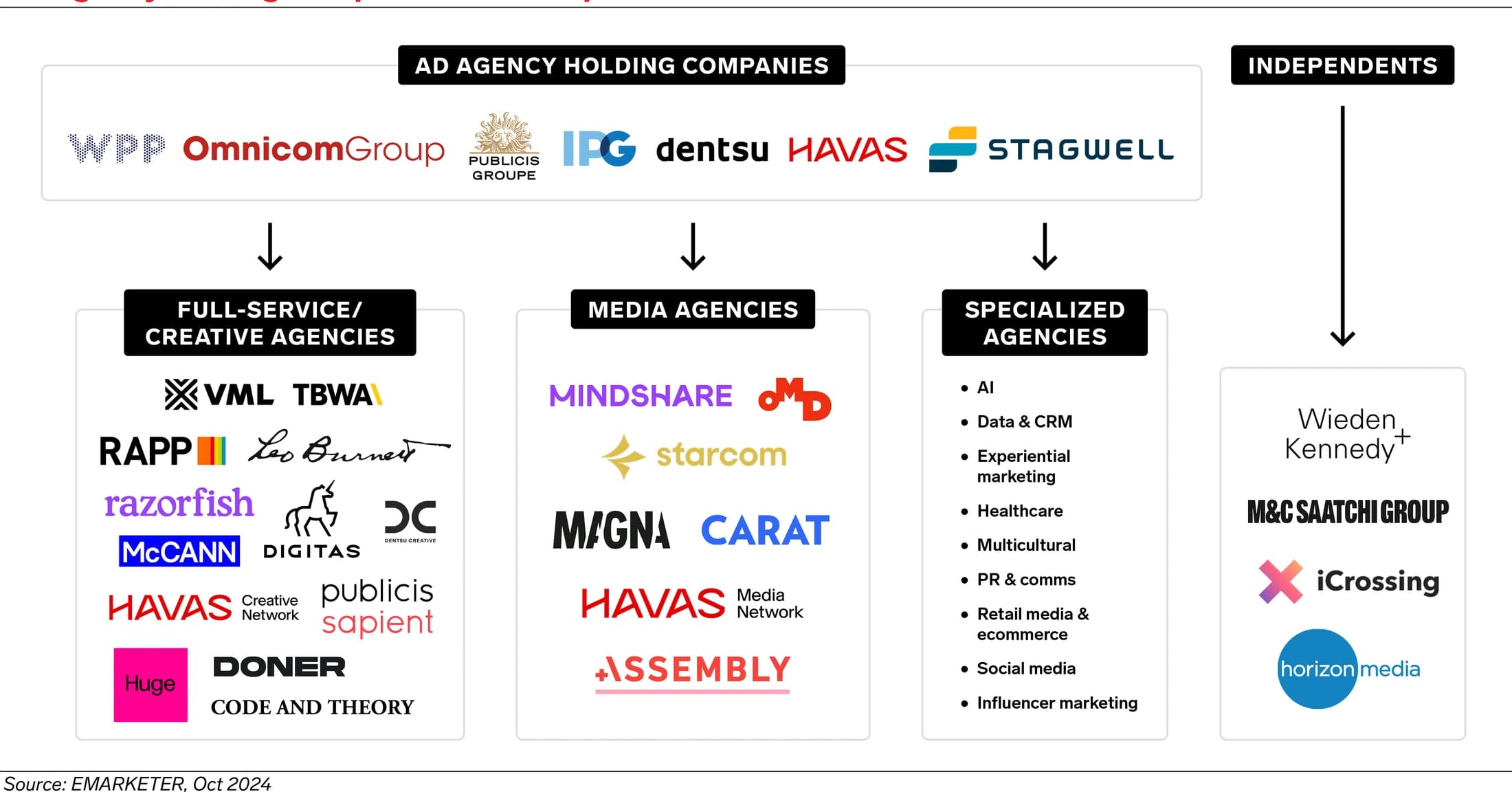
The Fortune 500's new creative playbook starts with a quiet hiring decision. McDonald's UK shifts to Leo Burnett's independent offshoot. Sainsbury's picks Wonderhood Studios over Publicis. Primark works with Lucky Generals. Walkers Crisps moves to Adam&EveDDB's independent arm. A pattern emerges: retail and CPG brands with century-old marketing budgets and holding company habits are routing campaigns through independent shops. Not as experiments, but as primary relationships.
The shift happens without press releases. No "agency of record" announcements. No holding company earnings calls explaining the loss. The brands just start working differently. Faster briefs. Shorter timelines. Cultural work that moves at internet speed instead of quarterly planning cycles. The holding companies notice when the renewal doesn't come. By then the indie shop is already three campaigns deep.
This isn't about cost cutting. McDonald's UK can afford any agency on earth. This is about operational fit. Retail moves fast. Fashion cycles compress. CPG brands need cultural fluency measured in days, not months. The independent shops built speed and cultural response into their operating model from day one. The holding companies built process and overhead into theirs. Retail and CPG brands are choosing accordingly.
The Speed Advantage That Actually Delivers
Speed is consultant-speak until you map it to retail reality. Primark's fashion cycles run six weeks from design to store. Fast fashion's entire economic model depends on reacting to what's trending now, not what was trending when the brief was written. A holding company pitch process takes longer than a Primark product cycle. An independent shop can be briefed Monday and shooting Thursday.
Lucky Generals wins Primark's UK creative work in 2019. The brief: make fast fashion feel culturally relevant without the sustainability baggage dragging down H&M and Zara. The timeline: aggressive. The holding company pitch included a deck about "agile methodologies." Lucky Generals' pitch included work that could run next week. Primark chose the agency that proved speed, not the one that promised it.
That distinction separates winners from losers in retail pitches now. Promises don't ship campaigns. Holding companies promise agility while maintaining approval hierarchies that add weeks to every decision. Independent shops demonstrate agility by collapsing the distance between brief and execution. When your product cycle is six weeks, your creative cycle can't be twelve.
McDonald's UK faces a similar constraint. Menu innovation cycles quarterly. Cultural moments last days. The holding company model schedules creative reviews months in advance. Leo Burnett's leadership team splits off, forms Burnett London as an independent entity in 2014, and wins McDonald's UK creative in 2021. Same talent. Different operational model. The work ships faster because there are fewer approval layers between brief and output.
Wonderhood Studios lands Sainsbury's in 2020 after Publicis holds the account for decades. Sainsbury's CEO Simon Roberts tells Campaign the choice came down to "pace and creativity." Pace first. Creativity second. The order matters. Retail CMOs stopped believing the holding companies could move at retail speed. The independent shops proved they could by actually doing it.
The operational difference shows up in week-one meetings. Holding company new business process: strategy deck, capability presentation, case study review, meet the team session, follow-up questions, revised proposal, final pitch. Independent shop process: brief on Monday, work on Tuesday, present Wednesday, refine Thursday, shoot Friday. Retail and CPG brands started choosing the shops that act like their business actually works.
This operational rhythm match matters more than creative awards. A Cannes Lion proves you made something good once. A five-day turnaround proves you can make something good on retail timelines. Retail doesn't slow down for creative development. The agencies that win retail accounts are the ones that speed up to match retail operations.
Cultural Fluency as Competitive Weapon
Walkers Crisps faces a problem holding companies can't solve with process. The brand needs to stay culturally relevant in a market where "crisps" means something different every six months. TikTok makes pickle-flavored Pringles trend for two weeks. A celebrity mentions a discontinued flavor. Regional dialects turn specific crisp varieties into meme material. Walkers needs an agency that watches the same internet the customer does.
Adam&EveDDB operates as an independent within the DDB network. The technical structure matters less than the operational reality: they move like an indie shop. Walkers has worked with them since 2014. The relationship survives because the agency catches cultural shifts before the brand does. When Gary Lineker becomes a polarizing figure after his immigration tweet storm in 2023, Adam&Eve has a response strategy drafted before Walkers' holding company partners finish their morning meeting.
Cultural fluency means proximity to culture, not youth or coolness. Lucky Generals' team averages mid-thirties. Wonderhood's founders came from the holding company system. What changed wasn't age. It was proximity to culture. Holding companies organize around client service hierarchies. Independent shops organize around the work. That structural difference determines who sees the trend first.
The hierarchy point deserves expansion. In a holding company, cultural intelligence travels up through account managers, then strategists, then planning directors before reaching the creative team. Each layer adds distance from the original cultural moment. By the time the brief reflects the trend, the trend has evolved. Independent shops put the people watching culture in the same room as the people making creative. The intelligence loop closes faster.
The Primark account demonstrates this clearly. Fast fashion's cultural challenge isn't making things cheap. It's making cheap feel intentional. The holding company pitch showed research about Gen Z values. Lucky Generals showed cultural territory Primark could own without ever mentioning sustainability. The brief asked for youth marketing. The indies delivered cultural positioning. Different problem solved.
Sainsbury's shift to Wonderhood tells the same story from a different angle. UK grocery retail in 2020 meant pandemic logistics, community positioning, and hourly cultural recalibration as government policy changed daily. Publicis had capability and scale. Wonderhood had the ability to rethink positioning in real time. Sainsbury's chose the agency that could rewrite strategy between Monday brief and Wednesday presentation.
That real-time strategic flexibility becomes crucial when culture moves faster than planning cycles. Holding companies build strategic frameworks designed to last quarters or years. Independent shops build strategic frameworks designed to evolve with the work. Retail culture shifts weekly. The agency model built for quarterly stability can't serve the brand that need weekly adaptation.
McDonald's UK faces this constantly. The brand operates in dozens of cultural contexts simultaneously: football culture, breakfast culture, late-night culture, family dining, quick lunch. Each context requires different creative territory. Holding company process assumes one brand position applied across contexts. Independent shops assume multiple positioning strategies running in parallel. Retail and CPG brands need the parallel model. The indies offered it first.
The Operational Model That Wins Pitches
The pitch stories matter because they reveal what retail and CPG brands actually value. They want proof of operational fit, not capability presentations. Lucky Generals wins Primark by showing work that could run next month. Wonderhood wins Sainsbury's by rebuilding strategy in the room during the pitch. Burnett London wins McDonald's by demonstrating speed without showing a single case study about speed.
The holding company pitch follows a formula: credentials, case studies, team bios, strategic framework, creative samples, budget breakdown. The independent pitch follows reality: here's the work, here's when it can run, here's who makes it, here's what happens when you hate it. One format proves capability. The other proves operational compatibility. Retail brands choose compatibility.
McDonald's UK decision in 2021 came down to this distinction. The holding company pitch included a transformation roadmap. Multiple workshops. Stakeholder alignment sessions. A timeline measured in quarters. Burnett London's pitch included work ready to shoot and a timeline measured in weeks. McDonald's chose the agency that understood retail timelines match campaign timelines, not the agency that wanted to run workshops first.
The workshop model reveals everything wrong with holding company retail strategy. Workshops assume you need consensus before action. Retail assumes you need action before consensus. You test, learn, iterate in market. The holding company wants alignment meetings. The independent shop wants market feedback. When Burnett London pitched work ready to shoot, they signaled understanding of how retail brands actually develop creative: in market, not in conference rooms.
Sainsbury's selection of Wonderhood over Publicis in 2020 followed the same logic. Publicis pitched integration: shopper marketing, digital, brand, CRM, all coordinated through a central planning function. Wonderhood pitched focus: brand work that moves fast because it doesn't wait for coordination with seventeen other disciplines. Sainsbury's chose the agency that solved one problem well over the agency that promised to solve twenty problems eventually.
The operational models differ in three specific ways. First, decision speed. Independent shops have fewer approval layers. Work moves from creative to client without internal review boards. Second, team stability. The people who pitch are the people who make the work. No bait-and-switch with senior leadership at pitch and junior teams on execution. Third, strategic flexibility. Indies can rewrite strategy mid-campaign because they don't have global brand guidelines to follow.
Primark's relationship with Lucky Generals demonstrates the third point clearly. Fast fashion strategy changes with trend cycles. What worked in spring fails in fall. The independent shop can rewrite positioning three times per year without checking with network leadership in New York. The holding company has to reconcile UK strategy with global brand guidelines. Primark picked the agency that could move without permission.
That permission structure kills holding company retail work more than any other factor. Independent shops operate with client permission only. Holding companies operate with client permission plus network approval plus legal review plus brand guideline compliance. Each permission layer adds time. Retail brands operating on six-week cycles can't wait for four permission layers. They choose the agency that needs one.
The Client Relationship That Actually Works
The relationship model matters as much as the operational model. Retail and CPG brands aren't hiring agencies. They're hiring creative partners who understand retail operations. The distinction changes everything about how the work gets made.
Wonderhood's Sainsbury's relationship works because the agency understands grocery retail margins, logistics constraints, and competitive dynamics. The holding company pitch treated grocery like any other category. Wonderhood's pitch proved they knew the category. Campaign Magazine reports that Simon Roberts specifically cited the agency's retail fluency in the selection decision. Not their creative awards, but their operational knowledge.
McDonald's UK chose Burnett London for similar reasons. The agency team included former McDonald's operators. They understood franchise economics, menu engineering, and QSR operations. The holding company team understood brand strategy. McDonald's chose the team that understood how restaurants actually work. The creative got better because the strategy started from operational reality instead of brand theory.
This operational knowledge creates better creative because it acknowledges constraints. Holding company creative often ignores operational reality: in-store execution limitations, supply chain constraints, franchise operator concerns. Independent shops with retail operational knowledge build creative that works within real constraints. The creative feels more authentic because it acknowledges the business as it actually operates.
This shows up in the work immediately. Lucky Generals creates Primark campaigns that reference specific store experiences. Racks. Queues. The hunt for sizes. Holding company creative treats retail as a backdrop. Independent shop creative treats retail as the story. The difference converts because it acknowledges how people actually shop.
Walkers' longstanding relationship with Adam&EveDDB works because the agency learned CPG distribution, retail negotiations, and promotional mechanics. The Gary Lineker campaign runs for decades because the agency understands sports marketing, celebrity management, and crisis response. The holding company capability deck promised all those things. The independent partnership delivered them.
The relationship structure enables this. Holding companies organize around account management layers. Clients talk to account directors who talk to strategists who talk to creatives. Independent shops organize around direct creative partnerships. Clients talk to the people making the work. Retail and CPG brands operating on compressed timelines can't wait for information to travel through account hierarchies.
McDonald's relationship with Burnett London runs this way. The creative team sits in McDonald's business reviews. They see sales data, operations metrics, franchise feedback. The work gets better because the agency sees the same business reality the client does. Holding company information architecture puts client data behind account management walls. Independent shop architecture puts creatives in the same room as business metrics.
That data access changes creative output fundamentally. When creatives see that a menu item underperforms in specific regions, they create regionally adapted creative. When they see franchise operator concerns about operational complexity, they create campaigns that acknowledge those constraints. Holding company creatives work from briefs filtered through account management. Independent shop creatives work from the same data the client uses to run the business.
What This Means for Retail Marketing's Next Chapter
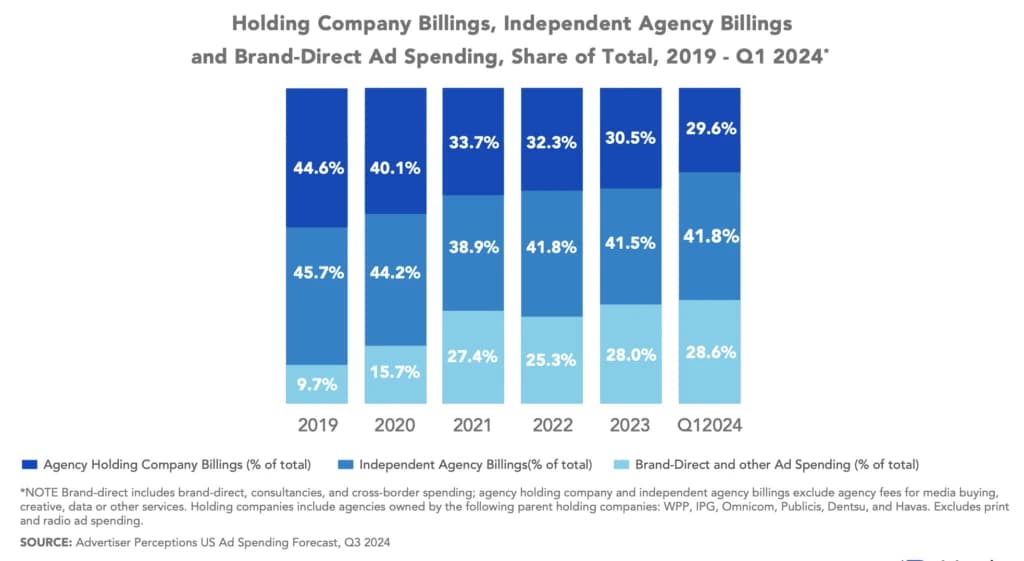
The pattern extends beyond the agencies named here. UK retail and CPG in particular shows preference for independent creative partners. The holding companies still hold most major accounts. But the renewal rate drops every cycle. The indies win more pitches than they did five years ago. Pitch participation data tells the story even when search volume stays flat.
The brands choosing indies share characteristics. Fast product cycles. Cultural sensitivity. Compressed timelines. Need for operational speed. These aren't fringe categories. This describes most of retail and CPG. The holding companies optimized for different client needs: global coordination, integrated capabilities, financial efficiency. Retail optimized for speed and cultural fluency. The operational models diverged.
McDonald's, Sainsbury's, Primark, and Walkers represent billions in marketing spend. Their choice to work with independent shops signals to smaller retail brands that the model works at scale. The holding company advantage was always scale and integration. When Fortune 500 brands demonstrate that independent shops can deliver at global scale, the holding company moat narrows.
The proof point matters more than the marketing spend. Small retail brands always worked with independent shops because they couldn't afford holding company minimums. When McDonald's chooses an independent shop, it proves the model works at enterprise scale with enterprise complexity. That permission structure opens independent shops to every retail brand that assumed holding companies were the only option for serious businesses.
The next wave shows in pitch activity. Retail and CPG brands brief independent shops earlier in the process. Not as backups, but as serious contenders. Holding company pitch teams now compete against Lucky Generals and Wonderhood Studios, not just against other holding company networks. The competitive set changed. The pitch win rate follows.
What retail and CPG brands discovered: independence isn't a limitation. It's an operational advantage for categories that value speed over scale and cultural fluency over global integration. The holding companies will adapt. They always do. But adaptation means building independent operating units or acquiring indie shops and trying not to slow them down. Either path proves the point: retail and CPG work requires independent shop speed.
The adaptation path shows the problem. When holding companies acquire independent shops, they face a choice: maintain independence and lose integration benefits, or integrate operations and lose speed advantages. Most choose integration. The acquired shop slows down within eighteen months. Retail clients notice. The relationship ends or shifts to holding company operations. The cycle proves that independence itself creates the operational advantage, not just the talent.
The brands figured that out. The holding companies are still figuring out how to deliver it. That gap creates opportunity for independent shops that understand retail operations, move at retail speed, and organize around the work instead of around client service hierarchies. The Fortune 500's quiet shift to independent creative partners started as isolated decisions. McDonald's here. Sainsbury's there. Primark over there.
Pattern recognition takes time. The pattern now visible: retail and CPG brands choose operational compatibility over credential presentations. They choose speed over integration. They choose the agency model built for how retail actually works instead of the agency model built for quarterly planning cycles that retail abandoned years ago. The next chapter of retail marketing runs through independent shops that proved they can move at retail speed. The holding companies can adapt or watch the renewal rate drop every cycle. Retail already decided which operational model wins.
Free Agency Media Editorial
All news