The Award-Winning Ad Campaign Nobody Talked About, On Purpose
Groove Jones won a top AI production award for a Dick's Sporting Goods campaign that generated almost zero search traffic or press. That silence reveals a new model for how specialized shops win work.
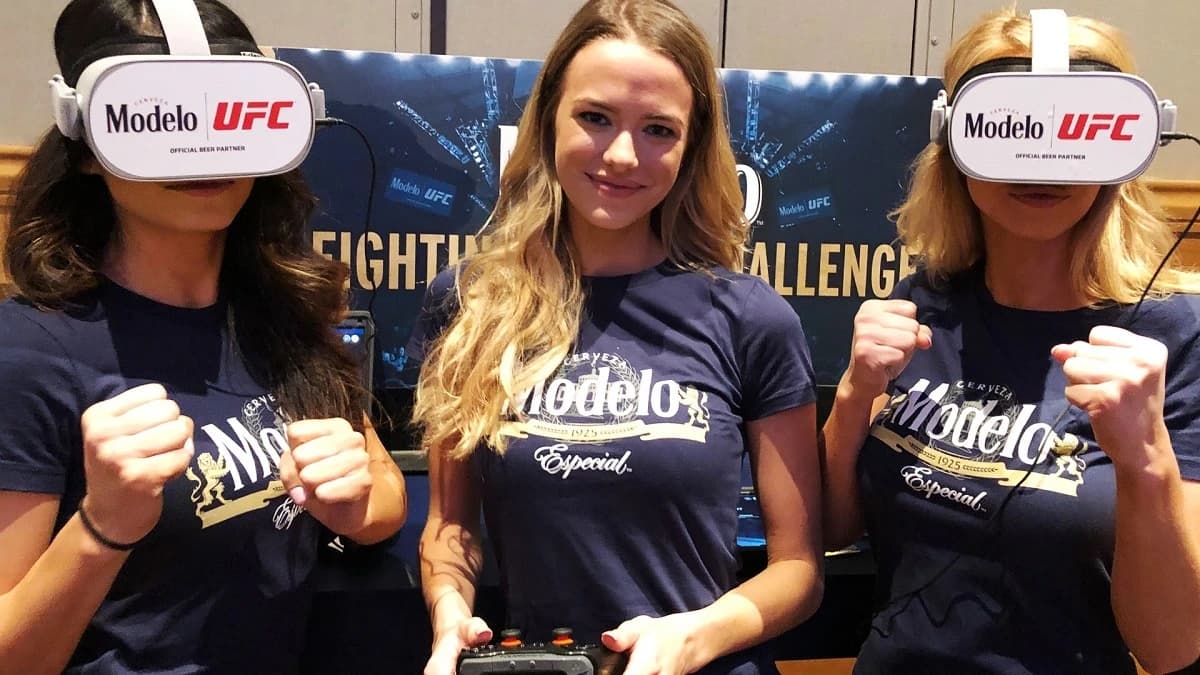

A campaign can win an industry award for its production technique and still generate less public discussion than a store return policy. That's the paradox sitting inside Groove Jones' work for Dick's Sporting Goods, Crocs, and the NFL. The project won "Best AI Workflow for Production" at the 2026 AARON Awards in April. It launched three months earlier as a hyper-real faux out-of-home (FOOH) social campaign built entirely on GenAI and VFX pipelines. And as of this writing, it has generated almost zero searchable trace, near-nonexistent trade coverage, and social engagement numbers that wouldn't clear triple digits on a single post.
That's not a failure. That's the story.
The Campaign Nobody Was Talking About
In January 2026, Groove Jones posted a case study announcing its work on a Crocs x NFL collection campaign, executed on behalf of Dick's Sporting Goods. The format: FOOH, faux out-of-home, a technique that builds hyper-realistic, seemingly physical installations entirely inside a rendering pipeline, then distributes them as native social content. No billboard was built. No location was scouted. The "out-of-home" moment existed only as a highly convincing simulation, generated and composited using GenAI and VFX tools, then dropped into feeds as if it were real.
This is Groove Jones' specialty. The agency is known in production circles for XR and AI-driven work, the kind of technically dense, tool-forward production that most shops either can't execute or don't want to learn. FOOH campaigns require a specific skill stack: 3D environment building, photorealistic lighting and compositing, generative asset creation, and enough production discipline to make synthetic content indistinguishable from photographed content. Dick's Sporting Goods needed that skill stack to sell a sneaker collaboration. Groove Jones had it sitting in-house.
The brief itself tells you something about how this kind of work gets assigned. Crocs x NFL x Dick's Sporting Goods is a three-way licensing and retail tie-in, the sort of project that touches multiple brand teams, multiple approval chains, and multiple sets of guidelines. That's usually where big agencies with big account teams earn their retainer, managing the complexity of stakeholders rather than the complexity of the craft. Instead, the craft-heavy piece of this campaign went to a shop whose entire value proposition is technical execution, not stakeholder management.
Groove Jones posted the case study. It linked out. And then, by every visible metric, the internet moved on without noticing.
What Zero Search Volume Actually Tells You
Here's where the data gets interesting, mostly because there isn't any.
The keyword cluster tied to this story, "dick's sporting goods," "dick's sporting goods agency," "dick's sporting goods campaign," "independent agency wins," "brand agency relationship," returns a combined search volume of zero. No agencies show up as actively competing for visibility in this specific intersection of brand and agency search terms. That's not a gap in our data collection. That's the actual state of public search interest in who made this work.
Run "dick's sporting goods" through Google today and the top six results are exactly what you'd expect from a $12 billion retailer with a century of brand equity: the flagship e-commerce site running a flash sale, the careers site, the Instagram profile, the Facebook page, the Wikipedia entry noting the company's 1948 founding by Richard "Dick" Stack, and the Google Play app listing. Not one of those six results references a campaign, a creative partner, or an agency of record. Not one mentions Crocs, the NFL tie-in, or FOOH production. The SERP is pure retail utility: shop here, work here, follow here, download here.
That's the search behavior of a brand whose customers care about inventory and pricing, not creative attribution. Nobody is Googling "who made the Dick's Sporting Goods Crocs ad." They're Googling whether the shoes are in stock. This is a useful reminder for anyone still measuring campaign success by search lift on the agency name: for a retailer at this scale, the agency was never supposed to be the story. The product was.
But zero search volume around "independent agency wins" and "brand agency relationship" as a broader cluster says something else entirely. It says the trade press apparatus that used to catch and amplify stories like this, the AdAge write-up, the Adweek roundup, the LinkedIn engagement bait, simply didn't fire. Nobody assigned this story before now. The work existed, won an award, and generated almost no third-party commentary anywhere that search engines or social platforms could index.
An Award With No Audience
The AARON Awards recognized the Dick's Sporting Goods campaign for "Best AI Workflow for Production" in April 2026, a full three months after Groove Jones first posted the case study. That gap matters. It means the work had already circulated, quietly, before the industry validation arrived. The award wasn't the moment the story broke. It was confirmation of something that had already happened without an audience.
Groove Jones posted about the win. That post, like the January case study post, generated under 100 views. No visible likes. No visible reposts. No replies, no quote-tweets, no marketers weighing in with hot takes about the future of GenAI production. Compare that to the kind of engagement a holding company shop generates when it wins a Cannes Lion: the LinkedIn cascade of "so proud of this team," the trade coverage, the awards-season recap articles ranking every network's haul. None of that infrastructure activated here. The signal was real. The amplification simply never came.
This is worth sitting with, because it inverts an assumption a lot of the industry still holds: that award recognition and public visibility move together. They don't have to. An agency can execute genuinely difficult, technically award-winning work for a Fortune 500 retailer and have that accomplishment live almost entirely inside its own case study archive and a single trade jury's judgment. The work doesn't need an audience to be verified as good. It needs a client who's happy, a jury that recognizes the craft, and a portfolio that proves it happened. Groove Jones has all three. What it doesn't have, and doesn't need, is a press cycle.
How Specialized Shops Skip the Pitch Theater
Traditional agency-client relationships at this scale run through a familiar sequence: RFP, credentials deck, chemistry meeting, creative pitch, review, win announcement, trade coverage. That sequence exists because most agencies are competing on the same axis, general creative and strategic capability, and clients need a formal process to differentiate between similar offers. It's also a sequence built for maximum visibility. Wins get announced. Losses get whispered about. The whole apparatus assumes an audience is watching.
Specialized production shops don't always need that apparatus, because they're not competing on the same axis. Groove Jones isn't in a chemistry meeting against five other integrated agencies pitching brand strategy and a 360 campaign. It's brought in because it can build a photorealistic synthetic environment and populate it with generative assets convincing enough to pass as documentary photography on a social feed. That's not a capability most agencies claim, and it's not a capability most clients need to shop around for once they've found a shop that can actually do it.
This is the quieter version of independence as advantage. The traditional narrative around indie shops winning big-brand work centers on the pitch: the independent agency that out-strategizes a holding company in the room. That's a real dynamic, and it happens. But it's not the only path, and for technically specialized shops, it might not even be the primary one. The path that produced the Dick's Sporting Goods campaign looks more like this: a brand or its retail partner needs a specific execution capability, someone in the room already knows who does that well, and the work gets briefed direct. No competitive review. No trade announcement. No press release. Just a brief, a build, a launch, and eventually, an awards submission that surfaces the work to an industry that otherwise would never have seen it.
For a shop like Groove Jones, that's not a limitation. It's the natural byproduct of being genuinely hard to replace. You don't need a press cycle when your capability is the pitch.
What the Silence Signals About Where This Work Goes Next
Zero search volume and near-zero social engagement could read as a red flag. It's actually a signal of something more durable: work that gets validated through execution and peer-jury recognition rather than through media amplification. That's a different distribution model than the one most of the industry still defaults to, and it's one that specialized indies are increasingly well-positioned to exploit.
Consider what the traditional model requires: an agency needs press relationships, a communications team, a strategy for seeding trade coverage, and a client willing to co-sign a case study announcement for PR purposes. That's overhead. It's also friction, friction that a technically specialized shop with a narrower, deeper offer doesn't necessarily need to carry. Groove Jones' January case study post and April award announcement cost almost nothing to produce and required no agency-side PR apparatus. The work spoke through the medium it was built for: a case study video, a portfolio entry, an awards submission. The audience that mattered, other technical directors, other production leads, other brands scouting for the same capability, found it anyway, through the channels that actually matter for that audience: awards juries, industry Slack channels, direct referral.
That's a meaningfully different growth model than "win a pitch, get press, repeat." It's closer to this: build a capability nobody else has fully mastered, execute it well enough that the client comes back, let the awards circuit do the validation work, and let word of mouth inside a technical community do the distribution work that press used to do. For AI-driven production specifically, where the technique itself is still novel enough that most clients don't know what to ask for, this model might actually be faster than the pitch cycle. You don't wait for an RFP that specifies "GenAI FOOH capability." You demonstrate the capability, publicly but quietly, and let the brands that need it find you.
The zero-search-volume, zero-trade-coverage outcome isn't a marketing failure for Groove Jones. It's evidence that the traditional trade press apparatus hasn't caught up to how this category of work actually gets discovered and distributed. The industry conversation about AI production is happening, loudly, in some corners. It's happening around tool announcements, around debates over authenticity and disclosure, around the ethics of synthetic advertising. What's largely missing is coverage of the actual production shops doing the technically hard version of this work at Fortune 500 scale, quietly, without waiting for permission from the press cycle to call it a win.
That gap is the opportunity. As more retailers and brands look for FOOH, GenAI-assisted, and XR-adjacent production capabilities, the shops that already have working case studies, verified client relationships, and award recognition, even quiet award recognition, will be the ones positioned to take that work direct. Groove Jones didn't need Dick's Sporting Goods to announce the partnership. It didn't need AdAge to cover the launch. It needed the work to be good enough that Crocs, the NFL, and a Fortune 500 retailer signed off on synthetic content standing in for a physical campaign, and good enough that an independent jury handed it an award three months later.
The next version of this story won't be as quiet. As GenAI production techniques become table stakes rather than novelty, the shops that mastered the workflow early, the ones with a real case study and a real award instead of a deck full of speculative capability slides, will be the ones brands call first. Groove Jones spent the first half of 2026 building that proof quietly. The trade press hasn't caught up yet. The brands looking for this exact capability already have.
Free Agency Media Editorial
All news