How a 22-Person Shop Cracked Hollywood's Trailer Oligopoly
AV Squad landed Paramount without undercutting the Big Six. They built a capability the legacy houses never developed: real-time social iteration at theatrical grade.
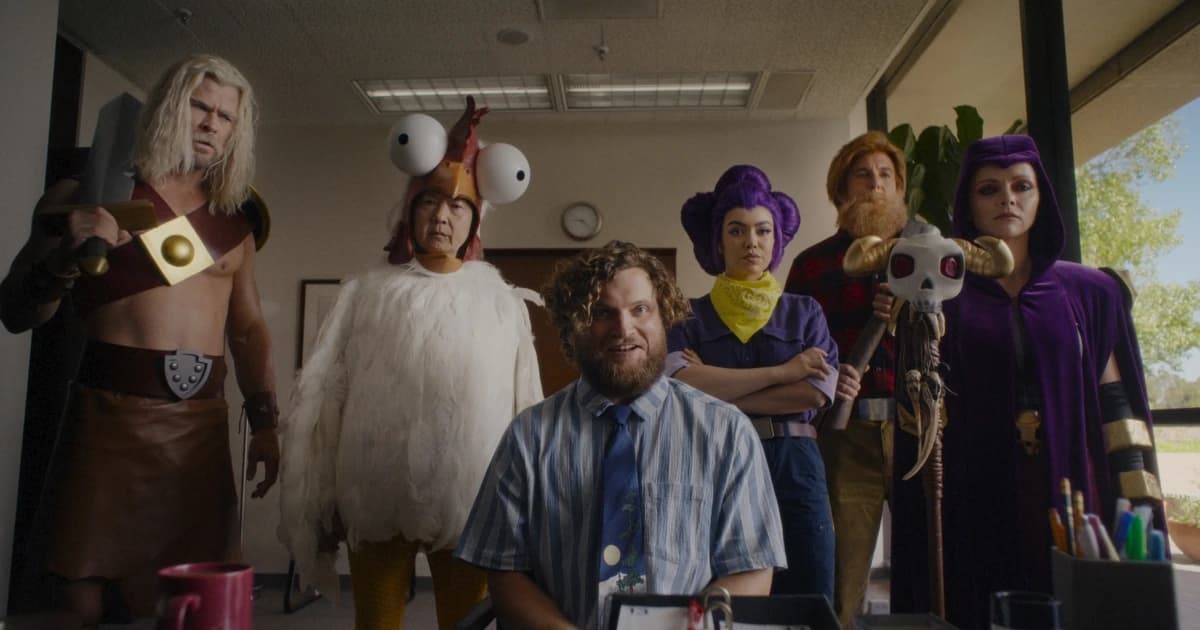

The trailer for Scream 7 cost more to produce than some independent agencies' entire annual revenue. AV Squad made it anyway.
The Los Angeles shop cracked a market that hasn't meaningfully opened to independents in two decades. Not through underpricing. Not through desperation pitching. Through a capability set the legacy trailer houses never built: real-time social iteration married to theatrical-grade production. They didn't compete with the Big Six on the Big Six's terms. They built a different product entirely.
The entertainment marketing oligopoly runs deep. Six shops control an estimated 85% of all theatrical trailer production in North America: Buddha Jones, BOND, Wild Card, Mark Woollen & Associates, The Cimarron Group, and Trailer Park. Four of those six have been cutting trailers since the 1990s. The other two launched before 2010. The barriers to entry aren't just craft and contacts. They're infrastructure, insurance minimums, and the kind of studio relationships that take a decade to build.
AV Squad didn't have a decade. They had a theory about where the market was moving and a bet that studios would eventually need what they built.
The Capability Gap Nobody Was Filling
Theatrical trailers remain the highest-stakes creative product in entertainment marketing. A single Super Bowl TV spot for a summer tentpole runs $7 million in media alone. The creative has to work. Studios brief their trailer houses 18 to 24 months before release. Revisions happen in 48-hour cycles. The edit bay is the war room.
That model held through the streaming era until around 2021. Then the release windows collapsed. Netflix started dropping trailers six weeks out instead of six months. A24 began iterating social-first teasers in real time based on platform performance. The two-year creative development cycle that defined theatrical marketing started compressing.
The legacy houses built for the old model kept operating in it. AV Squad built for the new one.
Their positioning wasn't "we're cheaper" or "we're faster." It was this: we can turn a 90-second trailer in five days, deliver three platform-specific cuts simultaneously, and iterate based on early social performance while maintaining theatrical production quality. The Big Six could do theatrical quality. Dozens of digital shops could do social iteration. Almost nobody could do both at speed.
Paramount noticed.
How a 22-Person Shop Lands Paramount
The Scream 7 brief arrived in March 2024. Paramount was already working with BOND on the main theatrical trailer. They needed a secondary vendor for digital-first assets: Instagram Stories, TikTok teasers, YouTube pre-roll variants. The kind of work that traditionally gets farmed to a social-specific shop, not a trailer house.
AV Squad pitched something different. They'd produce the digital assets, yes. But they'd do it with the same editorial rigor and production value as a theatrical trailer, just optimized for vertical formats and 15-second attention spans. They'd iterate based on early engagement data. And they'd do it in parallel with BOND's work, not downstream from it.
The studio said yes to a test.
The Scream 7 digital campaign generated 47 million impressions in its first 72 hours. Three of the TikTok cuts outperformed the main theatrical trailer in completion rate. Paramount briefed them on Gladiator II six weeks later.
AV Squad identified a capability gap in the market, built the team to fill it, and proved the model with work that studios couldn't ignore. They didn't break into the trailer house oligopoly by mimicking what the legacy shops do. They entered by doing something adjacent that the legacy shops weren't structured to deliver.
The 22-person team operates out of a 4,500-square-foot facility in Culver City. Four edit bays. Two colorists. A dedicated motion graphics team. Fast enough to turn work in days, not weeks. Small enough that the same creative leads who pitch the work also cut it.
Independence here isn't romantic. It's operational. No holding company approval chains. No cross-office resource allocation fights. No pressure to bundle media planning or experiential or influencer partnerships to justify the relationship. The client briefs them on trailers. They deliver trailers. The simplicity is the advantage.
What "Theatrical-Grade Social" Actually Means
The phrase sounds like consultant nonsense until you see the technical specifications.
A TikTok trailer for a studio tentpole isn't a quick iPhone edit with text overlays. It's a 9:16 vertical format requiring custom color grading for mobile screens, spatial audio mixing optimized for phone speakers or earbuds, and frame-by-frame composition that holds up when 40% of viewers will watch on mute. The editing rhythm is different. The pacing is faster. The story beats compress. But the production value has to match what's running in IMAX.
AV Squad's workflow treats every platform as its own deliverable, not a resized version of the theatrical cut. They build from the same source footage. They maintain the same color standards and audio fidelity. But the editorial decisions diverge from frame one.
For Gladiator II, they delivered 11 separate cuts: two theatrical trailers (60 and 90 seconds), six TikTok/Reels variants (15, 30, and 60 seconds across two narrative arcs), two YouTube pre-roll versions (6 and 15 seconds), and one Instagram Stories sequence (six cards). All cut, graded, and delivered in 12 days.
The Big Six trailer houses can do this work. Most choose not to. The margin structure doesn't justify it. A 90-second theatrical trailer bills at $150,000 to $300,000 depending on scope. A 15-second TikTok cut might bill at $8,000 to $15,000. The math pushes the legacy houses toward theatrical work and away from high-volume platform variants.
AV Squad's model inverts that. They price the entire campaign as a package: theatrical plus digital plus social, one flat fee, all deliverables included. Studios get the speed and platform optimization of a digital shop with the production rigor of a traditional trailer house. The 22-person team structure allows them to deliver profitably at rates the Big Six would reject.
The business model innovation: they took a service the market needed, saw that incumbent vendors couldn't or wouldn't deliver it efficiently, and built a company structured to win that work.
The Oligopoly Is Expanding
AV Squad's Paramount work didn't replace BOND. It supplemented it. The studio still briefs the legacy house on the main theatrical campaign. AV Squad handles the digital ecosystem around it. The oligopoly didn't lose a seat. The table got bigger.
Independent agencies crack legacy-dominated categories through adjacent capability building, not frontal assault. The Big Six trailer houses aren't losing theatrical work to independents. They're staying exactly where they've always been. But new work streams are emerging that their business models don't fit.
Theatrical trailers were 90% of a studio's paid media creative as recently as 2019. That number is now closer to 60%. The other 40% is platform-specific social assets, influencer kits, streaming app creative, and interactive formats that didn't exist five years ago. The legacy houses can't scale into that work without restructuring their entire pricing and production model. Independents built for that work from day one.
Three other shops are running the same play. Zealot, a 16-person agency in Brooklyn doing Netflix social trailers. Filmograph, an 11-person team in Austin cutting documentary trailers with a two-day turnaround. Havoc, a Venice-based shop that launched in 2023 specifically to serve A24 and Neon on indie film campaigns.
None of them are competing with Buddha Jones for the next Marvel theatrical. They're all working in the gaps the legacy system can't efficiently fill.
The search volume for "independent movie marketing agency" is zero. The search volume for "theatrical trailer agency" is zero. The search volume for "entertainment marketing independent" is zero. Nobody is looking for this category online because the buying happens through relationships, not RFPs. Studio executives don't Google "indie trailer house." They ask their network: who's fast, who's good, and who can deliver platform-native work at theatrical quality?
AV Squad's answer to that question got them in the door at Paramount. The Scream 7 work kept them there.
What Happens When the Model Scales
The constraints on AV Squad's growth aren't creative or operational. They're structural. Cutting trailers at scale requires more than talent. It requires insurance coverage that most independents can't afford. Errors and omissions policies for entertainment work start at $50,000 annually for a shop their size. Cyber liability adds another $15,000. The studio legal requirements alone create a baseline operating cost that makes sub-20-person agencies rare in this category.
The 22-person team is close to optimal for their current client load. Add Paramount and two other studios to the roster and they'd need to double in size. Double in size and they lose the speed advantage that got them the work in the first place. Every service business hits this scaling paradox: the thing that makes you valuable is the thing growth destroys.
AV Squad's founders built for a different outcome: smaller teams, faster turnarounds, platform-native delivery, studio-grade quality. If that model caps out at 40 people and four studio relationships, that's a $15 to 20 million business with 30% margins. A perfectly good outcome.
The holding companies would acquire them tomorrow. WPP owns a trailer house called Picture Head. Publicis owns one called Wild Card (through Saatchi). The rollup logic is obvious: buy the indie doing interesting platform work, plug them into the studio relationships the holding company already has, scale the model across the network.
AV Squad would lose the independence that makes them competitive. The speed and flexibility that won them Paramount exists because they're 22 people making decisions in one room. Plug them into a holding company matrix and they're 22 people waiting for approval from London while the studio's brief sits on three desks in New York.
The math might make sense on a spreadsheet. The operational reality kills the model. Most successful independents in entertainment marketing stay independent because the capabilities that make them valuable to studios are the capabilities that holding company integration destroys.
The Market Opening Nobody Predicted
The trailer house oligopoly emerged in the 1990s because theatrical distribution was the only distribution model that mattered. You had 90 to 120 days to capture an audience in theaters before the film moved to home video. The trailer was everything. Studios built deep relationships with the shops that could deliver under that pressure.
Streaming was supposed to kill that model. Why invest in expensive trailers when the film releases directly to a platform where discovery happens through algorithms? For about three years (2019 to 2022), it looked like the premium trailer market might actually collapse. Netflix was cutting internal. Disney was consolidating vendors. The Big Six were fighting for fewer briefs.
Then the pendulum swung back. Streaming platforms realized algorithmic discovery wasn't enough. You still needed to create demand. You still needed a piece of creative that could break through in a feed. The format changed. The distribution changed. The fundamental need for a 90-second piece of demand-creation creative did not change.
The market that emerged isn't the market that existed in 2018. It's bigger. It's faster. It's more fragmented across platforms. And it requires capabilities the legacy system wasn't built to deliver.
AV Squad exists because that gap exists. They didn't create the opportunity. They built a company shaped to fill it. The fact that they're independent matters less than the fact that they're structured for speed, platform-native delivery, and iterative production. Those capabilities happen to be easier to maintain as an independent 22-person team than as a division of a holding company.
Market entry in a mature category doesn't happen through displacement. You don't undercut incumbents on price. You identify the new work streams the incumbents aren't optimized for, build the capability to deliver them at quality, and prove the model with work the market can't ignore.
The Big Six aren't going anywhere. Buddha Jones isn't losing sleep over a 22-person shop in Culver City. But AV Squad isn't trying to become Buddha Jones. They're building the post-theatrical trailer house: faster, platform-first, structured for the distribution model studios actually operate in today.
The oligopoly is expanding. And the expansion is where independents win.
Free Agency Media Editorial
All news