The Immersive-Agency Turf War Happening Where Google Can't See It
Search volume says this category is dead. Pitch rooms say otherwise, and one indie agency is quietly winning a positioning fight nobody else is even contesting.
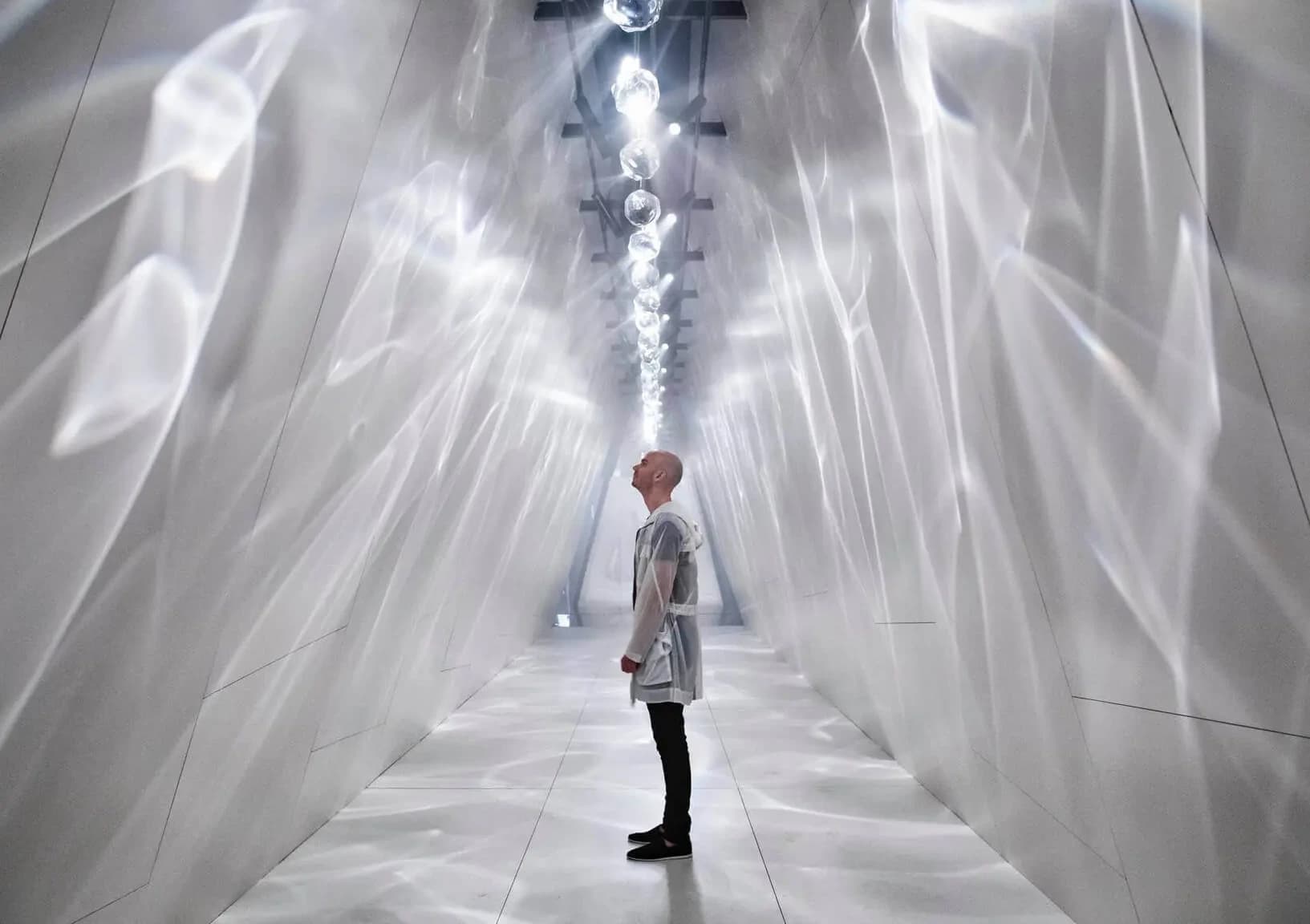
The keyword tells you almost nothing. "Digital immersive experiences" pulls 10 searches a month. Zero additional volume across the other six terms in its cluster: interactive e-commerce website, social-first campaign, digital branding trends 2025, creative web development agencies, UI/UX design for brands, independent agency digital work. By every conventional SEO metric, this is a dead category. Nobody's searching for it. Nobody should be writing about it.
And yet it's one of the most contested positioning battles in advertising right now, fought almost entirely off the SERP, in DMs and decks and pitch rooms that Google will never index.
That's the paradox worth sitting with. The category looks empty because the demand isn't coming from search. It's coming from brand teams who already know who they want in the room, and who are actively routing around the directories, the AV integrators, and the holding company networks to find them. The volume isn't zero. It's just invisible to a keyword tool.
The Page One Results Are Solving the Wrong Problem
Run "immersive digital experience agency" through Google and you get nine results that tell you exactly nothing about who's actually winning lifestyle brand work. Sortlist runs "The 100 Best Immersive Experience Agencies," a directory play that treats immersive work as an interchangeable line item. Superside publishes "8 Best Immersive Design Services for Enterprises in 2026," a listicle built for procurement teams comparison-shopping vendors. Gensler and RIOS show up too, both architecture firms extending into "experience design" as a service tier bolted onto their built-environment business. OneDiversified sells AV integration. Successive Digital sells AR/VR technology solutions. LinkedIn's algorithm surfaces a "top content" aggregation page.
Three of those nine results are directories or aggregators, not agencies at all. That's a third of page one dedicated to sorting and ranking rather than making. The remaining results treat immersive experience as a bolt-on capability, something you add to an architecture practice or a technology stack, not something you build a creative point of view around.
What's missing from all nine: not one names a lifestyle brand. Not one explains why a beauty label, a streetwear house, or a hospitality group would choose one shop over another. The entire page reads like a capabilities menu: tech stack, service tier, deliverable list. Nobody's answering the actual question a CMO is asking, which isn't "who can build AR" but "who understands my culture well enough to build something my audience won't roll their eyes at."
That gap is the story. The SERP has commoditized a category that brand teams are actively de-commoditizing in their own buying behavior.
Why Lifestyle Brands Are Routing Around the Holding Companies
Talk to anyone who's sat in a holdco pitch process for experiential or immersive work and you'll hear the same complaint: the idea that gets approved in round three is never the idea that got everyone excited in round one. Legal reviews it. Brand safety reviews it. A regional director reviews it. By the time it's cleared for production, the cultural moment it was built to ride has already passed.
That's not a knock on the talent inside holding companies. It's a structural problem. Approval chains exist to protect the client relationship at scale, and they do that job well. But lifestyle brands aren't buying protection right now. They're buying speed and cultural fluency, and those two things don't survive a four-layer sign-off process.
VIBE Agency has built its entire public positioning around this exact gap. On X, the shop describes itself as an experiential marketing partner focused on unforgettable events, AI-driven experiences, metaverse activations, and data-backed events designed to create strong brand connections. Notice what's absent from that list: no mention of channel plans, no mention of media buying frameworks, no mention of the kind of integrated-agency jargon that dominates holdco new business decks. VIBE is pitching moments, not systems.
Enigma is telling a similar story from a different vertical. Case studies shared through Campaign Middle East show the shop building immersive fan experiences around sporting events, automotive launches, and track experiences. That's not incidental. Motorsport and automotive launches are lifestyle categories with some of the shortest cultural half-lives in marketing: a launch moment, a race weekend, a fan activation window that closes in days, not quarters. You cannot run that kind of brief through a six-week approval chain. You need a partner who can greenlight internally in an afternoon.
Experience Epic, also active in this conversation on X, focuses on sensory-immersive corporate events: scent, soundscape, and lighting engineered specifically to shift mood and deepen connection. Small detail, big signal. This isn't agencies pitching "immersive" as a category label. It's agencies pitching specific sensory and cultural tools, which is a fundamentally different conversation than the one happening on page one of Google.
There's a broader sentiment running under all of this. One X user, writing about agency approaches more generally, criticized the "one-size-fits-all" method common among larger shops and contrasted it with agencies willing to do genuine founder-level discovery before building a brand's voice. That critique wasn't aimed specifically at holding companies, but it names the exact dynamic lifestyle brands are reacting to. Big shops sell frameworks. Small shops sell understanding. Lifestyle brands, whose entire value proposition often rests on feeling understood by a specific audience, have an obvious reason to prefer the second.
There's also a cultural undercurrent worth naming directly. As AI-generated content saturates every feed, one widely shared take on X argued that people are increasingly craving connections that are "made by human," and that physical and interactive experiences are becoming the differentiator precisely because content is becoming infinite and free. If that's true, and the engagement patterns suggest a lot of marketers believe it, then immersive experience work isn't a nice-to-have add-on to a lifestyle brand's content calendar. It's becoming the thing that proves a brand still has a pulse.
Wavespace and the White Space Nobody's Claimed
This is where the SEO data gets genuinely interesting. Across the entire tracked keyword cluster covering immersive digital experience, interactive e-commerce, social-first campaigns, digital branding trends, and UI/UX design for brands, our tracking shows exactly one agency actively contesting this territory in organic search: Wavespace Agency, at wavespaceagency.com.
One agency. Seven keywords. A category that every major directory and AV integrator treats as settled, commoditized, already won by whoever has the biggest capabilities page. And Wavespace is the only indie shop that's shown up in the data actively claiming it.
That's not a small thing. It means the positioning fight for "who owns lifestyle-brand immersive work" in search is still functionally uncontested. Sortlist owns the directory play. Superside owns the enterprise listicle play. Gensler and RIOS own the built-environment crossover play. Nobody owns the specific claim that matters to a CMO at a beauty, hospitality, or streetwear brand: we build culturally fluent work, fast and creatively unsafe, for brands whose audience can smell a holding company deck from across the room.
That's the white space Wavespace is sitting in. Whether that's deliberate strategy or a byproduct of niche focus, the effect is the same: a single agency is currently building whatever category authority exists in search for a positioning claim that every other indie in this space should be racing to contest before the SERP catches up and the directories notice there's a gap to fill.
This is the part other indie agencies should be paying closest attention to. The absence of competition in a keyword cluster isn't a sign the category doesn't matter. Search volume of 10 a month proves that. It's a sign the category hasn't been claimed yet, and claiming it early is cheap right now in a way it won't be in eighteen months, once the holding companies and the directories figure out lifestyle brands are actively looking for this exact positioning.
The Positioning Playbook: What to Pitch, Price, and Staff
If the pattern across VIBE, Enigma, and Wavespace tells you anything, it's that winning this work isn't about technology. Nobody in this space is winning pitches by having the newest AR SDK. They're winning by pitching a point of view about culture, backed by a structure fast enough to act on it.
What to pitch. Lead with the cultural moment, not the deliverable. VIBE doesn't pitch "we build metaverse activations." It pitches unforgettable brand connections, with metaverse activations as one tool in service of that. Enigma doesn't pitch "we do event technology." It pitches fan experiences built around a specific cultural window, a race weekend or a launch, where the platform is a vehicle for the moment rather than the point of the brief. The playbook: identify the cultural window before the client does, show up with a point of view about why it matters to their specific audience, and treat the tech stack as the least interesting slide in the deck.
How to price. Holding companies price by scope: hours, deliverables, headcount allocated across a Gantt chart. That model punishes speed, because speed means fewer billable hours to justify the invoice. Indie shops built for this work should price on moment-capture value instead: what is it worth to a client to be first, to own a cultural conversation for a 72-hour window nobody else can move fast enough to claim. That's a harder number to defend in a procurement spreadsheet and an easier one to defend in a CMO's head, which is exactly where lifestyle brand decisions actually get made.
How to staff. This is where the gap between indies and holdcos is starkest. A holding company staffs an immersive brief with a producer, a technologist, an account lead, and a strategist who reports up through two more layers before anything ships. An indie built for this work staffs it with people who live in the culture the brief is targeting: community-fluent creatives who know what a scent or a soundscape or a fan-facing AR filter needs to feel like before it's built, not after client feedback tells them it missed. Experience Epic's sensory-design focus, scent and soundscape engineered specifically to shift mood, only works if the people building it already understand the emotional register of the audience. That's a hiring philosophy, not a job description. You can't RFP your way into cultural fluency.
The through-line across all three plays: pitch the moment, price the speed, staff the fluency. Every holding company can eventually copy the deliverable. None of them can copy the org structure fast enough to matter.
Why the Holding Companies Can't Just Copy This
It's worth being precise about why this isn't a temporary advantage that closes the moment a holdco decides immersive experience matters. The constraint isn't creative talent. Holding companies employ plenty of people who could build exactly what VIBE, Enigma, or Wavespace build. The constraint is structural, and structural constraints don't get solved by hiring.
A holding company's value to its shareholders comes from scale and process consistency across hundreds of client relationships. That same consistency is what kills a cultural-moment brief. You cannot standardize a process for "move in 72 hours on a fan moment nobody saw coming" without breaking the exact governance model that makes a holding company valuable to its investors in the first place. The two goals are structurally incompatible, not just culturally different.
That's why this isn't a story about small shops outworking bigger competitors. It's a story about a category of work that specifically requires the organizational speed only independence provides. Lifestyle brands aren't choosing Wavespace, VIBE, or Enigma because they're cheaper or because nobody bigger would take the meeting. They're choosing them because the brief itself, by its nature, can only be executed well by a shop unencumbered by the approval architecture that scale requires.
Where This Goes Next
Search volume of 10 a month won't stay flat forever. As lifestyle brands keep routing this work to independents, and as case studies like Enigma's automotive and sporting activations get more public visibility through outlets like Campaign Middle East, the buyers currently finding these shops through word of mouth and warm introductions will start typing something into Google. When that happens, the directories will notice. Sortlist will add an "immersive experience for lifestyle brands" filter. Superside will publish a new listicle. The SERP will catch up to what the pitch rooms already know.
The agencies who benefit from that shift won't be the ones who wait for the keyword volume to justify the investment. They'll be the ones who, like Wavespace appears to be doing right now, claimed the positioning while the category still looked too small to matter. Ten searches a month is not a market. It's a signal that the market hasn't been priced in yet. The indies who understand that distinction, and who build their pitch, their pricing, and their staffing around cultural speed rather than technical capability, are the ones who'll own this category by the time the volume finally catches up to the demand that's already there.
Free Agency Media Editorial
All news