Lincoln's Quiet Defection From Big Agency Land Signals a Bigger Break
Lincoln moved its business to an independent shop, and the trade press said nothing. That silence is the real story about automotive's crumbling agency wall.


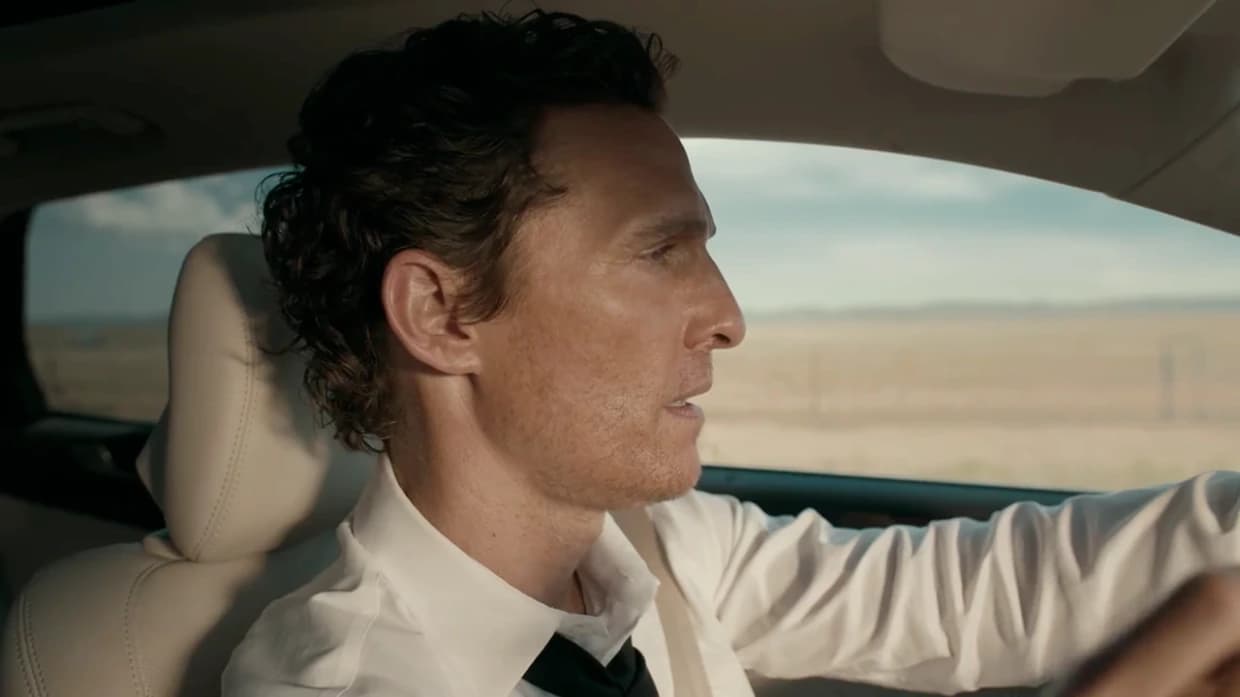

Lincoln has been building cars since 1917. For nearly all of that history, its advertising ran through the same handful of holding company networks that serve every legacy Detroit brand: giant agency systems built for giant automotive budgets, with media planning, creative, and production split across specialized units inside the same conglomerate. That's the model. That's been the model for decades.
So when Lincoln moved its business to ARC Creative, an independent shop, the industry's trade press should have been loud about it. It wasn't. A search for "lincoln agency" or "lincoln campaign" right now turns up almost nothing useful: no ranking analysis, no breakdown of scope, no accounting of what changed. The cluster of keywords around this move, "lincoln," "lincoln agency," "lincoln campaign," "independent agency wins," "brand agency relationship," currently shows zero competing content of substance. Zero agencies have published anything meaningful about it. That's not because nobody's searching. It's because the story hasn't been told yet.
That vacuum is the story. When a 100-plus-year-old luxury automotive brand moves its business to an independent, and the trade press produces nothing, it tells you two things: the holding company PR machine has no interest in explaining why it lost the business, and the independent shop that won it hasn't needed to explain itself either. Silence, in this case, isn't absence of news. It's a signal that the old rules about who gets to serve legacy automotive clients no longer hold.
The Zero Before the Signal
This deserves more than a hot take. "Inside work" as a search term pulls 720 searches a month, a real, sustained appetite from people who want to know what happens after the win: how the account actually runs, who staffs it, what the deliverables look like month to month. That's a meaningful number for a niche industry term. It tells you readers aren't just curious about who won the pitch. They want the operational reality behind it.
And right now, nobody's answering that question for Lincoln specifically. The keyword cluster sitting at zero total search volume with zero agencies competing for it isn't a sign of disinterest. It's a sign the conversation hasn't started. Every legacy account move that holding companies have handled for decades gets covered reflexively: a press release, a trade blurb, maybe a quote from a CMO thanking the outgoing network for "years of partnership." None of that has happened here, because an independent agency doesn't need a press release to validate the win. The work speaks, or it doesn't get retained. That's the entire premise of how independents operate, and it's exactly the premise holding companies have spent 40 years insulating their clients from having to test.
Lincoln testing it, quietly, without the usual trade theater, is itself the headline most of the industry has missed.
Why Holding Companies Have Owned Automotive for a Century
Automotive has been the most holding-company-locked category in advertising for a simple reason: scale. A national automotive account isn't one brief. It's dozens running simultaneously across regional dealer co-op budgets, national brand campaigns, digital performance work, and increasingly, retention and loyalty programs for existing owners. WPP, Omnicom, Publicis, IPG, Dentsu, and Havas built entire agency networks specifically to manage that complexity: one holding company, multiple specialized units, all serving one automotive client under a single master services agreement. It's an efficient model on paper. It's also a model that concentrates enormous decision-making power in a handful of global networks, and independent agencies have spent decades getting locked out of the category as a result.
The rationale automotive CMOs have used to justify staying inside that system hasn't changed much in 20 years: nobody gets fired for hiring the network that already knows the category. That's not a compliment to the work. It's a description of institutional risk aversion, and it's exactly why automotive has lagged categories like DTC, beverage, and tech in giving independents a real shot at the business. Those categories moved faster because their CMOs had less to lose and more incentive to bet on speed and differentiation. Automotive CMOs, historically, had the opposite calculus.
Lincoln sits inside Ford, a company that has spent billions annually on measured media across its portfolio, and legacy Detroit spend of that scale has almost never flowed to a shop outside the traditional holding company system. That's what makes this move worth dissecting instead of glossing over. It's not that an independent won a small regional co-op budget. It's that an account with this kind of heritage, inside a parent company with this kind of scale, chose to test the independent model on work that actually matters to the brand's positioning going forward.
What Winning the Business Actually Requires
Winning a pitch and winning the retention that follows are two entirely different disciplines, and this is where most coverage of agency moves gets lazy. The trade press loves the "who won" headline. It almost never explains what "winning" obligates the agency to deliver over the following 12 to 24 months, which is the only period that actually determines whether the relationship survives.
For a legacy automotive client moving off a holding company network, the scope conversation usually starts with a hard question: what exactly is the independent agency being asked to own? Full creative and brand strategy is one scope. Creative plus a chunk of digital production is a different, heavier scope. Creative plus media planning is heavier still, and it's the scope most independents have historically been boxed out of, because holding companies bundle media buying power as a retention weapon: lose the creative account, but keep the media buy, and you still keep the client on the books.
An independent winning a legacy brand's business typically has to prove something a holding company incumbent never has to prove: that a leaner structure can move at the same cadence as a global network without dropping quality on the deliverables that matter most. That's not a survival argument. It's a structural one. A smaller shop with fewer layers between the strategist and the client doesn't need three internal reviews before a concept reaches the CMO. That speed isn't a nice-to-have in a pitch. It's often the deciding factor, because legacy brands moving to independents are almost always doing so because the previous model got slow, not because it got expensive.
The specifics of what ARC Creative was asked to own inside Lincoln's business, the exact scope, the review cadence, the deliverable calendar, haven't been fully reported yet. That's consistent with the zero search volume sitting on this cluster right now. What's clear from the pattern across the industry is that when independents win legacy accounts of this scale, the scope conversation almost always centers on creative ownership first, with media and digital production negotiated as a second phase once the relationship proves out. That's the sequencing that gives an independent room to demonstrate value on the deliverable that's hardest to fake: the work itself.
The Retention Problem Nobody Talks About
Winning the pitch is the easy part to cover. Keeping the business is the part that actually separates independents built for this from independents that got lucky once. Holding companies have one structural advantage independents don't: redundancy. If a creative director burns out or a strategist leaves, there are three more inside the network who can step in without the client noticing a gap. Independents don't have that bench depth, and pretending otherwise doesn't help anyone.
What independents have instead is continuity of ownership. The senior people who won the pitch are almost always the same senior people running the account 18 months later, because there's no bench to rotate them off to a different client once this one gets less exciting. That continuity matters enormously to a legacy brand that spent years cycling through account leads inside a holding company network, where staffing rotations happen for internal utilization reasons that have nothing to do with what's best for the client relationship.
The account structure that tends to work for independents retaining enterprise-scale legacy clients follows a pattern: a small, senior core team stays embedded with the client on a daily basis, with specialized capacity, production, media buying, specific vertical expertise, brought in through named partners rather than absorbed as permanent headcount. That structure lets a lean shop match the scope of a much larger organization without carrying the overhead that makes holding company retainers so expensive in the first place. It's also the structure most likely to survive the first budget review, because it doesn't require the client to fund a bloated bench they're not using.
The review cadence matters just as much as the staffing model. Legacy automotive clients moving to an independent are watching closely in the first two quarters, because that's the window where the "was this the right call" conversation happens internally at the client, usually without the agency in the room. An independent that treats the first six months as a probation period, over-communicating, over-delivering on the metrics the client actually cares about, tends to convert a one-year win into a multi-year relationship. An independent that treats the win itself as the finish line usually doesn't get the renewal conversation.
The Broader Pattern This Fits Into
Lincoln's move doesn't happen in a vacuum, even if the search data around it currently reads like one. It fits a pattern that's been building for years: legacy brands with holding company relationships going back decades are increasingly willing to test independents on categories that used to be considered off-limits. Automotive was one of the last hard walls. Financial services was another. Both have started to crack, not because independents got cheaper, but because the work coming out of leaner shops has started outperforming the work coming out of bloated networks on the metric that actually matters: does the creative move the culture, or does it just run.
The holding companies built their model around control: control of media buying power, control of production pipelines, control of the client relationship through account layers that made switching costs enormous. That model worked when clients didn't have visibility into whether the work itself was any good relative to what a smaller shop could produce. That visibility gap has closed. Culture moves fast enough now, and gets scrutinized publicly enough now, that a legacy client can see clearly when the work coming out of an independent competitor is sharper than what their own network is producing for a fraction of the retainer.
This isn't a size story, and it shouldn't be treated as one. It's a quality argument. Independents don't win legacy accounts because they're small or because they're cheaper, though cost efficiency is often part of the pitch. They win because the work is better, and because the structure that produces that work, small senior teams, direct client access, no internal utilization games, is inherently built to produce sharper creative than a system optimized for managing headcount across dozens of accounts simultaneously.
What Happens Next
The zero sitting on this keyword cluster won't last. Stories like this get covered eventually, usually once the first campaign under the new agency actually runs and the industry has something concrete to react to. When that happens, the coverage will likely follow the same lazy pattern automotive account moves have followed for decades: a quick mention of the win, maybe a quote from a Ford or Lincoln marketing executive, and nothing about the scope, the structure, or what it actually took to retain the business past the first renewal cycle.
The more interesting story, the one worth tracking over the next 18 to 24 months, is whether ARC Creative's account structure holds up under the same pressure that's ended plenty of independent-agency wins before: budget scrutiny during a downturn, leadership turnover on the client side, or a holding company incumbent making an aggressive play to win the business back with a discounted retainer. Legacy clients test independents. They don't always stay tested. The agencies that convert a first win into a multi-year relationship are the ones that treat the retention period with the same intensity they brought to the pitch, and the ones that don't tend to end up as a footnote in exactly the kind of trade coverage that hasn't been written yet.
What's already clear, regardless of how the next 18 months play out, is that the wall automotive built around itself for a century has a crack in it. A legacy luxury brand tested the independent model on business that used to be considered untouchable outside the big six networks. That test is the headline, whether or not the search volume has caught up to it yet. The agencies paying closest attention right now aren't the holding companies defending their share. It's the other independents watching to see exactly how ARC Creative built the structure that made this possible, because the next legacy account willing to test the same bet is likely already having that conversation internally, right now, with nobody covering it either.
Free Agency Media Editorial
All news