The Pitch Deck Is the Only Marketing Material That Wins Accounts
9,080 monthly searches for 'marketing materials' and zero agencies competing for any of it. The document that actually wins nine-figure accounts isn't being published anywhere.
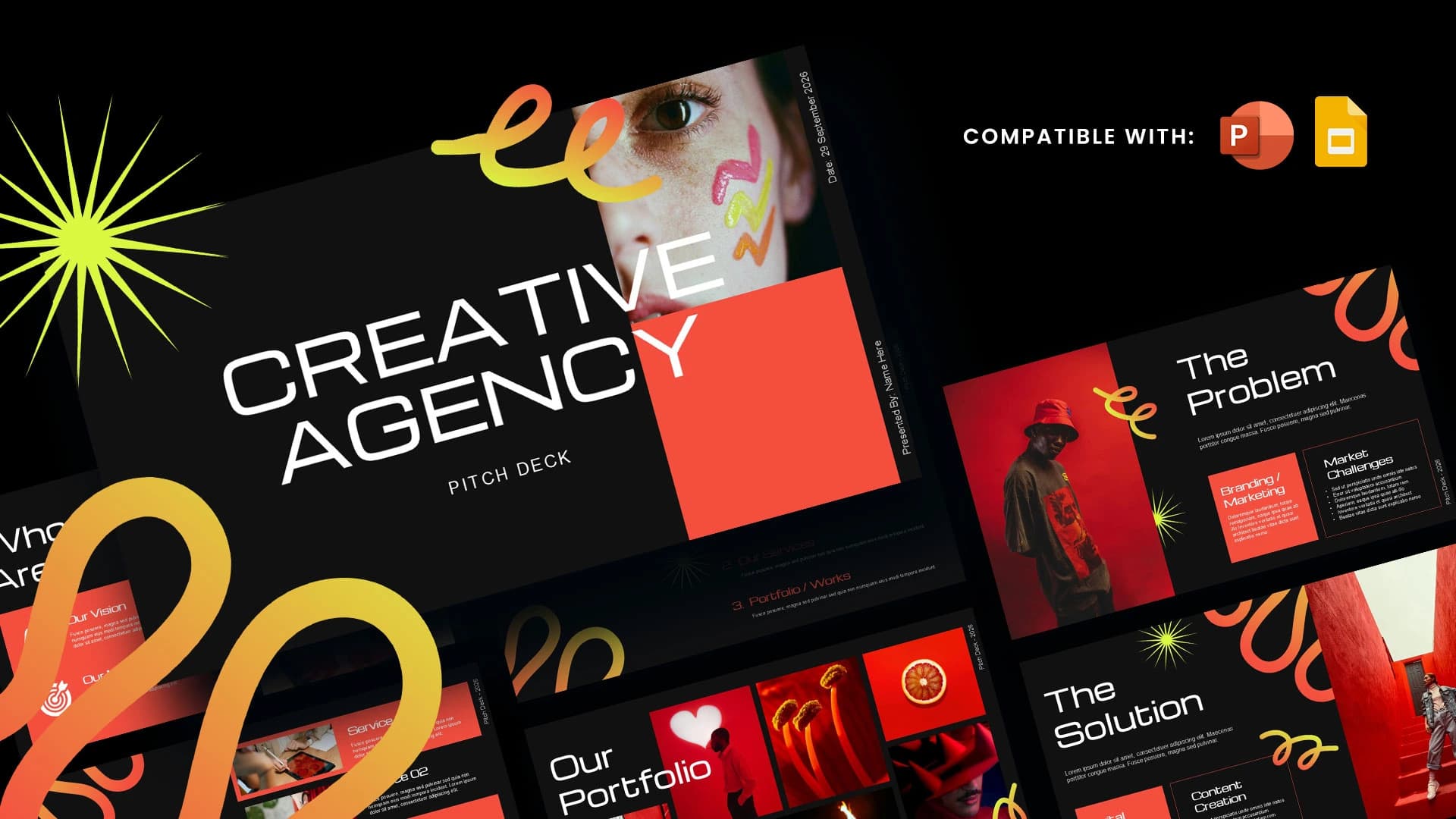
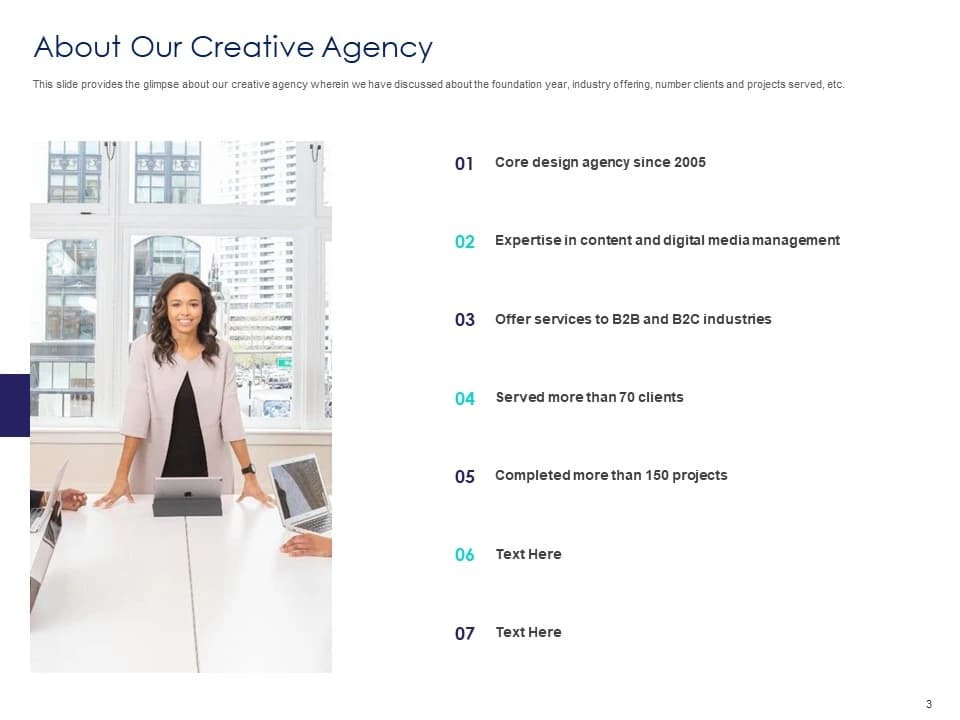

The Pitch Deck Is the Only Marketing Material That Wins Accounts
A search for "marketing materials" returns 9,080 monthly queries across ten related terms: marketing collateral, marketing flyers, print marketing materials, marketing brochure, marketing pens, marketing graphics, marketing templates, marketing campaign template, marketing strategy template. Zero independent agencies are competing for any of it.
That's not a gap. That's a signal. The document that actually wins a nine-figure account defection from a holding company isn't a brochure. It isn't a flyer. It's a deck, usually under 20 slides, that nobody optimizes for search because nobody thinks to. The internet's definition of "marketing materials" and the industry's definition have split apart, and the split tells you more about how independents actually sell themselves than any case study compilation ever could.
This is a teardown of that gap: what's actually in the decks winning Fortune 500 briefs right now, why the generic templates flooding that keyword cluster get the format wrong, and what founders building or refreshing their own materials should steal.
The Cluster Nobody Is Fighting For
Ten keywords, 9,080 combined searches a month, zero agencies ranking. Break the cluster down and it splits into two distinct audiences asking two distinct questions, and almost nobody serving either one is an agency.
The first half is vendor-side: marketing pens, marketing flyers, print marketing materials, marketing brochure. These are small businesses and event planners looking for a printer, not a strategist. The second half is strategist-side: marketing templates, marketing campaign template, marketing strategy template, marketing graphics. These are the people who actually resemble an agency's buyer, someone trying to structure a plan before they've hired anyone to execute it.
That second half is where the whitespace lives. Nobody currently owns the search intent behind "marketing strategy template" from an agency-credibility angle. The people ranking there are template marketplaces and generic business blogs, not shops that have actually built the document that got them into a review against three holding company networks. That's the disconnect: the operators with the most relevant, most tested, highest-stakes version of "marketing strategy template" content, the actual pitch deck, aren't publishing any version of it as content. They're treating it as proprietary IP instead of top-of-funnel proof.
Independent agency operations, as a discipline, has never been about search volume. It's been about relationships, reputation, and the deck itself doing the talking in a room. But the search data says there's demand for the thinking behind that deck, decoupled from the pitch it was built for. Nobody's filling it yet.
What the Deck Actually Has to Do
Strip away the branding and every winning pitch deck is doing the same four jobs in the same order: prove scale without headcount, prove taste without adjectives, prove trust without a logo wall, and prove speed without saying the word "agile."
Scale without headcount is the hardest one, because it's counterintuitive to how procurement teams are trained to think. A holding company network deck leads with people: 40,000 employees, offices in 90 countries, a chart of disciplines. An independent deck can't win that argument and shouldn't try. Instead, the winning move is timeline compression: showing how fast the work scaled relative to the size of the team that made it happen.
Madwell is the clean example of how that timeline reads when it's built right. Four people in 2011. Peloton by 2018. SiriusXM by 2020. By 2023, Hims & Hers running the most-talked-about Super Bowl spot of the year. That's not a slide that says "we've grown." That's a slide that says "look how little time this took and how little team it required." The paradox does the selling. Nobody needs a caption explaining the achievement, because the dates do that work without the cliché.
Trust without a logo wall is the second job, and this is where independents consistently outperform the templates flooding that "marketing strategy template" search cluster. Generic templates default to logo walls: rows of client icons meant to imply credibility through volume. But volume isn't the signal a CMO is looking for when they're deciding whether to leave a holding company relationship. Duration is. Wieden+Kennedy's 40-year Nike partnership isn't a logo on a wall. It's a number, one number, that does more trust-building than twelve client icons stacked in a grid. Four decades is a fact that a procurement committee can't argue with, and it reframes the entire pitch: this isn't a shop chasing a brief, this is a shop that keeps the briefs it wins for decades at a time.
Speed without the word "agile" is the third job, and it's the one most decks get wrong by overcorrecting. The instinct is to lean on process language borrowed straight from holding company vocabulary, the kind of phrasing built to describe workflow rather than conviction. That language is holding company language, and using it in an independent deck undercuts the entire pitch. The alternative isn't claiming speed. It's demonstrating it structurally, through how fast the deck itself moves from case study to case study, how little repetition there is, how few slides restate what the last slide already proved.
Where the Templates Get It Backwards
Run a search for "marketing campaign template" or "marketing strategy template" right now and what comes back is fill-in-the-blank: a slide for "objectives," a slide for "audience," a slide for "channels," a slide for "budget." It's a structure built for a marketing department building an internal plan, not for an agency trying to win a competitive review. That mismatch is exactly why zero agencies compete in this keyword space: the content that already ranks solves a different problem than the one an agency founder actually has.
An internal marketing plan template needs to justify a budget to a CFO who already trusts the department asking for it. A pitch deck needs to justify a relationship to a CMO who's actively being sold three other options in the same week, at least one of them backed by a holding company's procurement discount and global reporting infrastructure. Those are not the same document, and treating them as the same document is the single most common operational mistake in independent agency marketing materials right now.
The generic template also has a structural flaw specific to how it handles proof. It leaves a blank slide labeled "case studies" or "results," assuming the user will drop in whatever they have. But the order proof appears in matters as much as the proof itself. A deck that opens with a named account win and closes with a generic capabilities slide reads backwards. The counterintuitive fact, the paradox, needs to be the second or third slide max, not buried on slide fourteen after the reader has already decided how much attention this document deserves.
Marketing collateral and marketing materials, as generic categories, assume a passive reader flipping through at their own pace. A pitch deck assumes an adversarial reader actively looking for a reason to default back to whatever incumbent they already trust. That's the deeper problem with borrowing structure from the "marketing strategy template" search results: those templates are built for a reader who wants to be convinced. An agency's deck has to work for a reader who's actively resisting being convinced, because switching away from a holding company relationship carries internal risk for the person making that call. The deck has to do more than present information. It has to absorb objections before they're raised.
What Independence Actually Buys You Here
The advantage independents have in building this specific document isn't scrappiness. It's speed of iteration without a compliance layer standing between the strategist and the slide.
A holding company network deck has to clear brand guidelines, legal review, and often a global template mandated from a regional headquarters. That process protects consistency across hundreds of offices, which matters when you're managing that scale. But it also means the deck can't say anything sharp, can't lead with a genuine paradox, can't risk a sentence that sounds like conviction instead of consensus. Every sharp edge gets sanded down by the fourth reviewer.
An independent shop doesn't have that fourth reviewer. The deck can say "we don't do retainers under six figures" or "we turned down three category-conflicting briefs this year" because there's no global brand team weighing in on whether that's on message. That specificity, stated plainly instead of hedged, is the single biggest differentiator between decks that read like they were built by committee and decks that read like they were built by the person who's going to do the actual work.
This is where "agency operations marketing" stops being an abstraction and becomes a real operational choice founders have to make deliberately. Every hour spent softening a deck to sound safer is an hour spent making the independent shop sound more like the holding company alternative it's competing against. The deck's job is to widen the gap, not close it.
Independence also buys founders control over how often the deck gets rebuilt. A holding company network refreshes brand materials on a cycle set by corporate marketing, often annually, sometimes less. An independent shop can rebuild its deck the week after a major win, immediately, while the case study is still fresh enough to include exact numbers instead of vague retrospective language. That immediacy compounds. A deck updated within weeks of a win reads current. A deck updated once a year reads like it's selling last year's version of the shop.
The Physical Collateral Question
Half the search volume in this cluster, marketing pens, marketing flyers, print marketing materials, isn't about decks at all. It's about physical swag: what gets handed out at a conference booth, what gets mailed with a proposal, what sits on a desk after a meeting. It's tempting to dismiss that half of the cluster as irrelevant to how agencies actually win business. It isn't irrelevant. It's just secondary, and treating it as primary is a common misallocation of a small shop's limited marketing budget.
Print marketing materials still matter at the margins, mostly as a trust signal at industry events where an agency's physical presence gets compared directly against a holding company's booth. But the operational mistake is spending disproportionate energy there relative to the deck itself. A well-produced brochure handed out at a conference has a shelf life measured in days. A well-built deck, sent after a first call, gets forwarded internally, sits in inboxes for weeks, and often gets reused by the buyer to sell the switch internally to their own leadership. The deck does the actual selling long after the meeting ends. The pen doesn't.
That's the real lesson buried in the keyword split: 9,080 monthly searches, mostly for things that don't influence a competitive review, and almost none of that volume aimed at the one document that actually decides these accounts. Founders optimizing their marketing spend around what shows up in a Google search for "marketing materials" are optimizing for the wrong half of that number.
Building the Deck: What to Actually Do
Lead with the paradox, not the capabilities slide. If the shop has 14 people and landed a Fortune 500 account that three holding company networks pitched for, that's slide two, not slide twelve. The gap between size and achievement is the entire pitch. Don't bury it under an agenda slide.
Cut every instance of "full-funnel," "integrated," "agile," and "360." These are holding company words. They signal process, not conviction, and they make an independent deck sound like it's auditioning to be acquired rather than trying to win the brief in front of it.
Replace the logo wall with a duration stat. One long-term relationship, stated as a number of years, does more trust-building than a dozen client logos with no context. If there isn't a decades-long relationship yet, use frequency instead: how many campaigns for the same client, how many consecutive years renewed.
Build the timeline as a stack, not a list. Year, client, outcome, year, client, outcome, each one building on the last, ending on the most recent and most impressive. That's the propulsive structure that makes four data points read like unstoppable momentum instead of four unrelated bullet points.
Say the specific thing the shop won't do. A deck that states a real constraint, a floor on retainer size, a refusal to take category conflicts, a stated point of view on a format the industry overuses, reads more credible than a deck that claims to do everything for everyone. Specificity is a trust signal. Range is not.
Refresh it within weeks of a major win, not on an annual cycle. The compliance-free advantage independents have over holding company networks only matters if it gets used. A deck that's twelve months stale has surrendered the one structural edge independence provides.
Where This Goes Next
Nobody is currently writing to that "marketing strategy template" search intent from a credibility angle, and that whitespace won't stay empty indefinitely. The 9,080 monthly searches in this cluster aren't going to redistribute themselves toward agency-built content by accident. Someone has to decide to publish the thinking behind their own deck, stripped of client-confidential specifics, as proof of process rather than proprietary secret.
The shops that get there first will own a piece of search demand that currently belongs to generic template marketplaces with no actual pitch-winning track record behind them. That's a strange kind of advantage: not a creative advantage, not a client-roster advantage, just an attention advantage that's sitting unclaimed because the industry has treated its own operational materials as too private to publish.
The deeper pattern underneath all of this: independent agencies have gotten better at building the document that wins the room and worse at treating that document as anything other than disposable once the room is won. The next competitive edge in independent agency operations isn't a sharper deck. It's the shop willing to show its work.
Free Agency Media Editorial
All news