The Production Floor Has Moved to the GPU
Premium brands now need 3D configurators and immersive experiences. Traditional agencies can't deliver. Independent studios built around real-time rendering are exploiting the gap.
The Production Floor Has Moved to the GPU
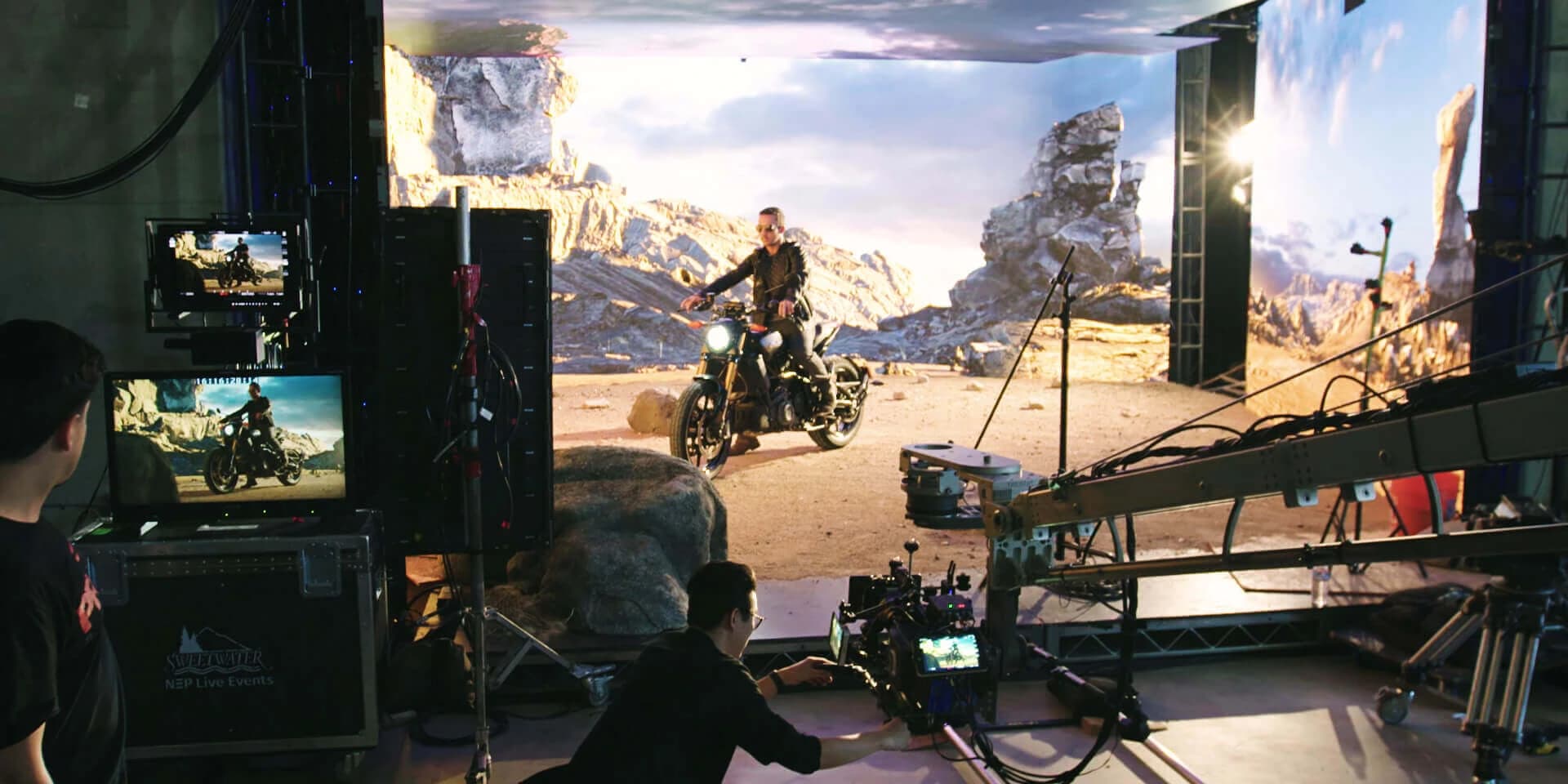
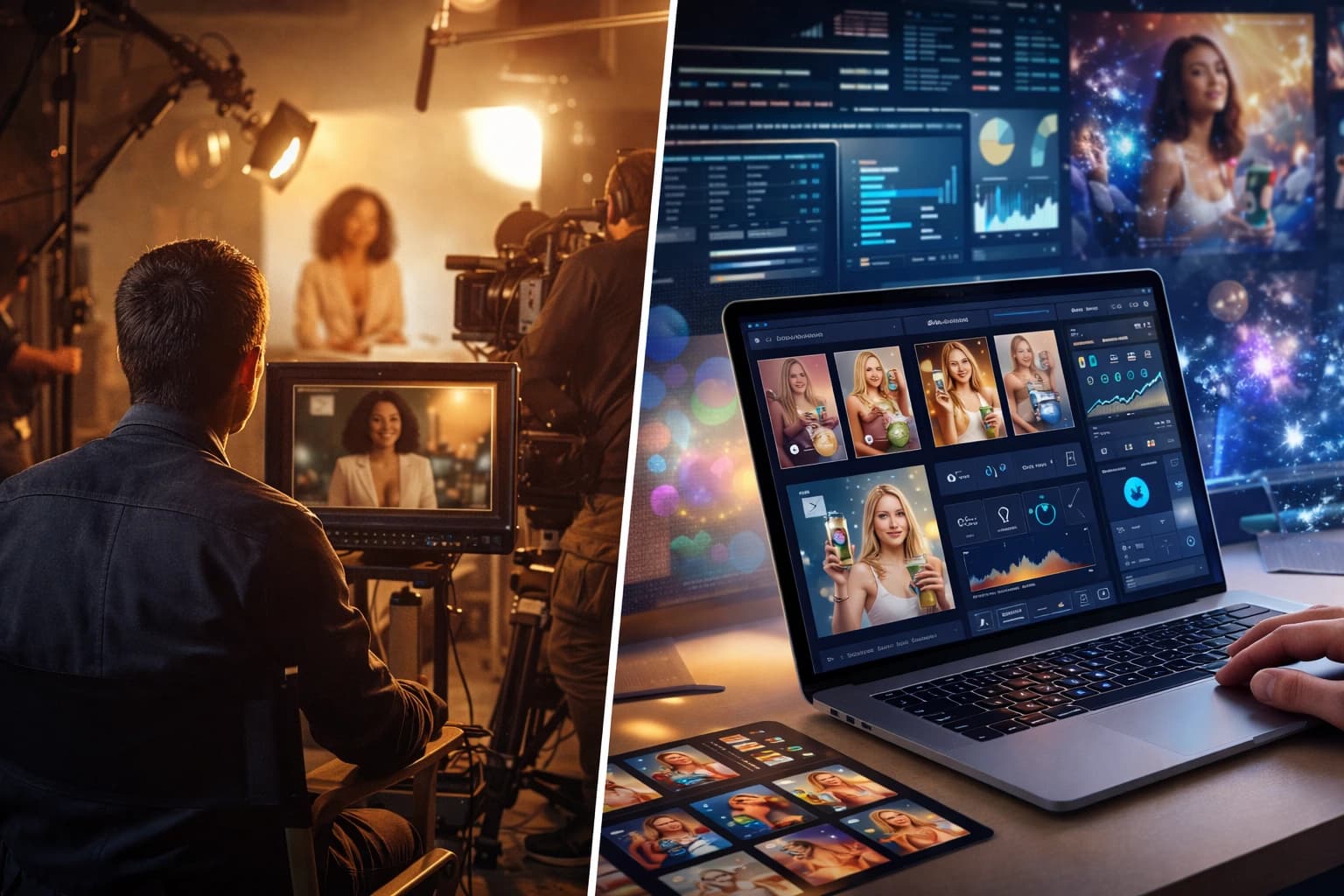
The Fortune 500 marketing executive who hired a holding company agency in 2019 expected TV spots and banner ads. The Fortune 500 marketing executive hiring in 2024 expects a navigable 3D product configurator that runs at 60fps in the browser. Traditional agencies brought copywriters and art directors. The client brief now asks for WebGL engineers and Blender artists.
The gap between what premium brands need and what traditional agencies can deliver has created a technical moat that a specific class of independent studios is exploiting with precision. Studios built from the ground up around real-time rendering pipelines, game engine workflows, and immersive experience architecture. Not creative shops that dabbled in 3D or animation houses that added a web team.
The paradox: the agencies winning this work are often smaller than the in-house creative teams at the brands hiring them.
Zero Search Volume, Massive Client Demand
Search volume for "3D brand design agency" sits at effectively zero. Same for "Blender commercial work," "immersive brand experiences," and every related term in this technical cluster. Total monthly searches across the entire keyword set: statistically negligible.
Yet the client briefs flood in. Biotech companies need molecular visualization interfaces. Fintech platforms want crypto wallet experiences that feel like navigating physical space. Premium automotive brands require configurators where users can examine stitching detail on leather seats from any angle. The disconnect between search behavior and market demand reveals something critical: procurement isn't happening through Google. It's happening through referrals, portfolio reviews, and direct outreach from brands who know exactly what they need and exactly how rare it is to find shops that can deliver it.
This is the opposite of commoditization. When everyone can do something, search volume explodes as buyers comparison shop. When almost nobody can do something, buyers don't search. They hunt.
Technical requirements create natural barriers. A traditional agency can hire a 3D artist. They cannot quickly assemble a team that understands physically based rendering workflows, real-time optimization for web delivery, and brand storytelling simultaneously. The integration is the moat. Knowing how to make something beautiful in Blender means nothing if you can't get it to load in under two seconds on a mobile device while maintaining brand consistency across 40 SKU variations.
What Premium Clients Actually Need (And Can't Get From Holding Companies)
The brief from a Series C fintech startup: build an interactive 3D environment where users explore financial products as physical objects in space. Navigation via scroll and cursor. Must work on any device. Must feel premium, not gimmicky. Must load instantly. Must convey security and sophistication while being genuinely useful.
Holding company agency response: concept deck with static 3D renders, timeline of 6-8 months, recommendation to "phase the approach" starting with 2D parallax scrolling as a "test."
Independent studio response: functional WebGL prototype in two weeks showing navigation paradigm, performance benchmarks, and three visual directions. Full build-out in 8 weeks. Deployment-ready code, not mockups.
Speed differences stem from technical architecture, not hustle culture. Studios built around game engine pipelines and real-time rendering don't need to "figure out how to execute" the brief. The brief describes their core competency. They're not adapting a traditional advertising workflow to accommodate 3D. The workflow IS 3D.
This creates a genuine expertise gap. Traditional agencies organize around media channel: the TV team, the digital team, the social team. These studios organize around rendering pipeline and interaction paradigm. When a biotech company needs a 3D anatomical model that users can rotate, section, and annotate in real-time, they're not looking for "the agency that did our last print campaign plus some 3D capability." They're looking for a studio where the entire team thinks in polygons, materials, and frame rates.
Client sophistication is rising faster than agency capability. Brand-side teams now include former game developers, VR specialists, and creative technologists who know exactly what's possible. They can spot the difference between a studio that models in Blender and then renders stills versus a studio that builds for real-time interaction from the first vertex. The brief itself functions as a filter: agencies that don't immediately understand the technical constraints self-select out.
The Talent Arbitrage Nobody Talks About
Premium 3D capability doesn't come from advertising backgrounds. It comes from game studios, VFX houses, architectural visualization, and product design. The independent studios winning this work aren't "hiring 3D artists." They're hiring people who spent five years optimizing character models for Unreal Engine or building procedural generation systems for automotive configurators.
This talent doesn't apply to holding company agencies. The organizational structure doesn't support it. A specialist who can write custom shaders and optimize render pipelines doesn't want to report to a creative director whose last technical skill was Photoshop CS3. The work culture doesn't translate. Someone used to iterating in real-time preview doesn't adapt well to "we'll see comps next Tuesday."
Independent studios built around technical craft attract technical craft. The portfolio is the recruiting tool. A designer who spent three years building particle systems for Nike product launches looks at the studio's case studies and sees kindred work. They see evidence that the studio understands what they do and how to value it.
Compensation models differ too. Holding companies have standardized salary bands based on years of experience in advertising. Independent studios price for capability: what can you build, how fast can you build it, how well does it perform. An artist who can create photorealistic materials and optimize them for web delivery at 60fps commands different economics than someone who can make pretty renders.
The best technical talent concentrates at studios that structure around technical excellence. The gap widens. Holding companies try to bridge it by "adding 3D capability" through acquisitions or new hires. But buying a studio and integrating it into a traditional agency destroys exactly what made the studio valuable: the tight integration between technical capability and creative vision.
Where the Work Actually Comes From
Client pipeline for this work doesn't resemble traditional advertising procurement. No RFP process. No credentials deck comparing twelve agencies. The brand already knows what they need is rare. They shortlist based on portfolio proof.
Biotech companies hiring for molecular visualization look at previous molecular visualization work. Not "creative that won awards." Not "campaigns for healthcare brands." They want to see evidence you've rendered protein structures, built interactive cellular environments, or created anatomical models that scientists found accurate.
Fintech platforms hiring for immersive experiences review technical case studies about performance optimization, progressive loading strategies, and interaction paradigms. They want frame rate benchmarks, not mood boards.
Premium automotive configurators: the client team includes engineers who will review the actual code. They're evaluating rendering efficiency, material authenticity, and scalability across model years. The pitch isn't about creative concept. It's about technical execution.
This changes what "winning the business" means. Traditional agency new business: relationship driven, credentials focused, ideas led. Technical studio new business: portfolio proven, capability demonstrated, execution validated. The studio that gets hired is the studio that's already done similar work and can prove performance metrics.
Referral networks are tight. A brand that successfully deployed a 3D product experience talks to other brands attempting similar builds. The conversation isn't "who should we pitch" but "who actually did this for you and did it work." Studios that execute well get direct referrals to similar briefs. No search required. No agency review process. Just: "We need what they built for you."
This creates concentration effects. A studio that executes one premium automotive configurator becomes the go-to for premium automotive configurators. A studio that builds one successful biotech visualization platform gets every similar biotech brief for the next two years. Expertise compounds faster in technical domains than in traditional creative: the learning from project one directly improves execution on project two in measurable ways.
The Moat Question: Defensible Advantage or Temporary Gap
The critical question: is this sustainable differentiation or a five-year window before technical capability becomes table stakes?
Three years ago, basic WebGL implementation was specialized. Today it's expected. Two years ago, real-time ray tracing was cutting edge. Today it's standard in game engines. Next year, AI-assisted 3D modeling will compress what used to take a team of artists weeks into what one artist accomplishes in days. Technical advantage decays.
But the decay pattern matters. "Can execute basic 3D" becomes commoditized quickly. "Can execute 3D at premium performance standards while maintaining brand consistency across complex product lines" remains rare longer. The moat isn't knowing how to use Blender. The moat is knowing how to use Blender AND optimize for web delivery AND understand materials AND maintain brand standards AND ship on deadline.
Integration creates the barrier. Tools become more accessible. Integration of tools, taste, performance optimization, and brand storytelling remains hard. A freelancer can learn Blender in six months. A studio that can confidently say "yes" to a Fortune 500 brief requiring 3D product configurators across 200 SKUs with localization for 12 markets takes years to build.
AI generates assets. It doesn't generate coherent brand systems across those assets. It doesn't optimize for performance. It doesn't understand interaction paradigms. The brief isn't "make a 3D model." The brief is "build an experience that performs at 60fps, loads in under two seconds, works across devices, maintains brand standards, and actually serves the user need."
Studios currently winning this work aren't winning because they monopolize the tools. They're winning because they've integrated the tools into a reliable system for delivering what premium brands actually need: proven performance, brand-consistent execution, and delivery timelines that traditional agencies can't match.
What This Means for the Independent Landscape
The 3D capability trend represents something larger than one technical skill becoming valuable. It demonstrates how technical craft creates natural boundaries around certain types of client work.
Traditional advertising agencies succeeded by being generalists who could execute across channels. The "full service" agency could handle TV, print, digital, social, experiential. The holding company model assumed that breadth created value: one relationship, many outputs.
Technical specialization inverts that logic. Premium brands increasingly need depth in specific capabilities more than they need breadth across channels. They need someone who can build a WebGL-based product configurator better than anyone else, not someone who can build a mediocre configurator plus run their social media.
This creates natural territory for independent studios. The studio built around 3D pipeline excellence will beat the holding company agency that "added 3D" every time the brief actually requires 3D excellence. Not because they're scrappier or hungrier. Because they've organized their entire operation around delivering that specific outcome.
The pattern repeats across technical capabilities. AI implementation. Voice interface design. Generative systems. Real-time personalization. Each creates boundaries that favor studios built around that capability over agencies trying to bolt it onto existing structures.
The question for independent studios: which technical capabilities create durable differentiation? 3D rendering is valuable now. It may be table stakes in three years. Studios that survive aren't the ones that mastered one tool. They're the ones that built systems for rapidly mastering whatever tool the brief requires while maintaining the integration that clients actually hire for.
The advantage isn't knowing Blender. The advantage is knowing how to take a complex client brief, translate it into technical requirements, assemble the right combination of tools and talent, and deliver work that performs. That integration remains rare regardless of how accessible individual tools become.
The Client Expectation Ratchet
The Fortune 500 brand that launched a successful 3D product experience sets a new baseline for every competitor in that category. Automotive configurators went from "nice to have" to "mandatory" in 18 months after the first premium brand deployed one that users actually preferred to dealership visits.
One successful 3D implementation proves the concept. Twenty brands immediately brief their agencies on similar builds. Agencies that can't deliver lose those clients to studios that can. Talent that understands these builds concentrates at the studios winning them. The gap widens.
Traditional agencies face a timing problem. By the time they recognize a technical capability has become mandatory, the best talent is already working at specialized studios, those studios have two years of case studies proving execution, and the client brief explicitly requests experience with that specific capability. "We're building that competency" doesn't win against "we've shipped twelve of these."
Independent studios that recognized 3D demand early built portfolio proof while demand was still emerging. That proof becomes the credential for the next wave of briefs. The compounding effect creates market position that's difficult to disrupt: these are the studios that do this work, evidenced by the fact that these are the studios that have done this work.
Zero search volume. Maximum client demand. That's not a contradiction. That's a signal about where value concentrates when technical capability creates natural moats. The studios that built their operations around real-time 3D aren't competing on the same playing field as traditional agencies anymore. They've moved to a different game entirely, one where the barrier to entry isn't creative taste or client relationships but technical integration that takes years to develop and proves itself one flawless 60fps experience at a time.
Free Agency Media Editorial
All news