Restaurant Marketing's SEO Vacancy: Software Owns It, Diners Reject It
Zero independent agencies rank for 'digital marketing for restaurants.' Software platforms own the SERP, but diners are publicly rejecting the templated content that strategy produces.
Zero independent restaurant marketing agencies rank in the top ten results for "digital marketing for restaurants." Not one. The keyword pulls 320 searches a month across its cluster, real demand from real restaurant owners looking for real help, and every single link pointing back at them is either a SaaS platform's blog or a Reddit thread. Toast's Tock brand has a page. So does Popmenu. So does TheFork. So does Rezku. Even Salesforce and Deloitte Digital have shown up to publish generic guides on a topic none of them practice for a living. The people who actually do this work for restaurants, the agencies who shoot the food, run the local SEO, and build the loyalty programs, aren't in the conversation at all.
That's not a content gap. That's a vacancy notice.
The SERP Is a Software Sales Funnel, Not a Marketing Resource
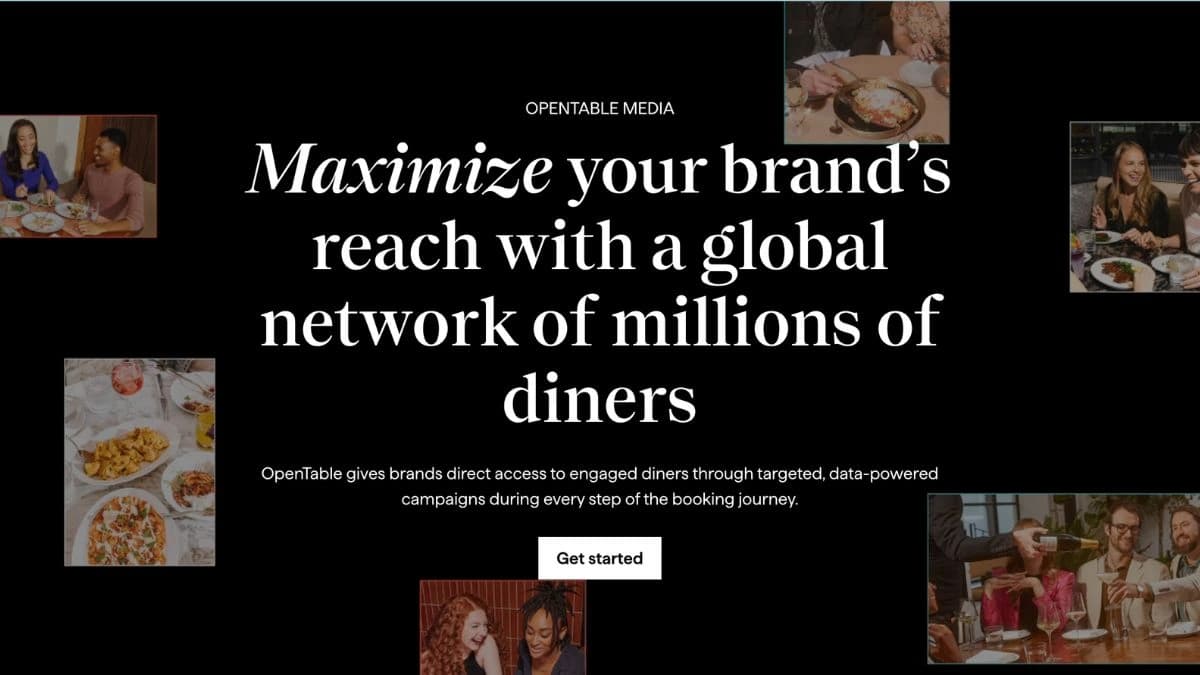
Look at what's actually ranking. Popmenu's "Ultimate Beginner's Guide to Digital Marketing for Restaurants" went up January 6, 2026. Rezku published its own "2025 Guide" on July 10. TheFork's guide landed December 17, 2024. Toast's Tock brand runs a resources page under exploretock.com. Malou, a hospitality software platform, published an "Online Marketing Tips" piece in April 2026. That's five reservation, ordering, and POS platforms, all publishing marketing advice inside the same twelve-month window, all optimizing for the same query.
None of them sell marketing. They sell software. The blog post is the funnel. A restaurant owner searches "digital marketing for restaurants," lands on Popmenu's guide, reads eight hundred words about email lists and social calendars, and the call to action at the bottom isn't "hire an agency." It's "start your free trial." The content is generic by design because generic content converts to software signups. It doesn't need to be right for a specific restaurant. It needs to rank and redirect.
Deloitte Digital's entry, published September 12, 2025, is the outlier that proves the rule. A global consulting firm writing about "social media business transformation and creator strategy" for restaurants isn't competing for restaurant clients. It's demonstrating category expertise to land enterprise retainers nowhere near the corner bistro. Salesforce's page sits inside its retail software vertical for the same reason. These are brand plays wearing an SEO costume.
Add up the field: of the nine results actually ranking for this query, eight are published by software companies or consultancies with zero hands-on restaurant marketing delivery. The ninth is a Reddit thread where an actual marketer, not a platform, tells restaurant owners the same thing agencies have known for years: manage valuable content, chase reviews, understand that search behavior has changed. A crowdsourced forum post is currently outranking every marketing agency in America for a query with commercial intent. That should embarrass the industry more than it does.
Meanwhile, the adjacent term "restaurant marketing agencies" pulls 720 searches a month, more than double the volume of the generic query the platforms have claimed. That's a search string with buyer intent baked into the words themselves. Someone typing "restaurant marketing agencies" isn't looking for a beginner's guide. They're looking to hire. And the field competing for it, according to the data, is effectively empty: zero agencies currently own visible, defensible ground on the broader cluster this term sits inside.
What Diners Are Actually Rejecting
Here's where the platform strategy runs into a wall the SEO data doesn't show. While Popmenu and Rezku are optimizing generic guides to sell software subscriptions, the diners those restaurants are trying to reach are actively rejecting the exact kind of content the platforms are pushing them toward.
The backlash on X isn't subtle. One post, from @OGsDontFold, calls out restaurants running AI-generated menus and flyers directly, arguing it signals a lack of capital and corner-cutting on quality. Another, from @bettyrosewrote, is sharper still: AI-generated ads make people assume "your food isn't nice enough to market on its own." That's not a fringe take. It's the exact opposite of what a software platform's content engine is built to produce: more templates, faster turnaround, less human judgment about whether a stock-feeling image undercuts the thing it's supposed to sell.
@wariocolosseum's replies echo the same frustration: misleading AI imagery instead of real food photography reads as a red flag, not a flex. And @rekinsports frames the broader problem as skepticism toward "over-engineered" marketing that distracts from mediocre food. Diners are pattern-matching. Slick, templated, AI-flavored marketing has become a tell, not a selling point.
@kripalamanna's post cuts closest to the strategic question restaurants actually need answered: are you in the food and beverage business or the content business? The advice that follows is blunt. Forced content often fails and can actively damage reputation. Let the food do the talking instead of chasing reels and skits built for algorithm reach rather than table turns.
This is the gap the platforms cannot close, structurally, no matter how good their content team gets. Popmenu, Toast, TheFork, and Rezku are software companies. Their business model depends on scale, templates, and repeatable output across thousands of restaurant accounts. Authenticity does not scale that way. Real food photography requires someone in the actual kitchen, with the actual dish, under actual lighting, for that actual restaurant. Local SEO that works depends on genuinely local signals: real reviews, real community ties, not a templated Google Business Profile checklist copy-pasted across a software company's entire client base. Community and loyalty programs that diners trust are built on specific relationships, not generic drip campaigns triggered by a POS system's marketing module.
The platforms know the content matters. What they can't offer is the thing diners are now actively screening for: proof that a human who cares about this specific restaurant made this specific thing.
The Defensible Niche Is Authenticity, and It Can't Be Templated
This is the strategic opening independent agencies aren't currently claiming, at least not where Google can see it. Three specific plays sit directly in the gap between what SaaS platforms can mass-produce and what diners are demanding.
Real food photography is the most obvious. A platform blog post can tell a restaurant owner to "use high-quality images." It cannot show up with a camera. Every one of the nine ranking guides mentions photography or visual content as a tactic. Not one of them can execute it. That's a service, not an article, and it's the single most repeated advice item across the entire SERP with zero delivery mechanism behind it.
Local SEO is the second play, and it's more defensible than it looks. TheFork's guide and Rezku's guide both mention local SEO as a component of a broader strategy. Rezku's July 2025 piece even states plainly that "the best strategy combines a strong local SEO presence, active social media engagement, a user-friendly" experience, essentially admitting that local search visibility is foundational, then moving on without explaining how a single restaurant actually wins that visibility against every other restaurant in a three-mile radius. Generic local SEO advice, applied identically across a software platform's entire client roster, doesn't differentiate anyone. Genuinely local execution, built restaurant by restaurant around specific neighborhoods, specific competitor gaps, and specific review patterns, is exactly the kind of work a templated content engine can't replicate at scale.
Community and loyalty is the third, and it's the one the X conversation keeps circling back to without naming it directly. @kripalamanna's point about letting the food do the talking isn't an argument against marketing. It's an argument against marketing that ignores the relationship a restaurant already has with its regulars. Loyalty programs bundled into POS software track transactions. They don't build community. An independent agency that understands a restaurant's actual neighborhood, actual regulars, and actual story can build loyalty mechanics around that relationship instead of around a generic points system every other restaurant on the same platform is running too.
Put those three together and you get a positioning statement no software platform can credibly make: not templated, not automated, not selling a subscription. An agency built this way works in the kitchen, in the neighborhood, and in the comments section, doing work a content management system cannot do on its own behalf.
The Practitioners Already Building This, Off the SERP
The interesting part is that this positioning isn't theoretical. It's already showing up, just not where Google is currently pointing people. The same X conversation that's tearing apart AI-generated restaurant content is also where actual practitioners are pitching the counter-model directly.
@ASTRALCOMLLC's post frames consistency, not flashy creativity, as the actual competitive edge for independent restaurants, a direct rebuttal to the algorithm-chasing content @kripalamanna warns against. That's a meaningful distinction. The platforms' guides are full of tactics: post here, email there, run this promo. What's largely absent from every one of the nine ranking pages is any mention of consistency as a strategy in itself, the unglamorous discipline of showing up the same way, week after week, until a local audience trusts the pattern.
@polsia and @PromeGrowth are both pitching specifics that map directly onto the authenticity gap: short-form video, local SEO, micro-influencer partnerships, delivery platform optimization across DoorDash and Uber Eats, Google Business Profile management, and trackable metrics built for independent restaurant budgets rather than enterprise retainers. @polsia also raises transparent pricing and no-retainer models as an explicit differentiator, a direct answer to the trust problem restaurant owners have with marketing spend that never shows measurable return. That's not a small detail. A restaurant owner burned once by a vague monthly retainer is exactly the kind of buyer searching "restaurant marketing agencies" 720 times a month looking for something that reads as accountable rather than abstract.
Even the M&A chatter reinforces the pattern. @ClareAdvisors' notes on specialized food and grocery-focused agency listings suggest consolidation interest is already forming around vertical-specific marketing expertise, a signal that the category is being recognized as investable even as it remains invisible on page one of Google.
And the branding critique in @ProjectConstitu's post, aimed at a national chain's decision to overhaul its graphics and menu rather than preserve what customers already trusted, is the cautionary tale in miniature. Authenticity isn't a tactic you bolt on. It's the asset you protect. The independent agencies positioning around real photography, real local presence, and real community relationships aren't inventing a new value proposition. They're the professional version of the instinct every frustrated X post in this dataset is reaching for: stop performing marketing and start doing the specific, credible, unscalable work that makes a specific restaurant worth choosing.
Why the Vacancy Won't Stay Empty
None of this is complicated to explain, and all of it is currently unclaimed. Zero independent marketing agencies rank for a term generating 320 monthly searches. The adjacent term with clear commercial intent, "restaurant marketing agencies," pulls 720 searches a month into a field with no defensible content presence at all. The platforms occupying that space: Popmenu, Toast's Tock brand, TheFork, Rezku, Malou, Salesforce, and even Deloitte Digital, are optimizing generic guides to sell software subscriptions, not marketing outcomes. And the diners those restaurants are trying to reach are, in real time, on X, actively rejecting the templated, sometimes AI-assisted content that generic strategy produces.
That's a genuine strategic opening. Independent restaurant marketing agencies don't need to outspend Toast's content budget or out-publish Popmenu's blog cadence. They need to do the thing software cannot: show up in the actual kitchen with a camera, build actual local search visibility restaurant by restaurant instead of template by template, and turn an actual neighborhood relationship into an actual loyalty mechanic. That work doesn't scale the way a SaaS platform's content engine scales, and that's precisely why it's defensible. A platform can copy a blog post. It cannot copy a specific restaurant's specific story, told by someone who was actually there to tell it.
The next twelve months will decide whether independent agencies claim this ground or leave it to the platforms by default. The demand is already documented: 320 searches here, 720 there, real numbers attached to real intent. Diner backlash against templated and AI-generated content is already public, already loud, already naming the exact failure mode the platforms are built to produce at scale. Practitioners already building the counter-model, the consistency-over-flash operators, the transparent-pricing shops, the local-first specialists, are already talking about it on X. What's missing is the SERP catching up to the reality on the ground. Right now, a Reddit thread outranks every agency in the country for a query with commercial intent attached to it. That won't last. Somebody is going to write the guide that isn't a funnel for a software trial, name the restaurants they've actually shot, actually ranked locally, and actually built loyalty for, and take the ten spots currently held by companies that have never once run a shift.
Free Agency Media Editorial
All news