Why Tech Startups Pay $200K for Brand Identity Work Traditional Agencies Can't Do
Boutique studios fluent in 3D web development are winning six-figure brand identity projects that holding company divisions never see. The capability gap has become a pricing gap.
The $150,000 brand identity project landed in a 9-person studio's inbox on a Tuesday. Not from a Fortune 500 brand. Not from a legacy company with a decades-old identity problem. From a seed-stage AI startup that wanted their brand to exist as a navigable 3D environment before it existed as a logo. The holding company branding divisions never saw the RFP. They weren't even in consideration.
This is the new reality of brand identity work in 2025. Tech startups don't want static brand guidelines. They want immersive digital experiences that feel native to WebGL, Spline, and Three.js. They want brands that move, that react, that exist in spatial dimensions. The agencies winning these engagements aren't the established brand consultancies with 40-year track records. They're boutique design studios that learned 3D web development because the internet demanded it.
The economics tell the story. A 12-person shop fluent in real-time 3D rendering can charge $120K-$200K for brand identity work that traditional agencies still quote at $80K for static deliverables. The capability gap has become a pricing gap. Independence isn't the limitation here. Technical fluency is the differentiator.
The Zero-Search Paradox
Here's what makes this shift invisible to most of the industry: nobody is searching for it yet. The keyword cluster around "3D web design agencies," "immersive brand identity," and "Web3 branding agencies" generates zero monthly searches according to aggregated SEO data. Zero. Not declining searches from a previous peak. Not low interest that's growing. Absolute radio silence in search behavior.
But studios are shipping spatial brand systems. Startups are paying $120K-$200K for them. The client briefs explicitly request "spatial brand systems" and "WebGL-native identities." The disconnect between search volume and market activity reveals something critical about how boutique studios win high-value work in 2025: they're not being discovered through Google searches. They're being found through portfolio sites, Dribbble showcases, Awwwards features, and direct referrals from founders who saw a 3D web experience and said "we need that for our brand."
Traditional brand consultancies still optimize for "brand identity agency" and "startup branding services." Those keywords still generate thousands of monthly searches. But the clients typing those queries aren't the clients writing $150K checks for immersive brand systems. Those clients are searching for specific studios whose work they've already seen. The discovery path bypassed traditional search entirely.
This creates a knowledge asymmetry. Legacy branding agencies see zero search demand for 3D web capabilities and conclude the market doesn't exist. Boutique studios see their inboxes filling with RFPs that explicitly require real-time 3D rendering and conclude the market is screaming for this work. Both are looking at accurate data. Both are reaching opposite conclusions. The difference is proximity to the actual buying behavior.
What Tech Startups Actually Want
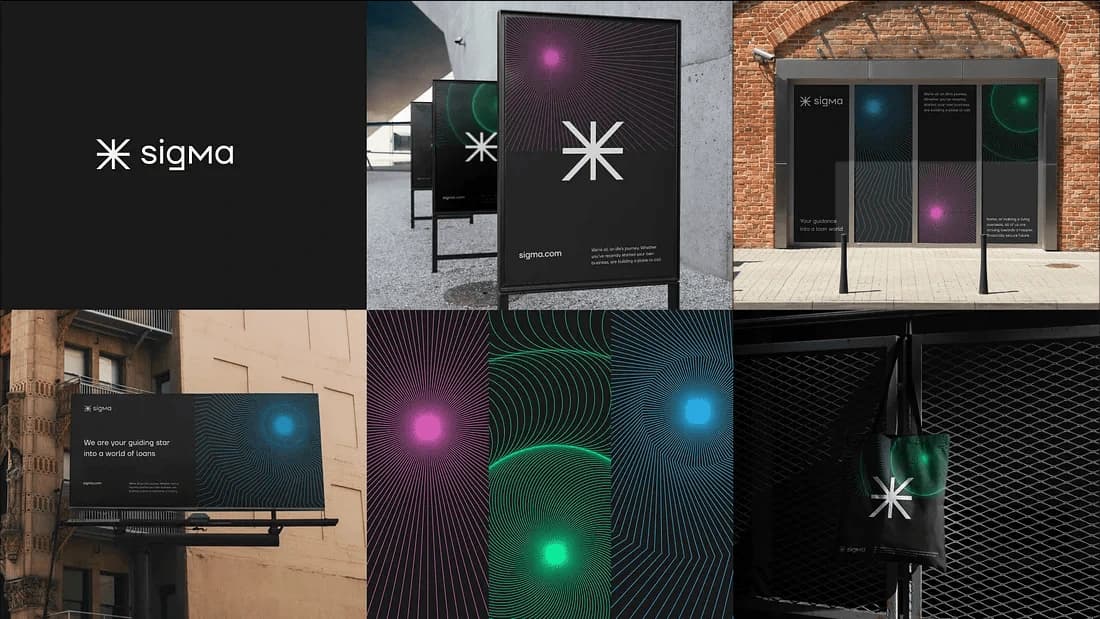
The brief from the AI startup was explicit: create a brand identity system where the logo is a physics-enabled 3D object that users can rotate, where color palettes shift based on interaction state, where typography exists in z-space and responds to cursor position. Deliverables included a Figma file, yes. But also a React Three Fiber component library. A Spline scene file. A WebGL shader collection. The brand guidelines weren't a PDF. They were a live GitHub repo.
No holding company branding division has a creative team structured to deliver that. Their brand identity process still flows through print-first thinking: develop the mark, define the color system, establish the typography, create the guidelines, hand off to digital teams for "activation." The whole methodology assumes the brand exists first as a static system that then gets adapted for digital contexts.
Boutique studios fluent in 3D web development inverted that flow. The brand exists first as a spatial, interactive system. Static applications are the adaptation, not the source. When your lead brand designer is writing GLSL shaders and your art director is pushing commits to the component library, you're not adapting a print identity for web. You're building a digital-native brand that can be frozen into static formats when necessary.
Tech founders building AI platforms, Web3 infrastructure, and spatial computing tools understand this instinctively. Their products exist in interactive, dimensional space. Why would their brand identity be flat? The conceptual mismatch between what they're building and what traditional brand consultancies deliver is obvious the moment they see a 60-page PDF of logo lockups and color specifications.
The capability gap isn't about adding 3D artists to the team. It's about rebuilding the entire brand development process around real-time rendering, physics engines, and component-based design systems. It's about thinking in framerate and interaction states instead of CMYK values and print bleed. Most established agencies aren't doing this because it requires dismantling 30 years of process infrastructure. Boutique studios are doing this because they never built that infrastructure in the first place.
The Economics of Spatial Brand Systems
A traditional brand identity engagement for a seed-stage startup runs $60K-$100K. Deliverables: logo system, color palette, typography, basic guidelines, maybe some templates. Timeline: 8-12 weeks. The studio assigns a senior designer, a junior designer, and allocates some strategy time.
An immersive brand identity engagement runs $120K-$200K. Deliverables: everything above, plus 3D brand assets, WebGL components, interactive guidelines site, motion systems, spatial design tokens. Timeline: 12-16 weeks. The studio assigns a senior designer who codes, a 3D artist who understands brand systems, and a creative technologist who bridges both.
The price difference isn't padding. It's skill scarcity. A senior brand designer who can also write React Three Fiber code commands higher rates than a senior brand designer who works exclusively in Illustrator. A 3D artist who understands brand consistency across spatial contexts is rarer than a 3D artist who makes product renders. The labor market for these hybrid skills is tight. Boutique studios hiring for this work are competing against game studios, product design teams, and VR companies for the same talent pool.
Here's the margin math that makes this work for small shops: the $200K project staffs two people for 12 weeks. Maybe 960 billable hours total if you're running lean. At $200K, that's $208 per billable hour. A well-run independent studio hitting 75% utilization and 60% margin on that rate is grossing $156 per hour after direct costs, or roughly $150K in gross profit on the engagement. That's enough to support two senior-level specialists in a high-rent market and still make the project worth taking.
Compare that to a traditional $80K brand identity project staffing a senior designer at $150/hour and a junior at $75/hour for 8 weeks. You're looking at roughly 640 billable hours, or $125/hour blended rate. At 60% margin, that's $75/hour gross profit, or $48K gross profit on the engagement. You need three of those to equal one immersive brand identity project's margin contribution.
The studios mastering 3D web work aren't doing more projects. They're doing fewer, higher-value projects with better margin profiles. That's the independence advantage: you can rebuild your entire service offering around an emerging capability because you don't need to retrain 200 people or maintain legacy process infrastructure. You hire two people who already know this stuff and you're in the market.
The Holding Company Silence
Not a single major branding consultancy owned by WPP, Omnicom, Publicis, or IPG has published a case study for a 3D web-native brand identity system. Not one. Their portfolio sites feature hundreds of brand redesigns. Many for tech clients. Zero that position the brand system as a spatial, interactive environment first and a static identity second.
This isn't because holding company studios can't hire 3D artists or web developers. It's because their client engagement model doesn't support the workflow. When you're staffing projects through a resource management system that allocates people by discipline, you can't easily assign a brand designer who codes or a 3D artist who understands typography. The system wants clean role definitions: this person does brand strategy, this person does visual design, this person does web development. Hybrid roles break the machinery.
Boutique studios don't have resource management systems. They have small teams where everyone does three things. The person building the 3D brand assets is also the person writing the design tokens and probably also the person doing client presentations. Role fluidity is the operating system. That's why they can ship work that requires constantly crossing discipline boundaries.
The other structural problem: holding company branding divisions sell retainer relationships and long-term partnerships. A $200K one-time brand identity project doesn't fit the business model. They want the $2M annual retainer where brand identity is the entry point for ongoing campaign work, social content, experiential activations, and media strategy. If the client just wants the brand system and plans to handle everything else in-house, the economics don't work.
Tech startups hiring for immersive brand identity want exactly that: the brand system, delivered well, and then they're handling the rest internally. They have in-house designers. They have product teams that can implement the WebGL components. They don't want or need the ongoing relationship. They want specialized expertise for a specific capability gap, delivered at a specific moment. That's a project model, not a retainer model.
So the work flows to boutique studios built for project-based engagements with technical depth. The holding companies aren't losing pitches for this work. They're not being invited to pitch at all. The RFPs go to studios whose portfolios demonstrate the exact capability the client needs. By the time a traditional agency hears about the opportunity, the contract is already signed.
What Happens When the Search Volume Appears
Right now, zero monthly searches for "3D web design agencies" or "immersive brand identity" means boutique studios are winning this work through portfolio visibility and direct referrals. But search behavior lags market activity by 12-18 months. The clients hiring for this work today aren't searching because they already know which studios can deliver. They saw the work, they reached out directly.
When search volume does appear, it will signal that the market has moved from early adopters to early majority. Founders who haven't seen the portfolio work, who don't have the direct referrals, who are just now realizing they need a spatial brand system. That's when "3D web design agencies" starts generating 1,000 monthly searches. Then 5,000. Then the holding company branding divisions notice and start publishing thought leadership about "the future of immersive brand identity."
By then, the boutique studios shipping this work in 2025 will have 50-100 case studies. They'll rank for every long-tail variation of the search query. They'll have the Awwwards features and the Dribbble followers and the GitHub repos full of open-source WebGL components. The market position will be entrenched. The late movers will be competing for scraps.
This is the pattern across every technical capability shift in the agency world: the studios that build the capability before the search demand appears own the category when the demand materializes. The studios that wait for search volume to validate the market are always two years late. They watch the early movers establish category dominance while they're still building business cases for investment.
The zero-search paradox isn't a sign that the market doesn't exist. It's a sign that the market is still being shaped by the early movers. The clients are already here. The budgets are already flowing. The search queries just haven't caught up yet. When they do, the agencies already doing this work will be the ones capturing that demand. The knowledge gap will have become a market position gap.
The Independence Thesis Holds
This is not about boutique studios competing with holding companies. This is about small shops identifying an emerging capability gap and moving faster than legacy agencies could. The advantage isn't scrappiness or determination. The advantage is structural: when you're nine people, you can rebuild your entire service offering around a new technical skill set in six months. When you're 900 people, that same rebuild takes three years and a restructuring plan.
Independence is the speed. The ability to hire two people with hybrid skills and immediately be in the market for high-value work that established competitors can't staff efficiently. The ability to price based on capability scarcity instead of competitive benchmarking. The ability to focus on project-based engagements with technical depth instead of retainer relationships with broad scope.
The tech startups writing $150K checks for immersive brand identity aren't doing it because they love supporting independent agencies. They're doing it because the boutique studios mastered a capability that the legacy branding consultancies haven't. That's the market signal: when clients explicitly request skills that traditional agencies don't have, independence becomes the strategic advantage. Size becomes the liability.
The 3D web shift has already happened. Agencies building spatial brand systems today are winning work traditional branding divisions don't even know exists. Zero search volume doesn't mean zero market. It means the market is moving faster than the search behavior tracking it. By the time Google Trends catches up, the category leaders will already be entrenched. The capability gap will have become a competitive moat.
That's exactly how independence is supposed to work. Small studios spot the emerging capability gap, build the skills, ship the work, and establish market position before the legacy players realize the game has changed. The zero searches today are the proof that it's working. When those searches appear, it will be too late for the slow movers. The independents will already own the category.
Free Agency Media Editorial
All news