Toyota and Burrell: The 55-Year Agency Bond Nobody Searches For
Toyota's 55-year relationship with Burrell Communications generates zero search volume, and that silence reveals what real agency durability looks like.
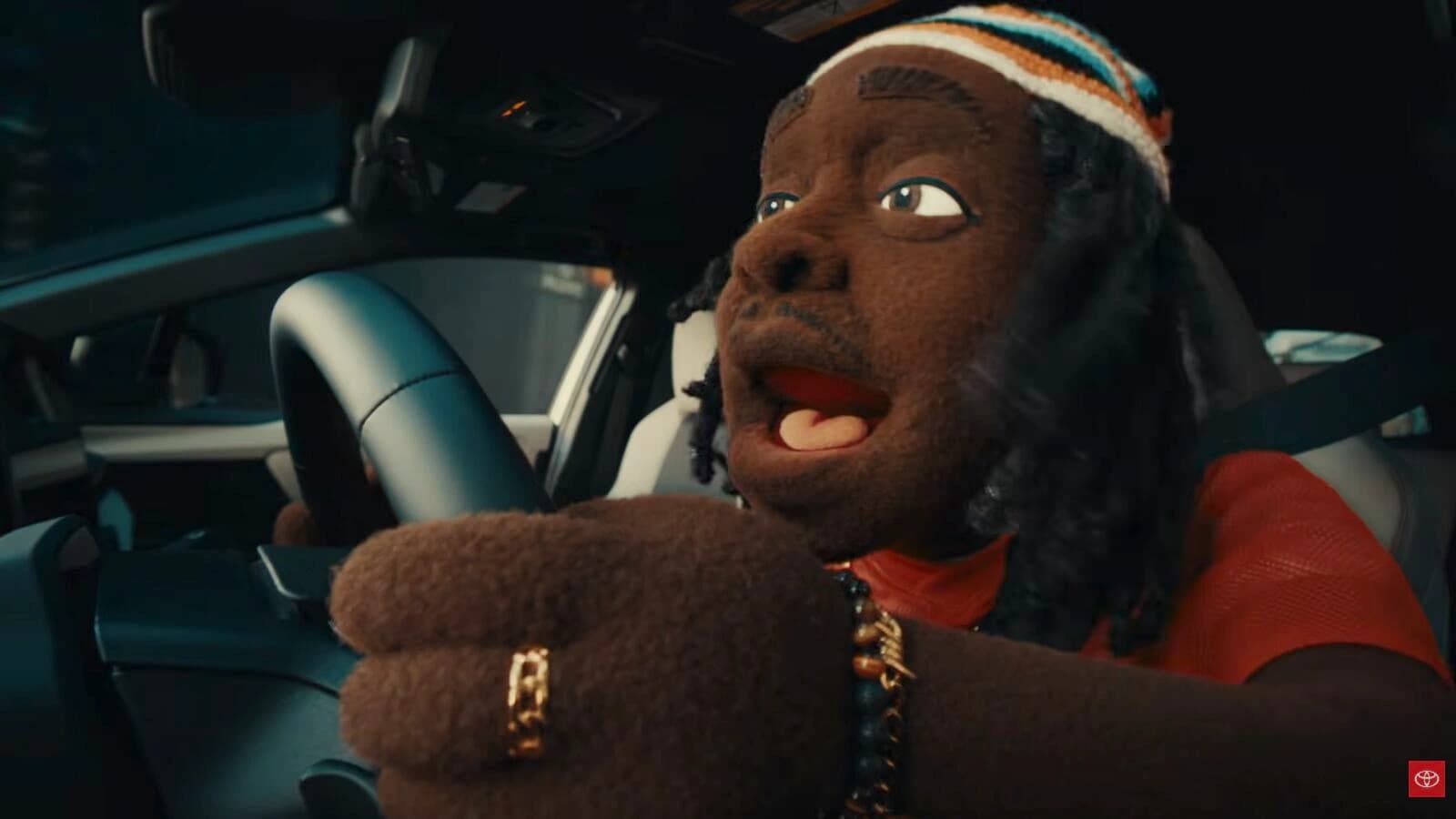


Zero. That is the monthly search volume for "Toyota taps Burrell Communications." Zero people typed it into Google last month. No agencies show up competing for that phrase. Not a single article occupies the search results explaining what just happened between one of the largest automakers on earth and a 55-year-old independent shop out of Chicago.
That absence is the story.
When a holding company wins a piece of Fortune 500 business, the trade press runs it within hours. AdAge has the headline before the ink dries on the press release. When Burrell Communications extends its multicultural mandate with Toyota, the internet shrugs. No breaking news alert. No LinkedIn pile-on. No SERP battle for the keyword. Just a campaign that ships, does its job, and disappears back into the quiet machinery of a relationship most of the industry has stopped paying attention to precisely because it has worked for so long that it stopped being news.
That is not a marketing failure. That is what durability looks like when nobody is performing for an audience of trade reporters. Burrell Communications did not need a press cycle to hold Toyota's African American consumer business. It needed decades of proof. And decades of proof is exactly what the search data, or the lack of it, reveals.
The Zero That Tells the Real Story
Run the full keyword cluster: "toyota," "toyota agency," "toyota campaign," "independent agency wins," "brand agency relationship." Combined search volume across all five terms: zero. Not low. Zero. This is not a hot topic. It is not trending on X. Nobody is fighting for rank position one through ten because there is no fight to be had.
That should tell every agency founder something important about where the real advantage lives. The stories the industry chases in real time, the pitch wins, the account reviews, the "shop of the year" headlines, are also the stories every competitor is chasing at the same volume, in the same news cycle, off the same three sources. The stories nobody is searching for are the ones nobody has built a defensible position around yet. Zero search volume is not a dead end. It is an open lane.
Burrell has occupied that lane for longer than most agencies have existed. Founded in 1971 by Tom Burrell, the agency built its entire identity around a philosophy Burrell himself coined: positive realism, the idea that Black consumers deserved to see themselves depicted with dignity and specificity rather than as a demographic afterthought bolted onto a general market script. That philosophy was never a marketing angle. It was the founding thesis of the company, and it remains the same thesis that has kept Burrell relevant across 55 years of an industry that has consolidated, collapsed, and rebuilt itself around holding company math at least three times over.
Fifty-five years is longer than WPP has existed in its current form. It is longer than most of the agencies currently occupying trade press headlines have been alive. And it happened without a single dollar of the search volume the industry treats as the measure of relevance.
Fifty-Five Years of Positive Realism
Here is what makes the Burrell story different from the standard indie agency profile: it is not a story about a small independent agency that broke through. It is a story about an agency that identified a category the general market agencies were structurally incapable of serving well, built the only durable specialty inside that category, and then held that ground for five and a half decades while the rest of the industry cycled through mergers, private equity buyouts, and holding company reorganizations.
Positive realism was never a campaign tagline. It was a business model disguised as a creative philosophy. General market agencies in the 1970s were not equipped to speak to Black consumers with cultural fluency, and they knew it. That gap did not close because the big shops tried harder. It closed because an independent agency built the infrastructure, the relationships, and the creative point of view that made it the only credible option for brands serious about that consumer.
That is the part other independents miss when they study legacy agencies. The lesson is not "find a niche." Every agency founder has heard that advice and nodded along without doing anything about it. The real lesson is sharper: find the niche a holding company cannot acquire its way into. Holding companies can buy scale. They can buy media inventory, buy data platforms, buy production capacity. What they cannot buy is 55 years of cultural trust built one campaign at a time with a consumer base that has been marketed to badly by outsiders for generations. Burrell did not compete on price or headcount. It competed on the one asset a holding company literally cannot manufacture on a quarterly earnings timeline: credibility that compounds.
That compounding is the whole story of why Toyota keeps coming back. A single great campaign gets you a project. Fifty-five years of positive realism gets you the account.
Why Toyota Runs a Segmented Agency Roster
Toyota moves more than 2 million vehicles a year in the United States, across a buyer base that does not behave like a single monolithic audience segment, because no buyer base that large ever does. So Toyota, like most Fortune 500 marketers with serious scale, runs a segmented roster: a general market agency of record handling the mass campaign, and specialist shops, Burrell among them, handling the audiences the general market lens consistently underserves.
This is not tokenism. It is math. A general market creative team optimizing for the broadest possible reach will, by design, produce work calibrated to an average. Multicultural audiences are not an average. They are specific, and specificity is exactly what general market creative sands down in the pursuit of mass appeal. Toyota's roster structure is an admission that one agency, however talented, cannot authentically serve every audience segment with the same creative point of view. Rather than force a single shop to be everything to everyone, Toyota built a portfolio: broad reach where broad reach works, cultural specificity where specificity is the entire value proposition.
This is where the holding company pitch deck starts to wobble. WPP, Omnicom, Publicis, IPG, and Dentsu, the five networks that dominate global holding company revenue, all maintain multicultural units. On paper, those units look like Burrell. In practice, they are frequently satellite divisions inside a much larger general market machine, staffed and resourced in proportion to how the parent network prioritizes the account that quarter. When budgets tighten, multicultural units are often the first line item scrutinized, because they sit organizationally adjacent to, rather than structurally central to, the holding company's core business.
Burrell does not have that problem, because Burrell does not have a general market division subsidizing or deprioritizing its multicultural work. The multicultural work is the entire business. There is no internal budget fight for resources because there is no competing division to fight with. That structural simplicity is a business advantage disguised as a limitation. Every dollar Toyota puts into the relationship goes toward the specialty, not toward propping up a parallel general market apparatus with its own competing priorities.
That is the real answer to why Toyota keeps a segmented roster rather than asking one agency to do it all: authenticity does not scale down from a general market lens, and it does not survive being treated as a rounding error inside a holding company's quarterly resource allocation. It survives inside an agency built around nothing else.
The Defensible Lane Holding Companies Can't Buy
Every agency founder who has ever built a pitch deck has heard the same advice: differentiate. Find your niche. Own a lane. Almost none of them have built a lane a holding company genuinely cannot enter. Most "specialties" in this industry are capabilities: TikTok-first content, AI-assisted production, performance media, whatever the trend cycle currently rewards. Capabilities can be acquired. A holding company can buy a 40-person TikTok shop for eight figures and bolt it onto its network by Monday. That is not a defensible lane. That is a shopping list item.
Cultural credibility built over 55 years is not a shopping list item. It cannot be acquired in a transaction because it does not exist as an asset separate from the trust that built it. If WPP acquired Burrell tomorrow, the acquisition itself would change the nature of the thing being purchased. The trust that took five decades of positive realism to build is not portable into a holding company org chart without altering what made it trustworthy in the first place: independence, continuity, and a client relationship built on specificity rather than scale.
This is the lesson independents keep skipping past in favor of chasing capability differentiation. A capability lane gets you acquired. A trust lane gets you kept independent, because the moment you sell, you break the thing you were selling. Any agency founder studying Burrell's trajectory should be asking a harder question than "what can we do that others can't do yet." The better question is this: what can we build that a holding company literally cannot replicate through acquisition, because replicating it would destroy the value in the process?
Very few answers survive that filter. Deep, decades-long cultural fluency with an underserved audience is one of the only categories that does. It explains why Burrell has stayed independent through 55 years of an industry defined by consolidation. It also explains why the relationship with Toyota is not a single campaign win worth a press release. It is a retention story, and retention stories do not generate search volume, because retention is quiet by design. Nobody writes headlines about a marriage that is still working.
What the Trade Press Isn't Covering
Zero search results. Zero competing agencies fighting for the keyword. That gap in the data is not a footnote. It is the actual finding. The industry's editorial infrastructure, the trade publications, the awards shows, the "shops to watch" lists, is built to reward the new: account wins, creative launches, agency mergers. It is structurally uninterested in the old, the sustained, the relationships that have simply continued working for so long they no longer register as news.
That editorial bias has a real cost. It means the industry's collective understanding of what makes an independent agency durable is skewed almost entirely toward the moment of the win: the pitch that landed, the RFP that got answered. It has almost nothing to say about what happens in year 30 of a client relationship, or year 55 of an agency's existence, because that story does not fit the news cycle's appetite for the new.
But the moment of the win is the least interesting part of the Burrell story. Any agency can win a project. The interesting part, the part with actual instructive value for every independent founder reading this, is what happens in the 54 years between the first Toyota brief and this year's campaign. What does it take to remain the answer, year after year, campaign after campaign, while the industry around you consolidates into five holding company networks and reorganizes itself every 18 months?
The trade press has no beat for that question because there is no breaking news hook attached to it. There is no press release titled "Agency Continues to Be Trusted." But that is precisely the story independents need told, because it is the story that actually maps to how Fortune 500 relationships get built and kept. Not through a single brilliant pitch deck. Through five decades of showing up with work that respects the audience enough to get specific instead of settling for average.
The Long Game Independence Was Built For
Here is the uncomfortable truth for every agency founder chasing the next big pitch: winning is the easy part. Keeping is the hard part, and keeping is the part the industry has almost no vocabulary for. Burrell's relationship with Toyota is not a case study in landing an account. It is a case study in what an agency has to be structurally, culturally, and creatively in order to remain the answer for over five decades while the client's needs, the media landscape, and the entire competitive set around it changed almost beyond recognition.
That kind of longevity does not happen by accident, and it does not happen inside a holding company structure optimized for quarterly account reviews and network-wide resource reallocation. It happens inside an independent agency that built its entire identity around a single, durable idea, positive realism, and then refused to dilute that idea chasing whatever capability the market happened to be rewarding that year. Burrell did not pivot into general market work to chase scale. It did not turn itself into a broader, multi-service shop to compete on size. It stayed exactly what it was built to be, and stayed independent long enough for that specificity to become irreplaceable.
Toyota's segmented roster is not a temporary structure waiting to be consolidated the next time a holding company pitches "efficiency." It is a recognition that the general market lens and the multicultural lens require fundamentally different creative instincts, and that forcing both into a single agency produces work that serves neither audience well. As long as that recognition holds, and nothing in the current holding company earnings calls suggests otherwise, the lane Burrell occupies remains defensible.
For every other independent reading this, the lesson is not "specialize in multicultural marketing." The lesson is sharper than that: find the audience, the category, or the creative problem where authenticity cannot be faked, cannot be acquired, and cannot be replicated by a network assembling capabilities through M&A. Build your entire identity around solving that problem better than anyone else can, and then hold that position for longer than the industry's attention span rewards. The trade press will not cover you for it. The search volume will stay at zero. And 55 years from now, some other independent agency will be studying your longevity as the case study, wondering how you managed to stay the answer for so long that nobody thought to ask the question anymore.
That is not survival. That is what independence was built to do, and it is the standard every founder chasing the next headline should be measuring themselves against instead.
Free Agency Media Editorial
All news