The B2B Agency Search Term Nobody Claimed and What It Reveals
A zero-competition search term exposes a canyon-sized gap in B2B marketing: agencies still sell execution while AI has already commoditized it.
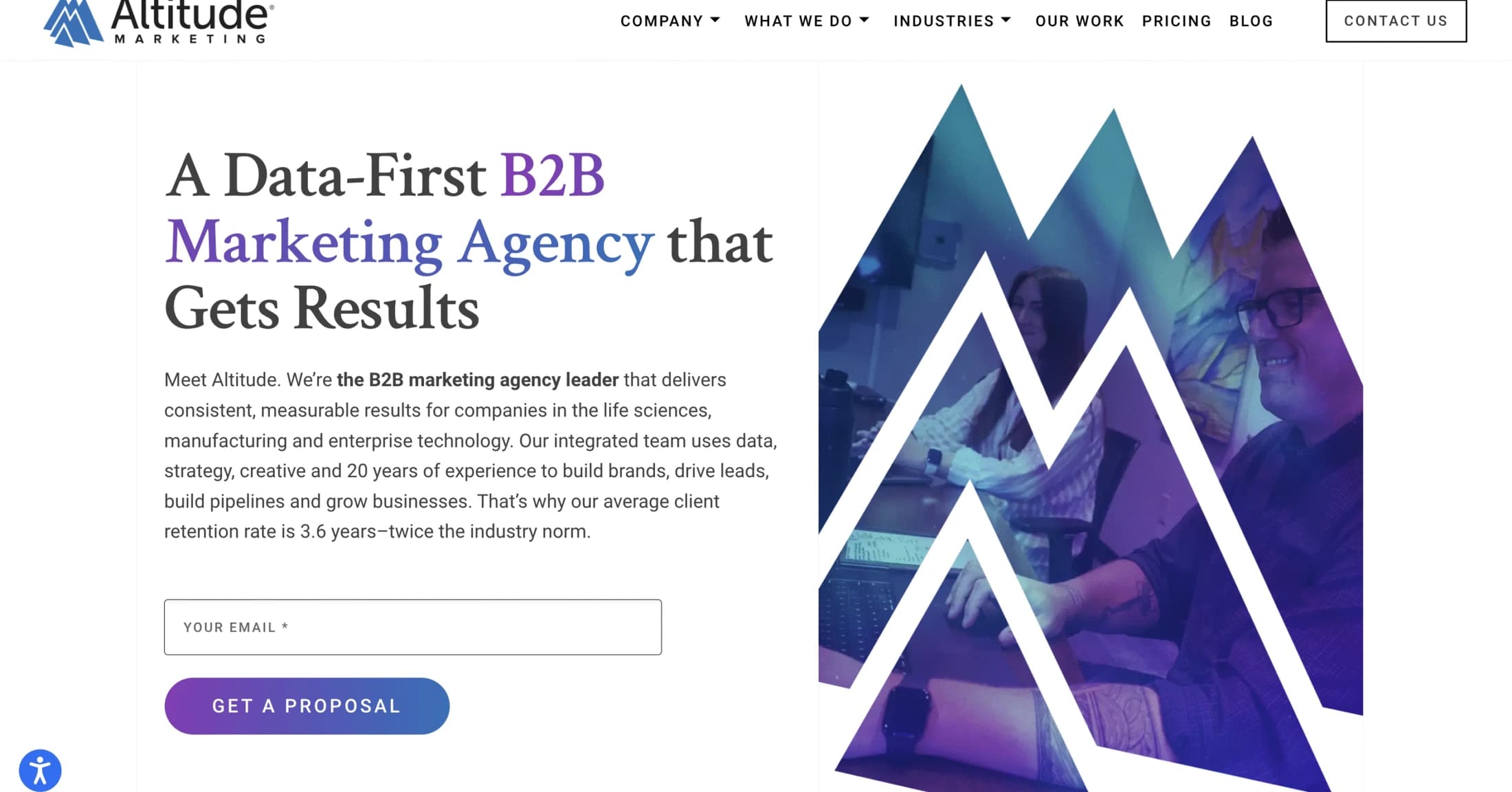
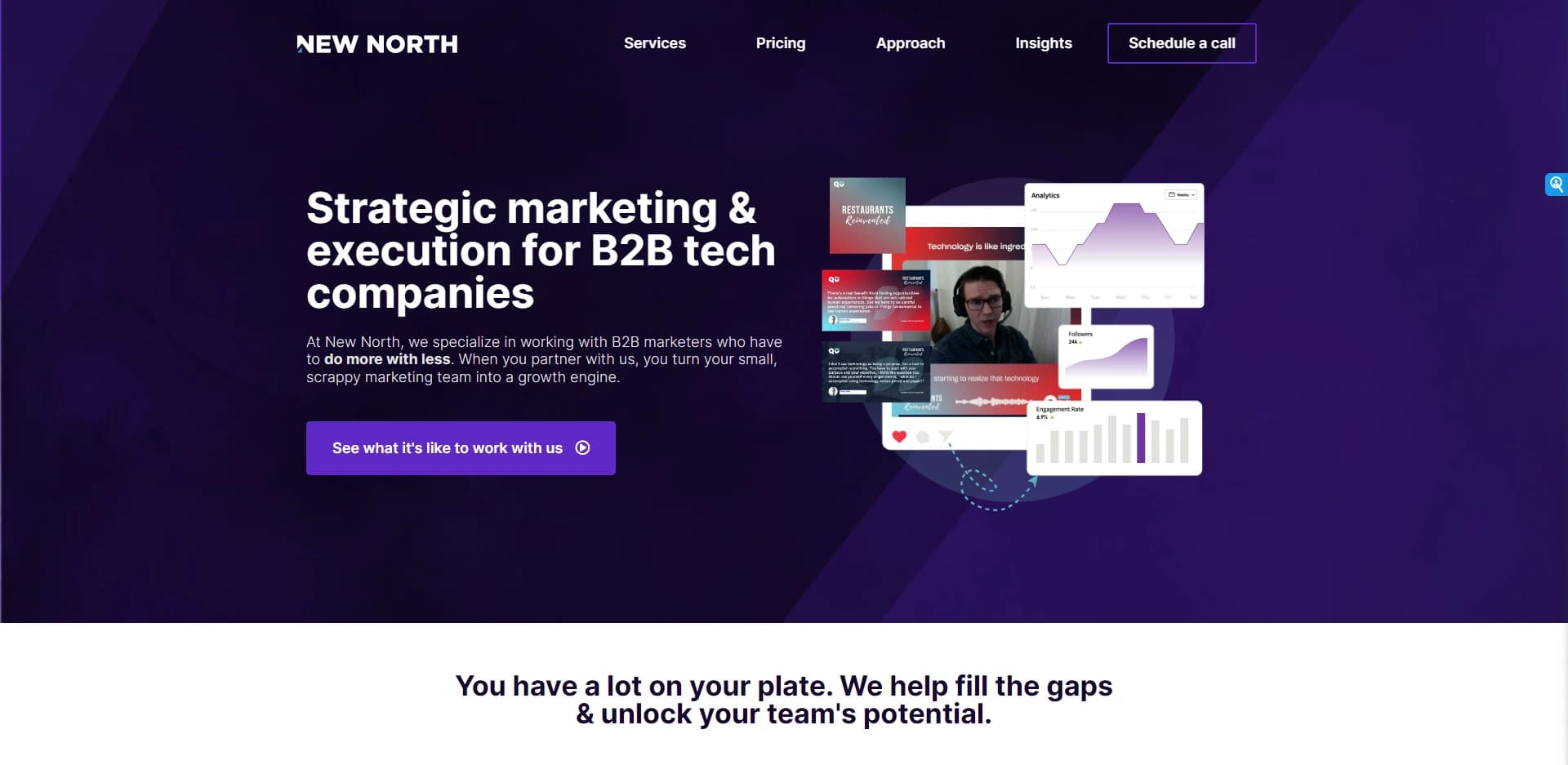
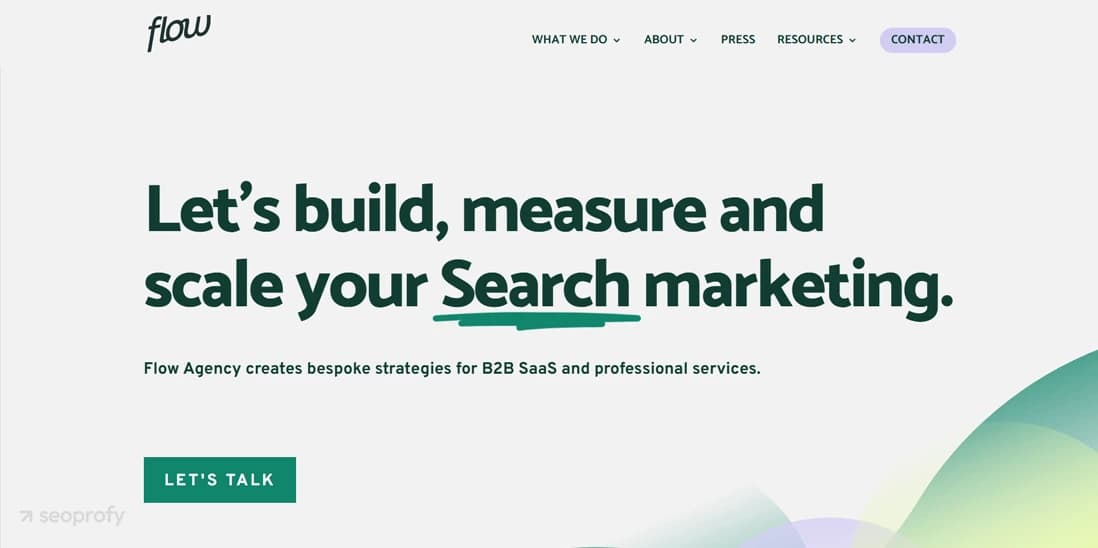
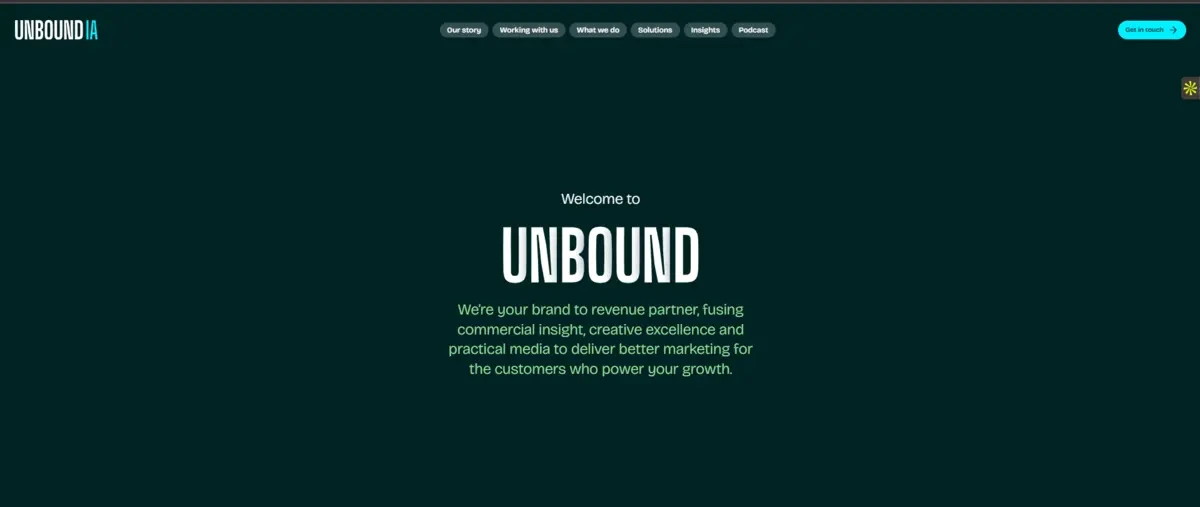
The search term "digital marketing for b2b companies" pulls 140 monthly searches. Zero agencies compete for it. Not one indie shop, not one holding company subsidiary, not one freelance consultant has bothered to rank for the exact phrase buyers type when they're trying to figure out who to hire. That's the paradox sitting in plain sight: a market where AI tools are producing more marketing content than at any point in history, and the actual positioning conversation, the one that answers "which agency model actually works now," is completely unclaimed.
This isn't a small gap. It's a canyon. And the reason it matters isn't SEO trivia. It's that the emptiness of that search result page is a mirror for the emptiness of the industry's self-description. Nobody is telling buyers what kind of agency wins in an AI-saturated market, because most agencies are still selling the thing AI just ate: execution.
Eight Links, Zero Agencies, One Missing Argument
Run the query yourself. The top ten results for "digital marketing for b2b companies" are a Reddit thread from a self-described "B2C performance marketer" wondering aloud whether B2B digital even works, a Salesforce guide, a Wrike explainer, a VC firm's thought piece, Nutshell's listicle, a LinkedIn business blog post, Landingi's feature roundup published June 30, 2026, and a Hinge Marketing strategy post from November 18, 2025. Eight links. Zero agencies. Not one shop showing up to say: here's what we do, here's why it works, here's proof.
That's not an SEO failure. That's a positioning failure at industry scale. When Salesforce and Wrike and LinkedIn own the definitional conversation around B2B digital marketing, and a Reddit thread questioning whether the discipline even works sits at position one, the message to any buyer researching this space is clear: nobody credible has claimed authority on how to actually win here. The software platforms have. The productivity tools have. The agencies haven't.
This is the opening indie shops have been waiting for without knowing it existed. Not a directory listing. Not another "Top 10 B2B Agencies" roundup competing with the same six sites everyone already ignores. A vacuum in the actual argument: what kind of agency model wins when AI has commoditized the thing agencies used to sell.
What AI Did to the Execution Layer
Here's the uncomfortable math. SEO used to be a moat. Paid media management used to be a moat. Content operations, the whole apparatus of blog calendars and email drips and campaign builds, used to be defensible expertise that justified a retainer. AI ate all of it in about eighteen months.
The discourse on X reflects this directly. One marketer, testing AI marketing agents firsthand, came away underwhelmed, noting that automated tools tend to produce generic SEO spam and low-quality creative, and that distribution and human oversight remain the actual bottleneck, not content generation itself. That's the tell. When the bottleneck moves from "can we make the content" to "can we make sure it doesn't sound like everyone else's content," the entire service menu of the traditional B2B agency stops being the product. It becomes table stakes.
Meanwhile the search behavior underneath all of this is shifting faster than most agencies are pricing their retainers. AI Overviews are up 58% in a single year and now trigger roughly 50% of all searches, according to marketing data circulating on X in 2026. That's not a gradual erosion of organic traffic. That's a structural rewiring of how buyers find anything, including the agencies who might help them market. The old game was rank tracking. The new game is citability: does an AI answer engine treat you as a credible source, or does it skip you entirely.
And buyers know the content is often hollow. Even AI's advocates on X concede the trust gap: 69% of B2B buyers now research vendors through AI tools first, then verify what they found with an actual human rep before trusting it. That number alone should reframe how every indie agency thinks about its value proposition. If nearly seven out of ten buyers don't trust the AI-assisted research enough to act on it without human confirmation, then the thing buyers are actually paying for isn't the research. It's the confirmation. It's judgment. It's a person willing to put their name on a claim.
That's the opening. Not "we do SEO better than AI can." Nobody wins that argument long-term, because AI gets better every quarter and SEO execution was never going to stay a human-only skill. The winning argument is "we're the verification layer buyers already say they need." Different pitch. Different value chain position. Different pricing logic entirely.
The Comprehension Gap: Why Reach Stopped Working
There's a second thread running through the current X discourse that matters just as much as the AI-skepticism angle, and it's about what actually breaks in B2B campaigns before they ever reach the AI question. One widely discussed take put it plainly: campaigns often fail at the comprehension stage, the gap between impression and action, and clarity problems can't be fixed by buying more reach. You can have flawless targeting, immaculate frequency, a beautifully optimized funnel, and still lose, because the buyer looked at the ad and didn't understand what you were actually offering.
This is a brand problem wearing a media-buying costume. And it's exactly the kind of problem AI cannot solve, because AI is extremely good at variation and extremely bad at conviction. It can generate forty headline options. It cannot decide which one is true to who you are and why that matters to a CFO evaluating six vendors at 11pm.
A separate but related critique making the rounds targets the mechanics of B2B lead generation directly: campaigns frequently waste sales time by making broad promises that generate volume instead of fit, flooding pipelines with unqualified leads. The fix proposed isn't more targeting sophistication. It's clarifying buying conditions upfront, being specific about company size, project scope, and fit criteria, even if that means fewer form fills. Fewer, better leads instead of more, worse ones.
Notice what both of these critiques have in common. Neither is a technology problem. Neither gets solved by a better AI tool, a smarter automation stack, or a faster content pipeline. Both are strategy and clarity problems, the kind that require a human who understands the client's actual business well enough to say no to volume in favor of precision. That's not execution work. That's judgment work. And judgment work is exactly what a 140-search-volume, zero-competitor SERP is telling the market nobody has claimed yet.
Brand as the Prized Asset, Not the Afterthought
There's a bigger structural argument circulating on X right now, and it's worth sitting with because it reframes the entire hierarchy of what B2B marketing departments and their agency partners should be optimizing for. The argument: brand marketing is becoming a prized asset precisely because attention is scarce and AI agents are increasingly the primary "users" parsing content on behalf of humans. In that world, consistency of voice, what one poster called "vibe," and long-term thinking matter more than they have in a decade, to the point where brand leadership is being discussed as a co-founder-level function rather than a mid-funnel marketing line item.
Sit with that for a second. If AI agents are now doing first-pass research and filtering on behalf of human buyers, and those agents make decisions based on pattern consistency and source credibility rather than clever copywriting, then the agencies who win aren't the ones who can produce the cleverest one-off campaign. They're the ones who can build a client's brand into something recognizable and trustworthy enough that both the AI layer and the human layer treat it as credible. That is not a channel execution skill. That is a positioning and identity discipline, the kind independent shops have always claimed to specialize in but have too often subordinated to the SEO retainer and the paid media budget.
There's also a sharper, more skeptical strand of the same conversation. One frequently echoed sentiment: audiences reject obviously AI-generated work, AI design tools are overhyped relative to their output quality, and even companies that build AI tools avoid using their own tools for their external marketing materials. Read that last part again. The companies closest to the technology, the ones with the most reason to trust it, don't trust it enough to put their own brand name on its raw output. That's not a minor detail. That's the entire market signaling, from the inside, that human judgment remains the last mile of credible marketing.
For an independent agency, this is the argument that should be showing up in every pitch deck, every case study, every piece of published analysis. Not "we're more agile than a holding company." Not "we're more affordable than a big shop." The argument is: in a market where AI-generated marketing is flooding every channel and buyers are actively fatigued by the sameness of it, the agencies who can prove human judgment, brand clarity, and trust-building are the ones with pricing power. Execution is a commodity. Discernment is not.
The Positioning Framework Replacing the Service Menu
So what does this actually look like in practice, beyond the theory. The old B2B agency pitch was a service menu: SEO, paid search, paid social, content, email, maybe a CRM integration line item. That menu made sense when each of those disciplines required specialized labor that clients couldn't easily replicate or automate. It makes much less sense now that a generative tool can produce a passable version of most items on that list in minutes.
The replacement isn't a longer menu with "AI strategy" bolted onto the end of it. It's a repositioning around three functions that AI structurally cannot perform on its own, and that the current SERP gap and X discourse both point toward as the emerging value center of B2B marketing.
Brand clarity as the entry point, not the add-on. The comprehension-gap argument from the X discourse is the clearest evidence that clarity, not reach, is where campaigns actually die. An agency that leads with "we'll fix your targeting" is competing on a commodity. An agency that leads with "your buyers don't understand what you're offering, and that's costing you every dollar you spend on media" is naming the actual problem, the one AI tools make worse by default because they optimize for volume of variation, not precision of message.
Verification as the deliverable. If 69% of B2B buyers use AI to research and then check that research with a human, the agency's job shifts from producing content to being the credible human layer buyers are already conditioned to seek out. That reframes case studies, testimonials, and named client work as the actual product, not marketing collateral for the product. Specificity becomes the currency. Vague claims are what AI produces by default. Named clients, named results, named people willing to be quoted are what AI cannot fabricate credibly and what buyers are now trained to demand before they trust anything.
Buying-condition discipline over lead volume. The fix proposed in the current discourse, clarifying fit criteria upfront even at the cost of fewer form fills, is a positioning statement disguised as a lead-gen tactic. It tells a prospective client: we are not going to sell you volume, we are going to sell you fit, because we understand your sales team's time is the actual scarce resource, not your top-of-funnel traffic. That is a fundamentally different value proposition than "we'll get you more leads," and it is one that AI-driven automation, which is optimized by default to maximize volume, cannot credibly make.
None of these three functions show up anywhere in the current SERP for "digital marketing for b2b companies." Salesforce's guide defines the discipline. Wrike's explainer defines the discipline. Nutshell's listicle offers ten generic strategies. None of it says: here is why the agency model itself needs to change, and here is what the new model looks like. That's the argument sitting open, unclaimed, at 140 monthly searches and growing as AI Overviews reshape another 50% of all queries around it.
What Comes Next for Independents Who Get There First
The agencies that move first on this repositioning aren't going to win by out-executing AI. That race ends the same way every technology-versus-labor race ends, with the technology getting cheaper and faster every quarter until the labor side of that specific comparison stops making economic sense. The agencies that win will be the ones who stop competing on execution entirely and start competing on the three things the current market data says buyers are actually starved for: clarity buyers can understand in three seconds, verification they can trust more than an AI summary, and enough taste to say no to volume in favor of fit.
That's not a defensive crouch. That's a strategic bet the market is already validating in its own discourse, whether the agencies selling into it have noticed or not. The Reddit thread ranking first for the core search term is a marketer publicly wondering if B2B digital marketing even works. The AI-skepticism posts circulating through the industry's own timeline describe a buyer base actively fatigued by generic, obviously automated output. The comprehension-gap argument describes campaigns that fail not from insufficient reach but insufficient clarity. Every piece of available evidence points the same direction: the execution layer is saturated and untrusted, and the judgment layer is under-claimed and in demand.
Zero agencies currently compete for the search term that defines this entire conversation. That won't stay true for long, because the gap is too obvious once you see the data lined up next to the discourse. The agencies who get there first, who build their positioning around brand clarity and human verification instead of channel execution, aren't going to be an alternative to the holding company model. They're going to be the only credible answer to a question buyers are already asking on X, in Reddit threads, and in their own AI-assisted research: not who can run my campaigns, but who can I actually trust to tell me the truth about whether they're working.
Free Agency Media Editorial
All news


