A No-Name CGI Shop Just Rewrote the Studio Marketing Playbook
WHY CGI beat Sony's agency of record to the biggest marketing moment of the summer with zero media spend and zero search volume. Here's why that gap matters.


A movie studio spent nine figures on a superhero tentpole, and the marketing moment everyone's still talking about didn't come from the studio's agency of record. It came from a CGI shop most of the industry had never heard of before July, posting to its own account, generating French entertainment coverage and marketing trade pickup without a single traditional media buy behind it. Search "Spider-Man: Brand New Day agency" right now and you'll get zero monthly volume. Search the campaign itself and you'll find IMDB, Reddit, Sony's own site, a wiki, IGN, Rolling Stone. Not one result mentions who made the marketing. That gap is the story.
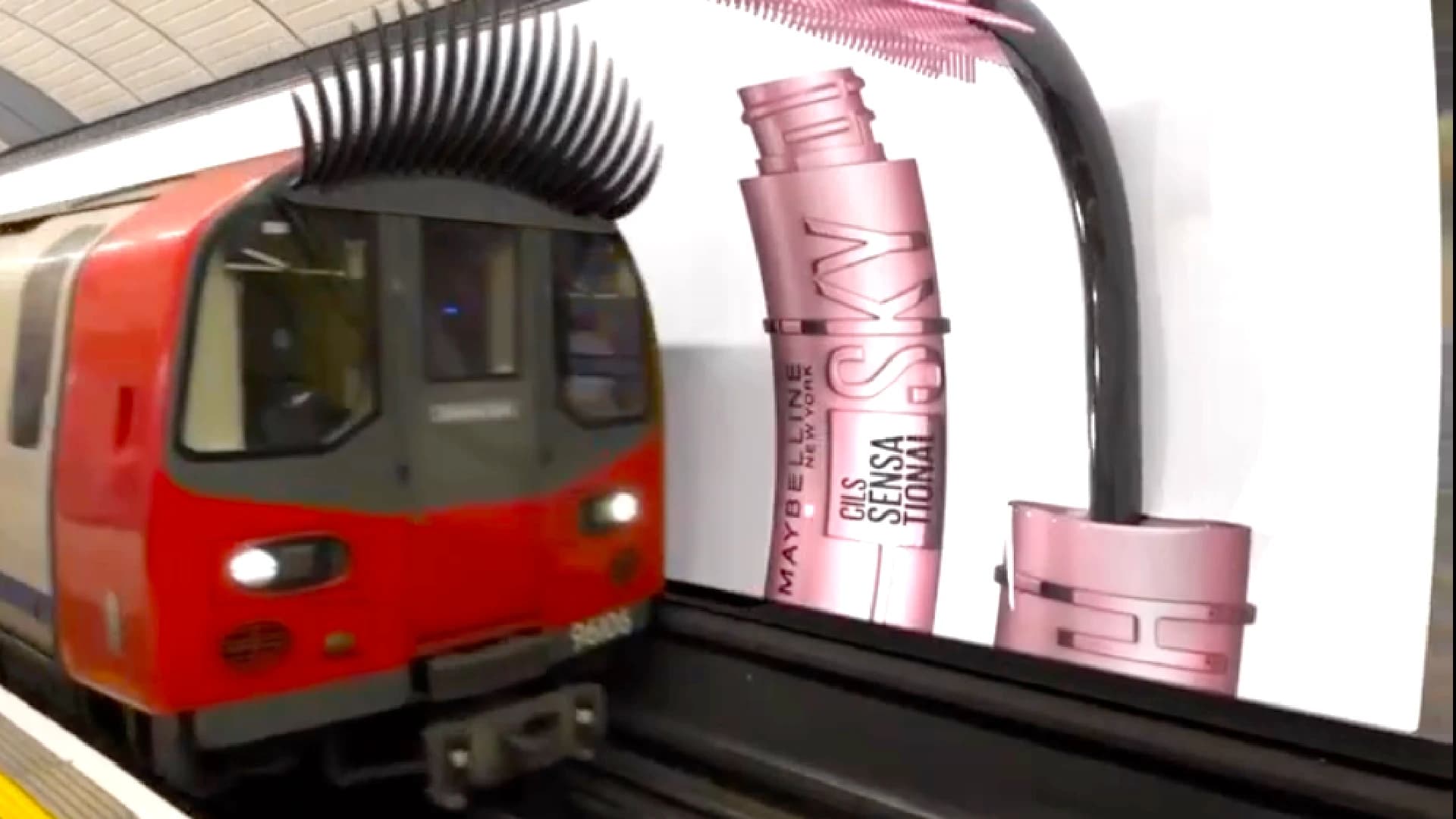
WHY CGI, the studio behind the campaign, didn't win this work by pitching a holding company account team or sitting through months of creative review. It won by building something nobody else was building: hyperreal, physically impossible CGI spectacle, native to the feed, designed to be shared before it was ever explained. Times Square blanketed in webs. A New York City subway car suspended mid-tunnel by silk thick enough to hold steel. No 30-second cut, no media plan, no press release. Just footage that looked real enough to stop a scroll and stayed on screen long enough to get retweeted by marketing trade accounts in four different languages.
The Search Data Shows a Vacuum, Not a Market
The keyword cluster around this campaign is strange: it's essentially empty. "Spider-Man: Brand New Day," "spider-man: brand new day agency," "spider-man: brand new day campaign," "independent agency wins," "brand agency relationship." Combined search volume: zero. Competing agencies actively ranking for this space: zero. In any other industry, that would mean nobody cares. In this one, it means the conversation is happening somewhere search volume doesn't measure yet: X, Instagram, WhatsApp forwards, Discord servers full of VFX artists arguing about workflow.
The top ten Google results for the film itself confirm it. IMDB holds the top spot. Sony's own movie page sits at three. A Marvel wiki page, an IGN review, a Rolling Stone takedown calling it "the same old MCU B.S.," a Deadline cast guide. Not a single result names a marketing partner, an agency, or a creative studio. That's not because the work didn't land. It's because the SEO infrastructure that normally surfaces "who made this ad" hasn't caught up to work that never ran as an ad in the traditional sense. There was no thirty-second spot to trace back to a credits reel. There was a video of Times Square drowning in web silk, posted by a studio's own account, and picked up organically by people who cover marketing because it was too good not to cover.
This is the tell. When search volume is zero but X engagement is real, named, and dated, you're not looking at a campaign that failed to break through. You're looking at a campaign that broke through somewhere the query data hasn't indexed yet. Bloomberg didn't write about Bear Stearns' internal memos in real time either. Sometimes the signal arrives before the search term does.
What WHY CGI Actually Built
Strip away the hype and look at the object itself. On July 11, @WHYCGI posted directly: "Spider-Man: Brand New Day takes over New York," with a video attached. No press release framing, no agency-speak. Three days later, the marketing trade account @afaqs picked it up: a giant spider web draped across Times Square, tagged #SpiderMan #BrandNewDay #Marvel #WhyCGI #CGI #CreativeCampaign #Marketing #Advertising. Eight hashtags stacked on top of each other because the trade press didn't have a category for this yet, so it used all of them.
The following day, French entertainment outlet Demotivateur ran it with a caption calling it a "promotion spectaculaire" in which Times Square becomes entirely covered in webs. Two weeks after that, on July 28, marketing account @the_brandwiz described the same concept: "Ahead of Spider-Man: Brand New Day, creative studio WHY CGI imagined Times Square covered in giant spider webs." By August 14, the format had evolved. @dailypop__ posted a new video: a New York subway car suspended by spider silk, captioned in French, describing WHY CGI staging a subway line held aloft by web strands. Twenty-six likes on that single post, which sounds modest until you register what it represents: five weeks of sustained media pickup across multiple countries and platforms, for a campaign whose entire budget line item probably rounds to a fraction of what Sony spent on linear TV buys for the same release.
Notice the pattern across every single post. Nobody's discussing media weight, GRPs, or flight dates. They're discussing the image itself, over and over, in different languages, unprompted. That's not amplification bought through a paid social strategy. That's word of mouth for a piece of CGI, which is the rarest currency in advertising and the one thing no holding company account team can requisition on a timeline.
Winning Studio Work Without an Account Team
This is the part that should make every mid-size agency uncomfortable. WHY CGI didn't beat larger shops on this business by outservicing them. There's no indication of a pitch deck, a chemistry meeting, or a scope-of-work negotiation anywhere in the public record. What's visible is a studio that had already built a reputation for a specific technical output, hyperreal impossible-scale CGI, and got tapped because that output already existed as proof of concept before Sony ever needed it.
This is the new lane, and it's not subtle once you see it: you don't win tentpole studio work anymore by being the agency of record with the deepest bench and the best account service. You win it by owning a visual and technical niche so specific that when a studio needs exactly that thing, there's only one name that comes up. Sony didn't need an agency that could do everything. It needed a studio that could make a subway car look like it was suspended by silk strong enough to hold a train, and make that footage indistinguishable from something that actually happened in Times Square. There's a real difference between hiring a large agency staffed for account service and campaign planning to build a movie's marketing, and hiring a specialist to manufacture a single unbelievable image built to travel on its own.
That distinction is the entire thesis of independence as a strength rather than a survival strategy. A large generalist agency has to protect its account service reputation, its media relationships, its integrated campaign credibility, and none of that is structured to move at the speed this format requires. WHY CGI's entire value proposition is the opposite of integration: a tight technical specialty, a social-native production pipeline, and a willingness to post the work directly rather than route it through sixteen layers of approval before a single frame reaches an audience. Five documented public posts spanning July 11 to August 14, roughly five weeks, produced coverage in English and French trade press, four-plus tagged marketing accounts, and zero paid media placement in the visible record. Compare that cycle time to a standard tentpole campaign's production and approval runway, typically measured in months, sometimes quarters, and the speed advantage isn't marginal. It's categorical.
Why the Format Is the Moat
The specific technical bet WHY CGI made deserves its own scrutiny, because it's not just "good CGI." It's CGI built around a single rule: make something that could never physically happen, and make it look like it did. A subway car doesn't get suspended by spider silk. Times Square doesn't get blanketed overnight. That's the entire appeal. The format only works because it's impossible, and it only spreads because it's photoreal enough that the first reaction is disbelief followed immediately by "wait, is this real?"
That's a different creative discipline than a traditional thirty-second spot, and it's a different discipline than standard VFX work built to serve a film's actual narrative. It sits in a specific niche: social-native spectacle content, built with AI-assisted CGI tooling based on the trade coverage referencing AI elements in the process, designed from the first frame to be discovered on a feed rather than encountered during a commercial break. Nobody else in the visible search and social data owns this specific lane right now. Zero competing agencies show up tied to this cluster. That's not because nobody else can build good CGI. It's because nobody else has built a reputation around this exact impossible-spectacle format at this exact production speed, tied to this exact release calendar.
That's the moat, and it's the kind of moat a specialist studio can build in a way a generalist agency structurally can't. A large agency has to protect its account service reputation, its media relationships, its integrated campaign credibility. A specialist studio has one job: be the best in the world at one very specific, very ownable thing. WHY CGI's version of that thing is making the impossible look photographed, not rendered. Right now, in the specific context of tentpole studio marketing, that's a category of one.
What the SERP Gap Predicts
Come back to the zero. Zero monthly searches for "spider-man: brand new day agency." Zero for "independent agency wins" tied to this cluster. That number isn't going to stay at zero. Search behavior lags cultural behavior by weeks to months, and cultural behavior around this campaign has already moved through five separate viral moments across two languages and at least five distinct accounts in five weeks. The Reddit thread sitting at position two in the current SERP, discussing the film's worldwide release, is going to accumulate comments referencing the marketing the same way threads eventually accumulate references to a director or a score composer. When that happens, the query volume around "who made the Spider-Man Brand New Day ads" is going to climb, and whoever has already published the definitive account of how WHY CGI built this campaign is going to own that search result the same way IMDB currently owns the film itself.
This is the meta-lesson buried inside a keyword cluster that currently shows nothing: the SERP hasn't caught up to the story yet, which means there's a window right now, not in six months, to be the record of what actually happened. Sony's own site ranks third for the film. It says nothing about the marketing. IGN, Rolling Stone, Deadline: all reviewing or covering the film itself, none touching the campaign. That's not an oversight. That's an entire category of coverage that traditional entertainment and trade press isn't built to produce, because it requires understanding both the studio-marketing relationship and the technical specifics of how the work got made. That's specifically the gap FAM exists to fill, and it's specifically the gap that's currently sitting at zero search volume and about to not be.
What This Reveals About the Next Five Years
Strip the Spider-Man branding away and what's left is a template. A studio marketing team needed something that would cut through a marketing environment where audiences have seen a thousand superhero campaigns and are numb to almost all of them. Instead of going back to the same agency of record that produced the same integrated campaign architecture that's produced diminishing returns for a decade, someone at Sony or its marketing partners made a bet on a format nobody else was running: hyperreal impossible spectacle, built to be discovered rather than broadcast. That bet paid off in trade coverage across two continents within days of each posting, without a media buy visible anywhere in the public record.
That's not an isolated event. That's a preview of how tentpole studio marketing procurement is going to work more often going forward. The account-service model that's dominated agency-studio relationships for decades assumes the client needs someone to manage a complex, multi-channel campaign across paid, owned, and earned media. That model still has value, and it's not disappearing. But it's no longer the only door into tentpole work. There's a second door now, and it's for studios, not agencies in the traditional sense: build a technical specialty so distinct and so ownable that the work markets itself the moment it's posted, and let the reach do what a media plan used to do.
Independent shops are better positioned to walk through that second door than holding companies are, not despite their size but because of it. A specialist studio doesn't need to protect an integrated account relationship. It doesn't need sign-off from twelve stakeholders before a video goes live. It needs one thing: to be undeniably the best at one very specific, very visible craft, and to move fast enough to prove it before anyone else claims the lane. WHY CGI proved it in five weeks with five posts and zero traditional media spend, and the studio credits page for one of 2026's biggest theatrical releases doesn't currently rank for a single query about who made the marketing. That's going to change. The work already changed the conversation. The search data just hasn't caught up yet, and the next studio marketing team weighing agency-of-record renewals against a specialist bet is watching the same numbers everyone else is.
Free Agency Media Editorial
All news