Why Procurement Teams Now Prefer Independent Agencies Over Holding Companies
Finance teams are awarding eight-figure retainers to shops under 100 people. The shift isn't about sentiment. It's about speed, expertise, and economic transparency.
The Procurement Paradox: Why Finance Teams Now Prefer Independent Agencies
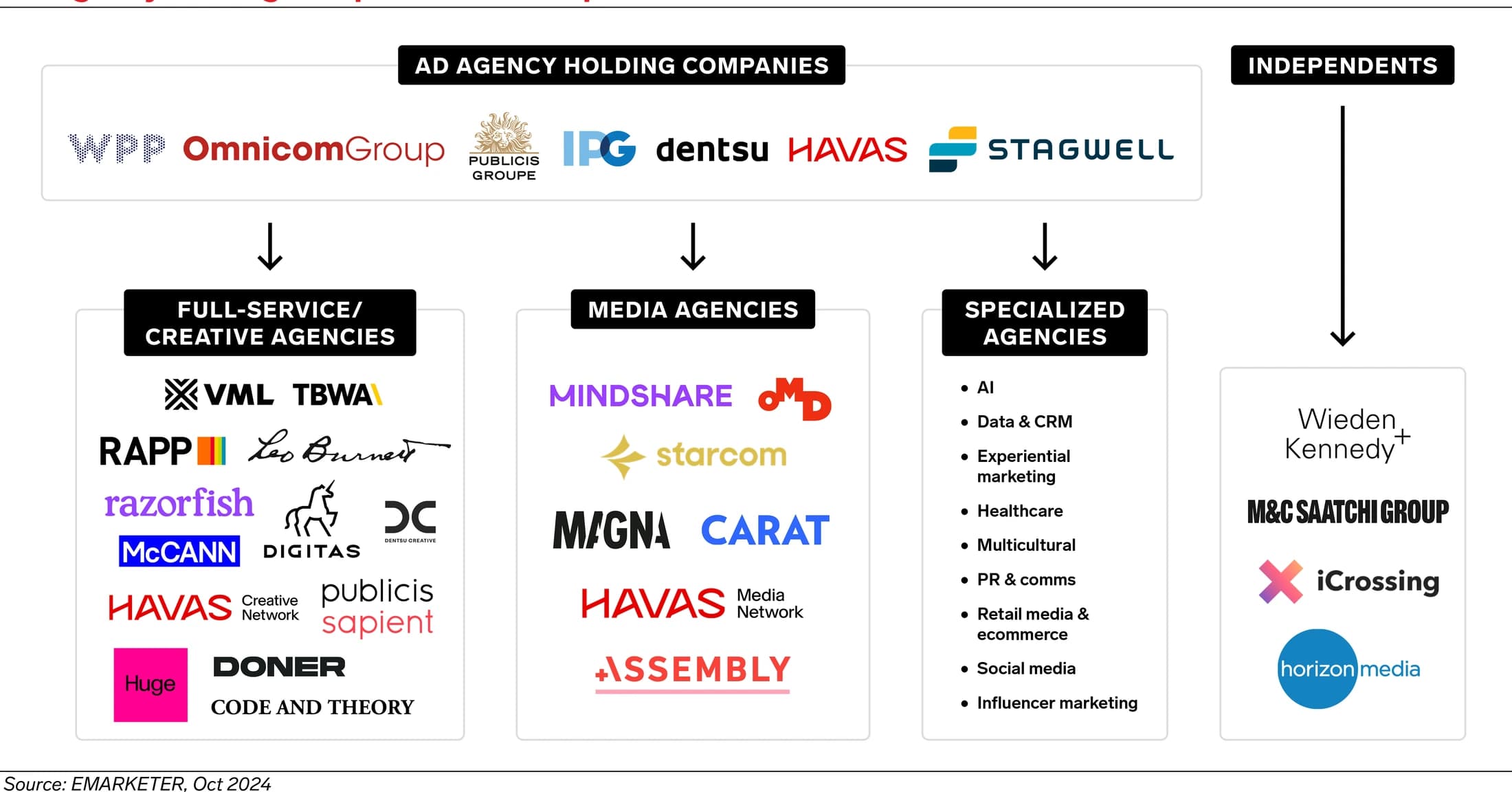
The holding companies spent a decade building procurement-friendly infrastructure. Centralized billing systems. Standardized contract templates. Global capability decks designed for risk-averse CFOs. Then something unexpected happened: the procurement teams started choosing independents anyway.
They chose independents not despite the added complexity, but because of what that complexity signals.
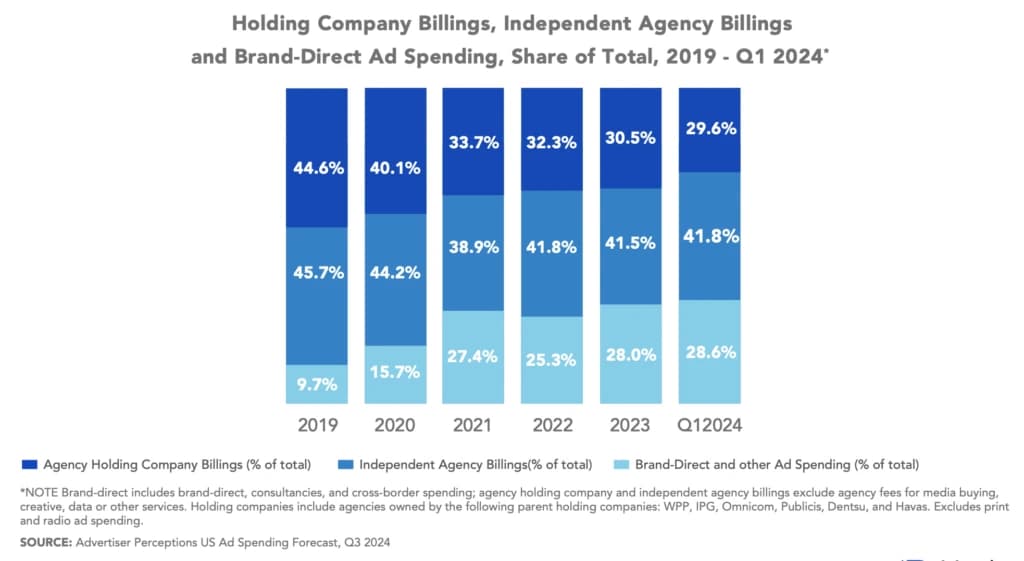
The shift isn't anecdotal anymore. It's structural. Agency of record appointments that would have defaulted to holding company networks five years ago are now landing with shops under 100 people. These are multi-year retainer commitments with eight-figure annual budgets: the kind of client relationships that used to require a Publicis or WPP badge to even enter the pitch.
The numbers tell part of the story. Zero monthly searches for "agency of record appointments 2024" doesn't mean the appointments aren't happening. It means the conversation has moved past the concept itself. Brands aren't googling whether to appoint an AOR anymore. They're deciding which type of agency deserves the commitment. And increasingly, they're choosing independence.
What Changed in the Pitch Room
The holding company pitch used to win on infrastructure. "We have 47 offices in 31 countries." "Our media buying clout saves you 18% on placements." "We can staff your account in six markets simultaneously."
Those claims still get made. They just don't carry the weight they used to.
Three structural advantages have emerged for independent agencies in competitive AOR pitches, and they're advantages that scale matters less for than procurement teams expected.
Speed as a deliverable. When a CMO says they need creative in market in six weeks, the indie shop shows work in progress by week two. The holding company shows a gantt chart. Speed isn't about working faster anymore. It's about decision rights sitting in the same room as the creative team. No global approval chains. No brand compliance committees in three time zones. The work moves because nobody has to ask permission.
Expertise depth over capability breadth. The "full-service" pitch deck lists 47 capabilities. The independent agency pitch shows mastery of three. Brands used to want the Swiss Army knife. Now they want the surgeon's scalpel. A DTC brand doesn't need a shop that can "do influencer marketing" as capability #23 on the services list. They need a shop where the founder built their career in performance creative and the senior strategist spent six years at a DTC brand doing exactly this type of growth work.
Budget allocation transparency. This is the procurement advantage nobody expected. Holding company fee structures obfuscate where the money goes. Parent company overhead. Regional office allocations. Capability center charges that show up in invoices but not in the work. Independent agencies bill for the people working on the account and the work being produced. The CFO can see exactly what $200,000 per month is buying. When budget scrutiny intensified post-2023, that transparency became a procurement selling point.
The Multi-Year Commitment Signal
Agency of record appointments aren't project work that converted. They're strategic bets. Three-year retainers. Exclusive relationships in specific categories. The kind of commitment that requires board-level approval and carries termination clauses.
When a brand makes that commitment to a 40-person independent agency instead of a global network, they're signaling something about their own strategic orientation. They're choosing agility over scale. Depth over breadth. Partnership over vendor relationship.
The procurement teams driving these decisions aren't romantics about independence. They're analysts optimizing for outcome efficiency. And the data they're seeing internally is clear: the independent agencies are delivering faster, with less overhead drag, and with senior-level talent that stays on the account instead of rotating out after six months.
The holding companies built their AOR dominance on infrastructure promises. Global reach. Integrated capabilities. Risk mitigation through scale. Those promises assumed that brands needed what holding companies uniquely offered.
But most brands don't operate in 47 markets. Most don't need simultaneous campaigns across six continents. Most need creative work in three core channels, produced quickly, by people who actually care about the outcome.
Independence delivers that more efficiently than integration.
Why Finance Teams Stopped Seeing Risk in Independence
The risk calculus shifted. Five years ago, appointing a 30-person agency as AOR felt risky to procurement. What if they couldn't scale to meet demand? What if they lost a key employee? What if they didn't have the infrastructure for a complex multi-market launch?
Those concerns haven't disappeared. The evaluation changed.
Now the risk questions procurement asks are different: What if the holding company staffs our account with junior talent after they win? What if the creative we saw in the pitch came from a different office and we get the regional team instead? What if their "integrated offering" means five separate P&Ls each protecting their margins?
Independent agencies solved the scale concern through partnerships and flexible resourcing. A 40-person shop that needs media buying expertise for a major launch doesn't pretend to have media buyers on staff. They partner with a specialized independent media agency and manage the relationship directly. The client gets actual expertise instead of a holding company's media arm that treats their mid-market budget as a rounding error.
The key employee risk proved overblown. Holding company turnover at the account level runs higher than independent agency retention. When the founder is still running creative reviews and the head of strategy has equity in the firm, they don't leave for the next opportunity. They are the opportunity.
Infrastructure concerns dissolved once procurement teams started auditing actual deliverable timelines. The holding company's "robust project management systems" added two weeks to every approval cycle. The independent agency's "lean process" meant decisions happened in the Wednesday morning all-hands and work shipped by Friday.
The Expertise Arbitrage
Holding companies built scale by generalizing talent. An account person can run a pharma brand or an automotive brand or a CPG brand because account management skills transfer across categories. A copywriter can write B2B SaaS copy or consumer packaged goods copy because writing is writing.
Independent agencies built expertise by specializing. Not at the agency level necessarily, though vertical-specific shops exist. At the talent level.
The strategist working on a fintech AOR at an independent agency came from another fintech brand or spent years at a fintech-focused consultancy. The creative director leading DTC work built their career in performance creative at DTC brands. The media lead has run this exact type of campaign 40 times before.
Procurement teams can measure this expertise arbitrage directly. Time to productive output drops. Strategic misfires decrease. The learning curve compresses because the team doesn't need to learn the category. They already know it.
Holding companies tried to solve this through practice groups and centers of excellence. Specialized teams that serve similar clients across the network. But those teams still operate within holding company economics. The best talent still gets pulled to the biggest accounts. The specialized expertise still gets diluted by generalist management layers.
Independent agencies make the specialization the business model. The entire shop exists to serve this type of client with this type of work. The founder's reputation depends on category mastery. The case studies on the website all show depth in one vertical instead of breadth across twelve.
When a brand picks an independent agency for an AOR appointment, they're not just buying creative services. They're buying compressed learning curves and accumulated category wisdom that would take a holding company team two years to build.
What This Means for Holding Company Response
The holding companies see the pattern. Their response has been predictable: acquire the independents winning these pitches. Buy the 40-person shop that just landed the AOR. Integrate their expertise. Replicate their model across the network.
This solves the immediate competitive threat. It doesn't solve the structural advantage.
The independent agency that won the AOR won because of decision speed, expertise depth, and economic transparency. Acquisition removes all three. Decision rights move up to the parent company. Talent dilutes across other accounts. Billing structures revert to holding company standards.
Some holding companies are trying a different approach. Create quasi-independent units within the network. Give them separate branding. Let them pitch independently. Maintain the appearance of agility while keeping them on the holding company balance sheet.
Brands see through this immediately. The "independent unit" still reports to a regional CEO who reports to a global CEO who reports to shareholders demanding 15% margins. The decision speed that made independence valuable evaporates in the org chart.
The real holding company response would require structural change: actually decentralize decision rights, actually allow profit-margin variation across units, actually let small agencies stay small and focused. But that breaks the holding company model. You can't run a publicly traded advertising conglomerate on the premise that smaller and more autonomous is better.
The Forward Look: Consolidation Without Integration
The next five years will see more independent agencies winning multi-year AOR commitments. Not because independence is trendy. Because the structural advantages that make independents better at certain types of client relationships are durable advantages.
Brands will continue consolidating agency relationships. Fewer agencies, larger commitments, longer terms. That trend predates the independent agency surge and will continue through it. But consolidation no longer defaults to holding companies.
A brand consolidating from six agencies to two is just as likely to pick two specialized independents as one holding company offering "integrated services." More likely, given what procurement teams are learning about where efficiency actually lives.
The independent agencies winning these AOR appointments will face their own scaling challenges. How do you maintain expertise depth while growing headcount? How do you preserve decision speed when you hit 150 people? How do you keep senior talent engaged on day-to-day client work when the agency grows large enough to have management layers?
Some will solve this by staying deliberately small. Turning down growth opportunities that would compromise the advantages that made them valuable. Others will fragment. The 80-person agency becomes two 40-person agencies with separate client rosters and shared back-office infrastructure.
Both approaches preserve what matters: the structural characteristics that make independent agencies better AOR partners for brands that value speed, expertise, and transparency over scale, breadth, and integrated billing.
The holding companies will keep pitching their infrastructure advantages. Some brands will keep buying them. Global brands with truly global needs still benefit from global networks. Complex regulatory environments still reward holding company compliance expertise. Risk-averse categories still see safety in scale.
But the default is breaking. The assumption that AOR appointments naturally flow to holding companies because holding companies have the infrastructure to handle them no longer holds. Independent agencies proved they can handle the commitment, deliver the work, and provide the transparency that makes procurement teams comfortable with multi-year retainers.
That proof isn't going back in the bottle.
The agencies that win the next wave of AOR appointments will be the ones that understand their structural advantages: speed, expertise depth, and transparency. These advantages matter more than the structural advantages holding companies built their business on.
Speed matters more than scale. Expertise matters more than breadth. Transparency matters more than integration. Independence isn't a limitation to overcome. It's the reason to choose.
Free Agency Media Editorial
All news