The Zero: What Wicked Weed's Silent Agency Move Reveals
Wicked Weed Brewing handed its creative business to an agency invisible in search data and trade press. The silence is the story.
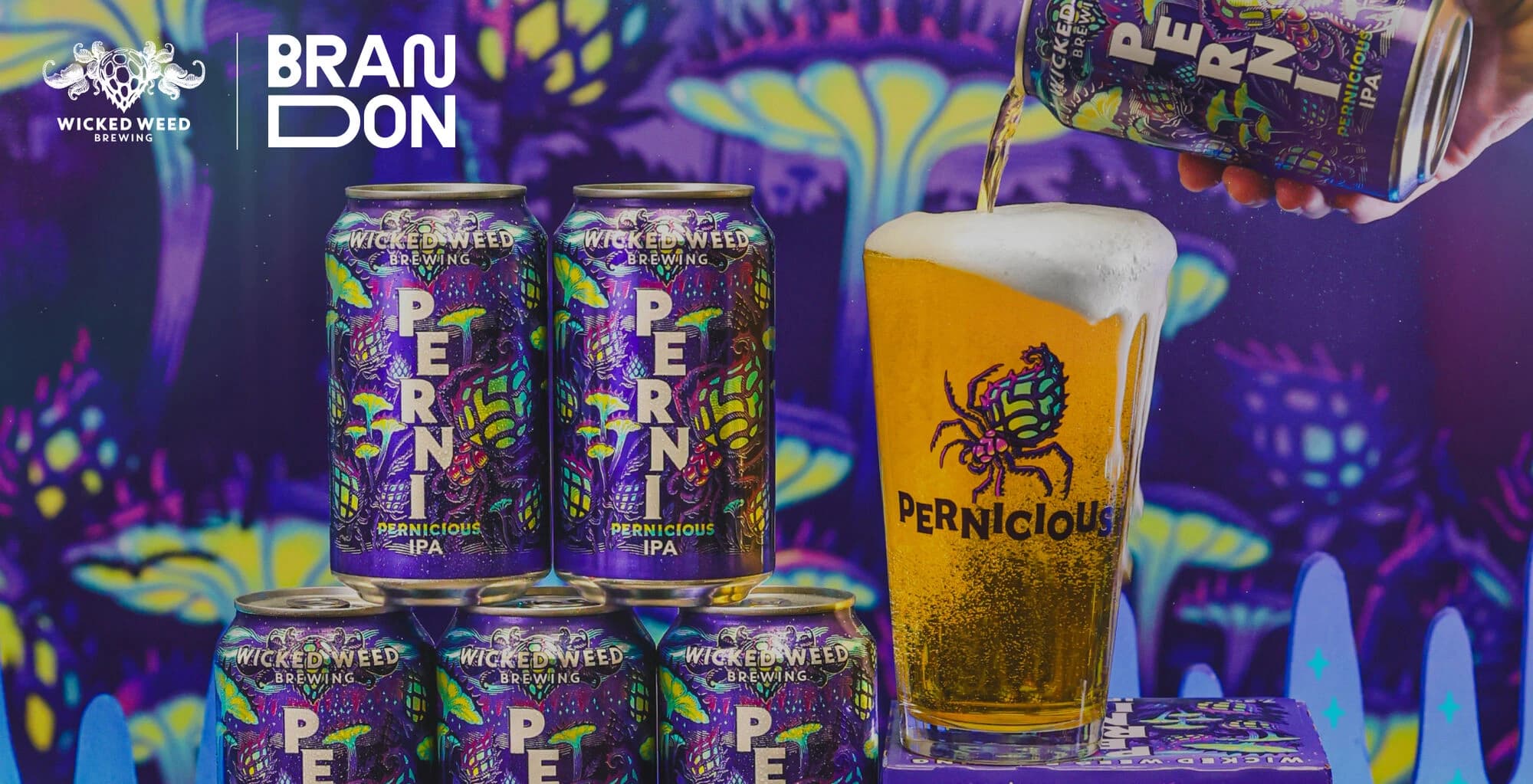
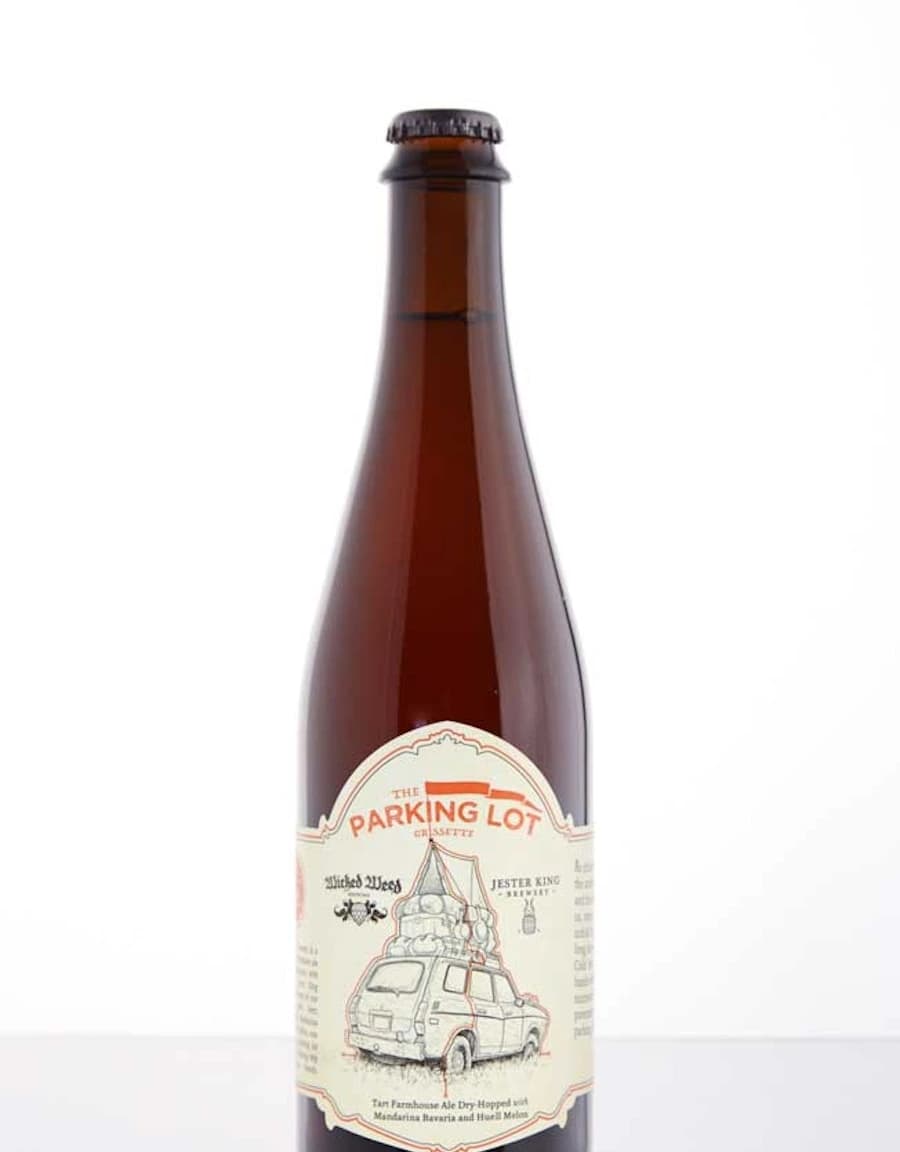
A global brewing conglomerate's regional craft label just handed its creative business to a shop that returns zero search volume across the entire "wicked weed brewing agency" keyword cluster. Zero. Not low. Not niche. Zero competing agencies show up in that same data set either. In an industry that lives and dies by trade press coverage, RECMA rankings, and Adweek's new business column, Wicked Weed Brewing taps Roastbrief and nobody's search behavior even notices.
That absence is the story. Not despite the silence. Because of it.
The Zero That Tells the Real Story
Every agency win of consequence usually leaves a data trail. A press release gets indexed. A trade publication runs the news. Search volume spikes for "who is the new agency for X" and stays elevated for weeks while the industry gossips about fee structures and pitch dynamics. None of that happened here. The keyword cluster around this move, "wicked weed brewing," "wicked weed brewing agency," "wicked weed brewing campaign," "independent agency wins," "brand agency relationship," returns a flat line. Zero monthly searches. Zero agencies actively competing for visibility in that space.
Read that as a market signal, not a market failure. When a beverage account moves inside the Big Six ecosystem, the incumbent loses the business publicly and a competitor wins it publicly. Six holding companies, WPP, Omnicom, Publicis Groupe, IPG, Dentsu, and Havas, have spent decades training the industry to watch those moves like they're stock tickers. When an account moves to an independent that nobody's tracking, there's no ticker. There's just the work, showing up quietly, without a press tour.
That's not a smaller story. It's a different kind of story. The kind FAM exists to tell.
Why Alcohol Marketing Was Supposed to Be Big Six Territory
Beverage and alcohol accounts have historically been some of the hardest categories for independents to break into, and for reasons that have nothing to do with creative quality. Alcohol marketing in the United States runs through a three-tier distribution system: producer, distributor, retailer, each regulated separately, each state running its own rulebook across all fifty of them. Add federal oversight from the Alcohol and Tobacco Tax and Trade Bureau, and you've got a compliance layer that most small shops have never had to build in-house.
Holding companies built entire practices around navigating that layer. Legal review, label approval, regional messaging restrictions: it's slow, procedural work, and it's exactly the kind of overhead that large agency networks are structured to absorb. That structural advantage is why beverage and alcohol briefs have defaulted to Big Six incumbents for so long. Not because the creative was better. Because the compliance infrastructure already existed.
So when a beverage brand routes creative to an independent instead, the interesting question isn't "can they make good ads." It's "who's handling the parts that used to require a holding company's legal bench." Either Roastbrief built that muscle, or Wicked Weed Brewing is handling regulatory review in-house and outsourcing only the parts where creative speed matters more than compliance scale. Both scenarios point the same direction: the moat that used to protect Big Six beverage practices is getting narrower.
What Wicked Weed's History Adds to the Paradox
Wicked Weed Brewing isn't a founder-owned startup testing the independent-agency waters for the first time. It's an Asheville, North Carolina brewery that sold a majority stake to Anheuser-Busch InBev in 2017, a deal that triggered one of the more visible backlash moments in modern craft beer history. Bars pulled their taps. Craft beer forums called it a betrayal. The brand that built its identity on small-batch, sour-focused, independent brewing suddenly had one of the largest beverage companies on earth as its majority owner.
That history matters here because it flips the expected direction of the story. The conventional arc goes: independent brand gets big, gets acquired, gets absorbed into holding-company infrastructure across every function, marketing included. Wicked Weed's arc has an inversion built into it. A brand now owned by a Big Six-adjacent beverage giant is choosing an independent creative partner over the kind of agency relationship that ownership structure would predict.
That's the paradox worth sitting with. AB InBev has in-house and roster relationships with agencies that operate at massive scale, built specifically to serve portfolio brands like Wicked Weed. Routing this work to Roastbrief instead isn't the path of least resistance. It's a deliberate choice against the default. And deliberate choices against the default are exactly what independent agencies should want CPG and beverage marketers making more of.
The Scope Question Nobody's Answering Publicly
The story gets harder to report here, and the industry's habit of confidentiality actually tells you something. Terms of agency assignments in beverage and alcohol categories rarely go public. Fee structures, scope documents, whether an engagement is project-based or full AOR: none of it typically surfaces unless there's a press release, and there wasn't one loud enough to shift search volume here.
What we can say with confidence is this: brands don't hand creative work to unfamiliar shops for low-stakes reasons. Regional craft brands testing new agency relationships are almost always solving for one of three things: speed, cost efficiency, or category-specific fluency that the previous agency relationship didn't have. Independents tend to win on the first and third far more often than the second. A twelve-person team doesn't always beat a four-hundred-person network on rate card. It almost always beats it on the number of approval layers between a creative idea and a finished asset.
That's the actual value proposition independents are selling into beverage categories right now, and it's not about being cheaper. It's about the brief moving from concept to production without passing through six rounds of holding-company sign-off first. Craft brands live and die by cultural timing. A meme moment, a regional event tie-in, a limited release tied to a seasonal ingredient: these windows close in days, not the weeks a large network's process typically requires. If Roastbrief is winning ground here, it's winning it on velocity, not on undercutting a holding company's day rate.
What This Signals for Craft and CPG Rosters Broadly
Zoom out from this single account and the pattern becomes the real story. Craft and CPG brands have spent the last several years quietly diversifying their agency rosters, adding independents alongside existing Big Six relationships rather than replacing them outright. It's a hedging strategy as much as a creative one. Keep the holding-company relationship for the scaled, compliance-heavy, multi-market work. Bring in an independent for the culturally fluent, fast-turnaround, category-specific work that a networked agency structure isn't built to move quickly on.
That bifurcation is showing up across beverage, spirits, and food categories, and it's showing up specifically in brands that have some connection to a larger parent company. The pattern makes intuitive sense once you see it: brands owned by conglomerates already have access to Big Six-scale infrastructure through their parent's existing relationships. What they don't have access to through that channel is category-native creative fluency, the kind that comes from an agency spending its time exclusively in a smaller, more specific world instead of managing a portfolio of accounts across a dozen categories.
Roastbrief's near-total absence from trade coverage and search data isn't evidence against this thesis. It's evidence for it. The agencies winning this kind of work aren't winning it by being loud in the trade press. They're winning it by being fluent in the category and fast in the process, then letting the finished work speak instead of the announcement. That's a fundamentally different go-to-market model than the one Big Six agencies have run for decades, where the win itself is treated as press-worthy before a single asset ships.
Where the Category Goes From Here
If this deal holds the shape it appears to hold, expect more of it, not less. Beverage and alcohol marketing spent a decade being one of the last strongholds where regulatory complexity kept independents out and Big Six incumbents comfortable. That advantage erodes every time a brand like Wicked Weed Brewing proves the compliance layer can be navigated without a holding company's legal bench attached to it. Once one craft or CPG brand makes that move without friction, the next one has a case study instead of a hypothesis.
The harder prediction is about visibility. If independents keep winning this kind of work the way Roastbrief appears to have won it, quietly, without a press cycle, without search volume spiking, the industry's existing tools for tracking agency movement will keep missing it. RECMA rankings, trade press win columns, keyword volume: all of it is built to detect the kind of loud, press-released moves that Big Six incumbents make when they win or lose an account. None of it is built to catch an independent agency picking up beverage work and simply doing it.
That's not a gap in the independent sector. That's a gap in how the industry measures itself. Free Agency Media exists specifically to close it, one verified account at a time, starting with the ones nobody else is tracking yet.
Free Agency Media Editorial
All news