Zero Search Volume, Real Revenue: Inside Luxury E-Commerce's Blind Spot
Keyword tools show zero demand for luxury niche e-commerce. Meanwhile small studios are shipping digital flagships that used to require holding-company budgets.
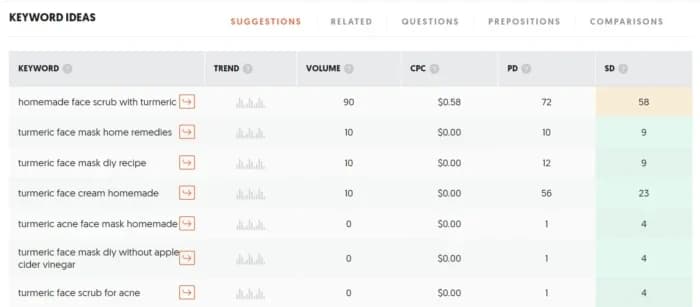
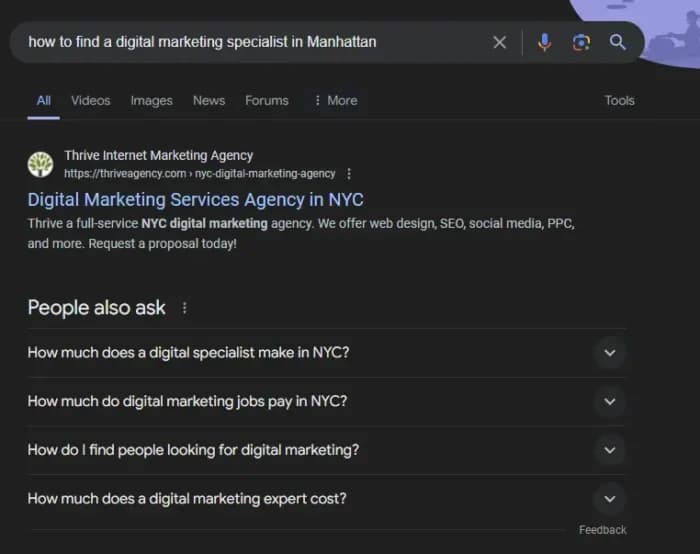
The keyword tool says zero. Zero monthly searches for "luxury niche e-commerce." Zero recorded volume across the entire cluster: luxury e-commerce website design agency, interactive e-commerce development, boutique digital experience studio, 3D product visualization agency, niche brand website case study. Five terms. Five zeroes.
And yet the work is already shipping. Cinematic campaigns built in minutes instead of weeks. Virtual models standing in for six-figure photo shoots. Digital flagships that feel like walking into a Madison Avenue storefront, built by teams that would fit in a single conference room. The demand data hasn't caught up to the supply. That gap is the story.
The Search Volume Paradox Nobody's Pricing In
When a keyword cluster shows zero volume, most agencies read that as "no market." That's the wrong read. Zero volume on a term like "boutique digital experience studio" doesn't mean nobody wants the service. It means nobody's searching for it by that name yet, because the buyers who commission this work don't Google generic category terms. They get referred. They see a competitor's site and ask who built that. They watch a founder's LinkedIn post about a virtual flagship and DM them directly.
That's a very different sales motion than the one baked into every listicle currently ranking for "luxury e-commerce website design agency." Search for that exact phrase and you get nine results: a mix of practitioners and directories, with the directories doing most of the talking. Clutch sits at position seven with a generic vetted-teams pitch. Superside runs a scored ranking of "15 Top Ecommerce Web Design Agencies," published August 14, 2026. Big Human runs its own listicle, "The 9 Best Ecommerce Website Design Agencies," published back on May 29, 2026, with Big Human conveniently included in its own countdown.
Two of the nine top results are agencies grading their competition or grading themselves. That's not an editorial gap. That's an opportunity gap, sitting in plain sight for anyone willing to build the case study instead of the ranking.
What's Actually Ranking, and What It Reveals About the Category
Strip out the directories and the self-graded listicles, and four practitioners remain in that top nine: Luxury Lloyd, Commerce-UI, Crème Brands, and Cybernautic. Each one tells you something different about where this category is headed.
Luxury Lloyd holds position one with a pitch built entirely around luxury as a discipline, not a vertical add-on. The homepage copy commits to luxury websites, luxury branding, and luxury content. No hedging toward "we also do ecommerce for everyone." Commerce-UI sits at position two as a Shopify Plus specialist, positioning itself explicitly around "elevating the luxury ecommerce website" through Shopify's enterprise tier. Crème Brands, at three, pairs custom high-end branding with web design, selling the two as inseparable. Cybernautic, at four, has carved out something narrower still: web design tuned specifically for appliance brands and home luxury, a sub-vertical most generalist shops wouldn't bother naming.
The pattern holds across all four: every practitioner that outranks the directories has picked a lane and refused to widen it. None of them say "ecommerce agency." All of them say "luxury." That specificity is functioning as an SEO moat and a positioning moat at the same time, and it's happening without any search volume pushing them there. They built the niche before the query existed.
Then there's Exhibea, ranking at position five, not with a website but with an Instagram profile: 38,000 followers, 577 following, 125 posts, bio reading "builder of brand worlds creating prosperity and growth for luxury." A social profile outranking established web design competitors for a commercial buyer keyword is not normal. It means the buyers evaluating luxury ecommerce partners are doing it visually, through a feed, before they ever hit a homepage. The portfolio is the pitch. The follower count is the credibility signal. Google noticed before most agencies did.
AI Closed the Budget Gap, and Nobody Announced It
For a decade, luxury-grade production was a holding-company moat. Cinematic campaign film, a real photoshoot with a real model, a 3D product render pipeline: that stack ran six figures before a single media dollar got spent. Independent shops could win the strategy and the concept. They rarely had the budget to execute at the production value a luxury client expected on the final asset. That gap is what kept big luxury accounts inside the big holding companies, budget line by budget line.
That gap is closing, and the closing is happening in public, on X, not in agency new business decks. @zahra4sure took a single product, sunglasses, a keyboard, skincare, and showed it rendered into three completely distinct premium campaign styles: a fashion editorial, a tech commercial, a luxury beauty spot. Same product, three production values, one operator, using what the post called "Vibe Marketing" as accessible infrastructure for smaller brands, the same infrastructure behind a separate viral post showing an AI marketing studio producing a full cinematic video ad in minutes. Every seller now has access to their own behind-the-scenes creative team, without the behind-the-scenes budget.
Separately, @ShamiWeb3 pointed to AI-generated livestream shopping ads for luxury fashion, and fictional jewelry campaigns running virtual models through full cinematic treatment. None of these are hypothetical demo reels. They're being framed, by the people posting them, as the near-term default for social commerce and generative advertising, not a novelty tier below "real" production.
Add it up and the implication is direct: the resource gap that used to separate a twelve-person independent shop from a holding company production department is compressing in real time. It's not gone. A holding company can still fly a crew to Marfa and book a name-brand director. But the floor for "looks expensive" has dropped, and it dropped fast enough that indies who adopted these tools early are pitching luxury production values that would have required a six-figure line item eighteen months ago.
The Texture Signal: How Small Teams Fake the Feeling of Expensive
Production value is half the equation. The other half is the interface itself, and here the conversation on X gets specific about mechanics rather than just tools.
@Techie_ego made the case plainly: luxury brands need platforms that communicate class and status directly through the visuals, with imagery that sells the outcome rather than the object. A beauty brand sells transformation. A travel brand sells the adventure, not the itinerary. The job of the site is to convert a browser into a customer willing to pay a premium, and that conversion happens on emotional register before it happens on price comparison.
@amitrawatinc broke down the specific technique doing the heaviest lifting right now: texture. Paper grain, fabric weave, embossing, metallic finishes, all simulated digitally, all deployed as signals of craftsmanship. The framing is precise: a site with texture feels crafted, a site without it feels assembled. That single distinction is the difference between "boutique digital experience studio" and "generic Shopify template," and it costs almost nothing to implement relative to what it used to cost to fake the same feeling through physical photography and print-quality asset production.
The "digital flagship" language itself is showing up as a direct descriptor now, not a metaphor journalists reach for. @_mathewdev posted UI and UX concepts for luxury fashion houses explicitly balancing editorial aesthetics against seamless shopping mechanics, the two things that used to require separate teams: an editorial content group and a commerce UX group. @Xayed007 posted a perfume brand site engineered around immersive storytelling, labeled directly as a "Digital Flagship" in the post itself. That's the term the industry has landed on for what used to be called, dismissively, "a nice website." A flagship is a destination. A website is a utility. The vocabulary shift matters because it tells you how the buyers are pricing the deliverable.
Who's Positioned to Actually Win the Category
Put the SERP data and the X conversation together and a clear shortlist of positioning strategies emerges, each represented by a named operator already occupying the top of search.
Luxury Lloyd built its entire identity around the word luxury, refusing the generalist ecommerce label that every directory defaults to. That's the cleanest bet in the category: don't compete on "best ecommerce agency," compete on being the only credible answer to "luxury" specifically.
Commerce-UI bet on platform depth instead. A Shopify Plus specialization is a technical moat, not just a branding choice. Enterprise commerce infrastructure paired with design capability is a harder combination to fake than aesthetics alone, and it's the combination luxury clients need once the storytelling layer has to actually process a checkout.
Crème Brands fused brand identity work with web execution into one offer, refusing to hand a client off between a branding shop and a build shop. That's an efficiency argument as much as a creative one: fewer handoffs, fewer chances for the luxury feel to get lost in translation between vendors.
Cybernautic picked depth over breadth in the opposite direction, choosing a sub-vertical, appliance and home luxury, and building specifically for it rather than positioning as luxury-agnostic. In a search landscape with zero measurable volume for niche terms, betting on a specific vertical where the buyer pool is small but well-defined is a rational play. You don't need volume. You need to be the only relevant result when the three buyers who matter actually look.
Exhibea skipped the website-as-primary-asset model entirely and built its credibility on Instagram, at 38,000 followers with 125 posts, treating the feed itself as the flagship. That's the boldest bet of the five, and the bet most aligned with how the actual buyers, per the X conversation, are evaluating: visually, through a stream of work, before a formal RFP ever gets issued.
None of these five are competing on headcount. None of them are competing on holding-company production budgets. They're competing on specificity, on platform depth, on vertical focus, and on distribution channel choice, and every one of those bets is available to a small team precisely because none of them require scale to execute. Independence isn't a constraint here. It's the operating condition that makes a sharp bet possible in the first place. A five-hundred-person shop generalizes because it has to feed many divisions. A ten-person studio can pick one lane and own it completely.
Where the Zero-Volume Category Goes From Here
Zero search volume on "luxury niche e-commerce" and its cluster terms is a snapshot, not a ceiling. Search volume follows adoption with a lag, and the AI production tools closing the resource gap between indies and holding companies are still in the early-adopter phase of that curve, per the pattern described across the X conversation: one post about a single product turned into three distinct premium campaign styles, another about a cinematic video ad produced in minutes, another about virtual models running full luxury jewelry campaigns. That's not a mature market talking to itself. That's a market finding its vocabulary in real time, the same way "digital flagship" went from metaphor to category descriptor over the course of a handful of posts.
The agencies that win the next eighteen months of this category won't be the ones waiting for the keyword tool to catch up. They'll be the ones who read zero volume correctly: not as absence of demand, but as absence of a name for demand that already exists. Luxury Lloyd, Commerce-UI, Crème Brands, Cybernautic, and Exhibea didn't wait for permission from search data. They picked a lane, built the portfolio, and let the ranking follow the proof of work rather than the other way around.
That's the playbook now available to any small studio willing to take it. The production gap that used to require a holding company's balance sheet is shrinking by the week, and the interface techniques that used to separate a flagship from a template, texture, storytelling, editorial pacing, are cheap enough to deploy without a specialist team. What's left to compete on is nerve: the willingness to say luxury and mean it, to pick a vertical and refuse to widen it, to treat a feed or a case study as the pitch instead of waiting for a directory to rank you seventh.
The keyword tool will catch up eventually. It always does, once enough of these case studies exist for the tool to notice the pattern. By then the agencies that moved first will already own the term.
Free Agency Media Editorial
All newsYou might like
The Production Moat Is Gone, and Lean Agencies Are Cashing In
IllustrationXThe Production Moat Is Gone, and Lean Agencies Are Cashing In
IllustrationX
The Fujifilm Claim No One Can Verify
Why Independent Agencies Are Winning Heritage Storytelling