Ogilvy Wrote the Indie Playbook. Then WPP Bought Him.
David Ogilvy's 1983 book reads like a rebuke of holding company economics. WPP owns his name anyway, and nobody's written the piece connecting the two.
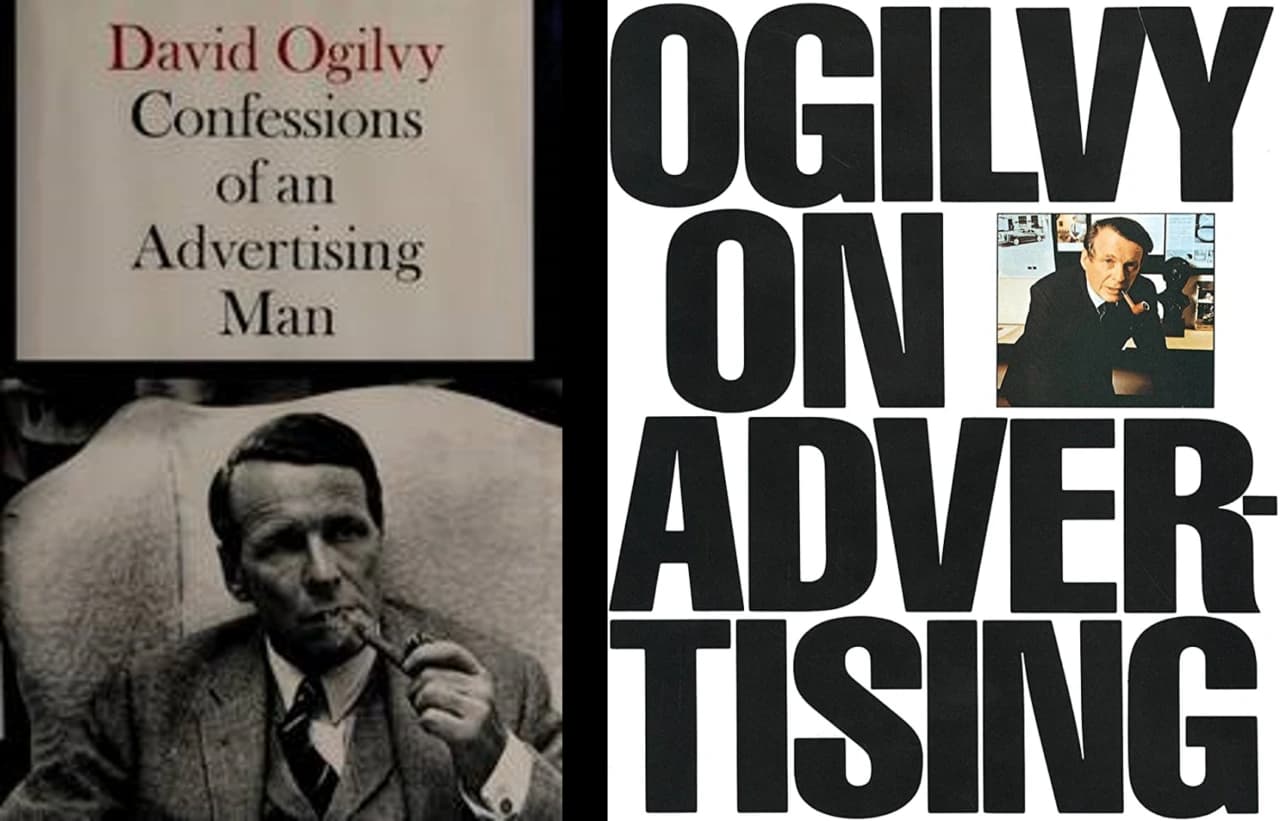


Nobody ranks for "Ogilvy on Advertising."
That's not a metaphor. Type the phrase into Google and you'll find biography pages, book reviews, PDF scans of a 1983 paperback. You won't find a single agency claiming the territory. Zero agencies compete for a cluster pulling 1,000 searches a month. Zero. The book that built the modern advertising industry's operating manual, the one every creative director has quoted in a pitch deck at least once, sits with an open content lane and nobody's driving through it.
That's the first paradox. Here's the second, and it's the one that actually matters: the man who wrote the most anti-holding-company book in advertising history now has his name on one of the largest holding company assets on the planet. Ogilvy, the agency, is owned by WPP. Has been since 1989, when WPP paid $864 million in a hostile takeover that David Ogilvy himself publicly opposed. The founder who built his reputation on radical client honesty, on craft as a commercial weapon, on the idea that a founder's personal standards should run through every piece of work the agency touched, got absorbed into the exact economic model his own book was quietly arguing against.
That contradiction is the whole story. Ogilvy wrote the founding text of independent agency philosophy. The industry took his principles and built a holding company empire on top of his name. And somewhere in that gap, a generation of independent founders picked the book back up and started reading it as instructions, not history.
The Three Principles That Read Like a Rebuke
Ogilvy on Advertising isn't a manifesto against holding companies. It was published in 1983, before the merger mania that consolidated the industry into the handful of conglomerates that dominate it now. But three of its core arguments land, forty-plus years later, as a near-direct critique of how holdco economics actually function.
The first: radical client honesty. Ogilvy's stance was that agencies exist to sell things, and if the advertising doesn't sell, it has failed regardless of how many awards it wins on the way to failing. "If it doesn't sell, it isn't creative" is the line that gets quoted in every deck, but the harder principle underneath it is honesty about outcomes. Tell the client what's working. Tell them what isn't. Don't dress up a media plan or a creative miss in agency jargon to protect the relationship. That kind of honesty requires an agency structure where the person signing the strategy is accountable to the client, not to a quarterly earnings call. Holding companies report to shareholders first. Independent shops report to the work first, because the work is the only thing keeping the lights on. There's no layer of corporate reporting between the founder and the client's problem.
The second: creative craft as a commercial weapon, not a cost center. Ogilvy didn't separate "creative" from "results." He treated the ad itself, the actual writing, the actual image, as the primary lever for moving product. The Rolls-Royce ad. "At 60 miles an hour, the loudest noise comes from the electric clock." That's not decoration. That's a commercial argument disguised as a sentence. Holding company economics, by contrast, treat creative as one line item among many: media buying, data services, production, creative. Margin gets squeezed across all of them equally, because the P&L doesn't distinguish between the department that makes the thing people remember and the department that buys the airtime. Ogilvy's whole career was built on the opposite bet: the craft itself is the commercial asset. Everything else is infrastructure around it.
The third: founder-as-culture-keeper. Ogilvy ran his agency with his personal standards baked into daily operating procedure. He wrote internal memos that read like commandments. He fired people for sloppy work and said so, in print, under his own name. That only works when the founder is still in the building, still reading the work, still capable of saying no. Once an agency gets folded into a holding company structure, the "culture" becomes a brand guideline document managed by a regional president who's never met most of the creative directors on the account list. The founder's standards get replaced by a shared services model. That's not a criticism of any individual person working inside that system. It's a structural fact about what happens to craft standards when the person who set them is three org-chart levels removed from the people doing the work.
Three principles. Zero of them survive holding company economics without significant compromise. That's not accidental. That's the whole argument.
The 1989 Case Study Nobody Talks About
Here's what makes the Ogilvy story more than a thought experiment: it already happened, in public, on the record.
WPP's 1989 acquisition of the Ogilvy Group wasn't friendly. David Ogilvy opposed it. He was, by his own account, deeply unhappy watching the agency he built get absorbed into a larger financial structure against his wishes. The $864 million price tag wasn't paid for the craft. It was paid for the client relationships, the billings, the scale. That's the tell. When a holding company acquires an agency, it's buying the book of business. It's not buying the founder's Tuesday afternoon habit of reading every piece of copy before it goes to the client.
This matters right now because it's the exact transaction structure playing out across the industry today, forty-plus years later, at smaller dollar amounts but with the same underlying logic. An independent shop builds a reputation on craft and client proximity. A holding company sees the billings and makes an offer. The founder either takes the exit or doesn't. If they take it, the agency's name often survives. The operating model rarely does in the same form. Ogilvy the man watched this happen to his own agency in real time and wrote about the loss of control candidly. That's the most under-discussed part of his legacy: he didn't just write the indie playbook, he lived through its inverse, and he said so publicly.
The search data reflects this gap in institutional memory. 1,000 monthly searches for "ogilvy on advertising" and its cluster terms. Zero agencies currently competing for that content. Zero search volume yet for the more specific phrase "ogilvy advertising indie," meaning nobody has connected the dots publicly between Ogilvy's founding principles and the independent agency argument in a way that search behavior has caught up to. That's not a sign there's no appetite. It's a sign the content territory is open because nobody's written the piece connecting a 1983 book to a 2026 economic argument. The audience curiosity exists. The publishing hasn't caught up to it.
What "Founder as Culture Keeper" Actually Costs a Holding Company
The reason this principle specifically gets lost inside holdco structures isn't malice. It's math.
A holding company's entire value proposition to its shareholders rests on operating leverage: shared back office, shared media buying scale, shared production resources across a portfolio of agency brands. That leverage requires standardization. Standardization requires the founder's idiosyncratic standards to get replaced by something that scales across dozens of offices and hundreds of accounts. You cannot run a global network the way Ogilvy ran a single agency out of one building, reading the work himself, because the whole financial logic of the holding company depends on the founder's personal attention becoming unnecessary to the operation.
That's the trade holding companies are explicitly built to make: founder attention for operating scale. It's a rational trade if scale is the goal. It is, by definition, the opposite trade an independent agency makes when it stays independent past the point where an acquisition offer would have been lucrative. Every founder who keeps a shop independent, past the size where a holding company would want to buy it, is making an active bet that the founder's personal standard on the work is worth more than the liquidity event.
Ogilvy's own writing is unambiguous about which side of that trade he believed produced better advertising. He wasn't sentimental about it. His argument wasn't "small is nicer." His argument was structural: the work suffers when the person accountable for its quality is removed from the process of making it. Forty years of holding company consolidation have not disproven that argument. If anything, the repeated pattern of acquired agencies losing creative distinctiveness within a few years of being absorbed is the empirical record confirming it.
The Content Gap Is the Story
Here's where the search data becomes more than a footnote. 1,000 monthly searches for a cluster with zero competing agencies isn't a small opportunity. It's a signal that an entire audience segment, people actively searching for Ogilvy's book and his advertising philosophy, currently has no independent agency perspective available to them when they go looking.
That audience isn't hypothetical. Anyone searching "ogilvy on advertising" in 2026 is doing one of a few things: a student or junior strategist trying to understand foundational ad theory, a founder building a pitch deck who wants a credible historical anchor, a marketer trying to benchmark modern creative against an old standard, or a journalist or analyst trying to make sense of how the industry got from Ogilvy's Madison Avenue to today's holding company landscape. Every single one of those searchers is a potential audience for the exact argument this piece is making: that Ogilvy's principles map directly onto the independent versus holding company debate happening right now, and that nobody's written it down yet.
Zero ranking content means there's no incumbent to displace. There's no entrenched SEO position built by a legacy publication or a holding company's own content marketing team. This is, functionally, unclaimed territory in a search landscape where almost nothing is unclaimed. The absence of competition is itself the finding. When a topic sits at 1,000 monthly searches with genuine cultural weight behind it, a book that's assigned reading in advertising courses, quoted in nearly every industry deck, referenced constantly in founder interviews, and produces zero competing agency content, that's not evidence of low demand. It's evidence of a slow publishing industry that hasn't connected a well-known book to a live economic argument.
Reviving the Playbook, Not the Nostalgia
The mistake would be reading this as an argument for nostalgia: bring back the old agency model, romanticize the Mad Men era, treat 1983 as some lost golden age. That's not the argument, and it's not what's actually happening across the independent agency landscape.
What's happening instead is more specific and more interesting. Independent founders today aren't recreating Ogilvy & Mather circa 1965. They're extracting the three structural principles, radical client honesty, craft as commercial weapon, founder-as-culture-keeper, and rebuilding them inside a completely different operating environment: smaller teams, faster production cycles, direct-to-brand relationships that skip the traditional RFP gauntlet entirely, and business models that don't require the operating leverage a holding company chases.
The honesty principle shows up in how independent shops pitch now. No agency of record retainer bloat, no twelve-person account team billing hours on a client that needs four people doing focused work. The client relationship is direct because the economics demand it be direct. There's no shareholder layer requiring the agency to justify headcount that isn't earning its keep on the account.
The craft-as-weapon principle shows up in how independent shops price and structure their work. When an agency's entire value proposition is the quality of the creative output, not the scale of its media buying or its data infrastructure, the craft has to be the thing that wins the business every single time. There's no fallback scale advantage to lean on when the work is mediocre. That pressure, uncomfortable as it is, produces exactly the outcome Ogilvy argued for: creative that has to sell because selling is the only argument the agency has.
The founder-as-culture-keeper principle shows up most clearly in size. An independent founder who keeps a shop small enough to personally read every brief, sign off on every deck, sit in every client review, is making the same bet Ogilvy made before the 1989 takeover changed the terms of his own agency's operation. That bet doesn't scale to a thousand-person network. It was never supposed to. It scales to exactly the size a founder can personally hold in their head, and independent agencies that grow past that size without deliberately building in senior craft oversight tend to lose the exact quality that made them worth hiring in the first place.
None of this is survival strategy. Independents aren't choosing smaller teams and leaner models because they can't compete with holding company resources. They're making a structural bet that Ogilvy's own book argued for decades before the current holding company landscape existed: that client honesty, creative craft, and founder proximity to the work are not nice-to-haves that get sacrificed for scale. They're the actual product. Everything else, the media buying, the data services, the account layers, is infrastructure that a client can source anywhere. The craft and the honesty are the only things an agency actually sells that can't be replicated by a competitor with a bigger balance sheet.
Where the Argument Goes From Here
The zero-competition search data for "ogilvy on advertising" won't stay at zero forever. Content gaps this clear don't survive long once someone identifies them, and the underlying demand, 1,000 monthly searches with no institutional voice claiming the conversation, is exactly the kind of signal that draws attention once it's pointed out.
What's more interesting than who eventually claims that search territory is what happens to the underlying argument as more founders read Ogilvy's book not as ad-industry trivia but as an operating document. The book was written by a man who watched his own agency get absorbed into the exact economic structure his principles argued against. That's not a footnote. That's the entire case study, sitting in plain sight, unexamined by an industry that quotes his one-liners constantly and reads his actual argument rarely.
Independent founders who go back to the source material aren't going to find a business plan. They're going to find a forty-year-old argument that radical honesty, real craft, and founder proximity to the work are commercial advantages, not romantic ideals. The holding companies that acquired Ogilvy's name kept the billings. They didn't keep the argument. That argument is sitting open, unclaimed, in a book most of the industry has quoted from without finishing.
The next generation of independent founders reading it in full, and building agencies structured around what it actually says rather than the one-liners that get lifted from it, is where this goes next. The search data says the audience is already looking for that connection to be made. Nobody's made it yet. That's the opening.
Free Agency Media Editorial
All newsYou might like
The Production Moat Is Gone, and Lean Agencies Are Cashing In
IllustrationXThe Production Moat Is Gone, and Lean Agencies Are Cashing In
IllustrationX
The Fujifilm Claim No One Can Verify

Why Independent Agencies Are Winning Heritage Storytelling