The Five-Year Silence: How OneFifty Quietly Kept Mazda UK
A consultancy has held a Fortune 500 automotive account for five-plus years with zero press coverage. That silence isn't absence of a story. It's the story.
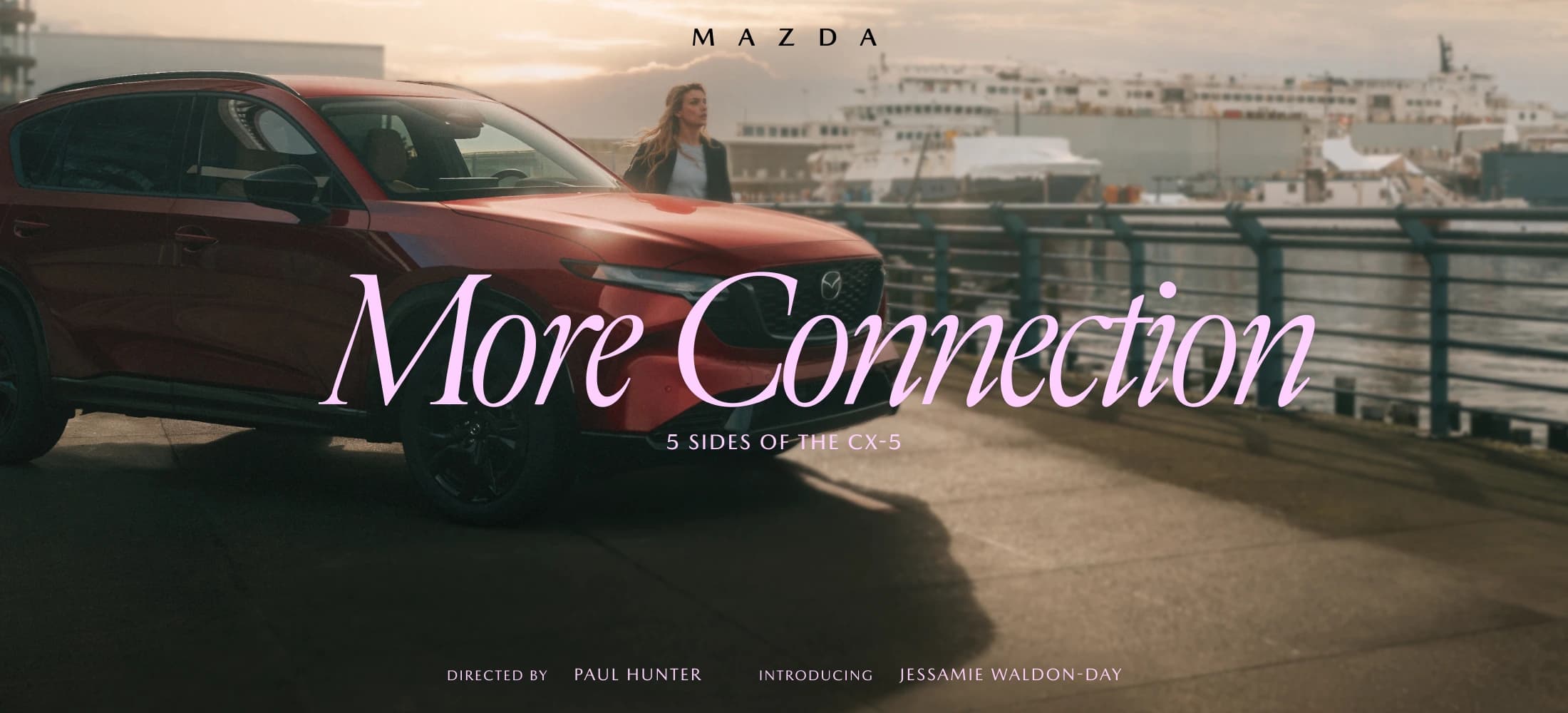
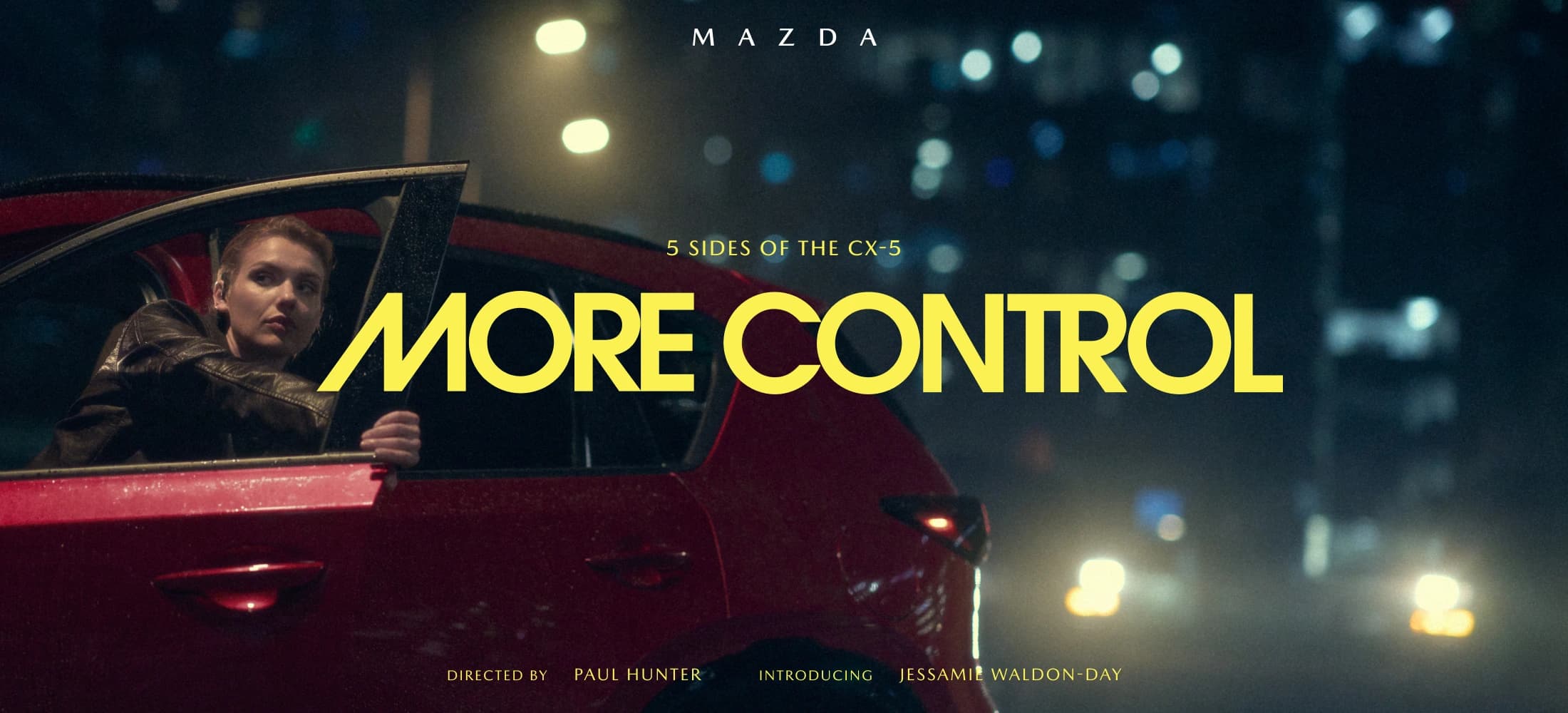
A consultancy has held a Fortune 500 automotive account for at least five years, and there's not a single trade headline to show for it. Zero search volume on "Mazda UK agency." Zero competitive agencies flagged in the space. Zero fresh news signal anywhere in the data. Most shops would call that a problem. For OneFifty, it's the opposite. It's the whole story.
Here's what actually happened. Somewhere between 2020 and 2022, OneFifty Consultancy started showing up in Mazda UK's award submissions: a Best Automotive content honor, a Drum Awards nomination, a Digital Impact Award. Then the trail goes quiet. No press release. No "agency of record" announcement. No LinkedIn thread from a CMO explaining the strategic rationale. Just years of retained work, invisible to anyone not reading award ledgers closely enough to notice the same name recurring.
That silence is the story the industry keeps missing. Everyone wants the pitch-win headline: the review, the shortlist, the incumbent getting fired, the new logo on the agency's website. Nobody wants the retention story, because retention doesn't generate a press cycle. But retention is harder to pull off than a win, and it's the metric that actually matters to a client. OneFifty didn't win Mazda UK once. It's kept Mazda UK for half a decade, through a period when holding companies were consolidating rosters across the entire automotive category. That's not survival. That's structural trust, built quietly, one renewal at a time.
The Zero-Signal Retention: What Five Years of Silence Actually Means
Start with the data, because the data is unusually blunt here. "Mazda UK," "Mazda UK agency," "Mazda UK campaign," "independent agency wins," "brand agency relationship": across that entire cluster, total monthly search volume comes in at 0. Not low. Zero. "Mazda taps OneFifty consultancy" itself pulls 0 searches a month. Nobody is Googling this relationship, and nobody in the competitive set is showing up to fight for the keyword either. Zero agencies flagged as competing in this space.
In most editorial categories, that would be a signal to move on. There's no story where there's no search demand, right? Wrong framing. Zero search volume around an agency-client relationship that's lasted five-plus years isn't absence of a story. It's evidence of one very specific kind of story: a relationship stable enough that nobody feels the need to write about it, debate it, or speculate on when it'll end. Volatile accounts generate search volume because people are hunting for news about instability: "is Mazda reviewing its agency," "who will replace," "why did they leave." Mazda UK generates none of that. The quiet is the retention signal.
Cross-reference that against what's actually ranking. The top of Google for "Mazda UK" is a wall of owned channels: the official Mazda UK site, the Mazda UK YouTube channel, Inside Mazda (the brand's own editorial blog), Mazda UK's Instagram, Mazda UK's Facebook page sitting at 149,216 likes and 661 people talking about it, and the Mazda UK Press Portal pushing CX-5 configurator news with a starting price of £31,550. Seven results. Zero of them are agency-side. Zero of them are trade press coverage of who's doing the work. The brand owns its own search real estate so completely that the agency behind the campaigns doesn't even register as a search competitor.
That's not a gap in OneFifty's visibility strategy. That's what good automotive brand management looks like when the agency relationship is functioning exactly as intended: invisible to the public, load-bearing to the client. The work shows up as Mazda's voice, not the consultancy's portfolio piece. Which is precisely why nobody outside the industry's awards circuit would ever know OneFifty was behind it.
What the SERP Doesn't Show: The Award Trail as the Only Public Record
If search demand won't tell the story, the award record has to. And the award record, thin as it is, tells a consistent one. Between 2020 and 2022, OneFifty picked up recognition across three distinct awards bodies for Mazda UK work: a Best Automotive content award, a Drum Awards nomination, and a Digital Impact Award. Three separate juries, three separate categories, one recurring client name attached to all of them.
That's not a coincidence pattern. That's a consultancy building a defensible body of work inside a single account over a multi-year window, submitting into different competitive categories as the scope of the relationship expanded. An agency doesn't get nominated across content, digital impact, and general automotive categories by doing one campaign and coasting. It gets there by doing enough distinct, awards-worthy work across enough disciplines that the account itself becomes a recurring entry in the consultancy's submission calendar.
Here's the part that matters more than any individual trophy: none of those 2020 to 2022 wins triggered a "why is this small consultancy the retained partner behind a major Japanese automaker" trade feature. Nobody wrote it up. Which means the only reason anyone would know about the Mazda UK and OneFifty relationship today is if they went looking specifically in award archives, the way this piece did. That's a retention story that's been hiding in plain sight inside awards-body PDFs for years, uncelebrated by the very industry press that loves nothing more than a flashy new-business headline.
Compare that information asymmetry to what happens when a holding company shop wins a pitch. The review gets covered before it's even decided. The shortlist leaks. The win gets a press release, a LinkedIn post from the ECD, a trade write-up within 48 hours. OneFifty got none of that in 2020, none of it in 2021, none of it in 2022, and evidently none of it through whatever renewal or scope conversation has kept the relationship alive into 2026. The absence of fanfare isn't a marketing failure on OneFifty's part. It's what a genuinely stable client relationship looks like from the outside: boring, because nothing is at risk.
Why Mazda UK Never Rostered Into a Holding Company
Here's the counterintuitive part that the industry's consolidation narrative doesn't account for. Automotive is one of the most holding-company-dense categories in advertising. Global manufacturers run massive, multi-market rosters, typically consolidated under WPP, Publicis, or Omnicom networks that can promise scaled production, global media buying, and single-point-of-contact account leadership across dozens of markets simultaneously. Mazda's global marketing operates inside that same competitive landscape. And yet, at the UK market level specifically, the retained relationship traced through the award data belongs to an independent consultancy, not a network shop.
That's the paradox worth sitting with. A holding company pitch deck for an account like this writes itself: global scale, unified brand system, cross-market efficiency, one contract instead of a patchwork of local agencies. Mazda UK, at least on the evidence available here, didn't buy that pitch. It kept a smaller, independent partner in place through multiple award cycles and, per the data, into at least a five-year run. Whatever the specific commercial reasons, the outcome contradicts the assumption that automotive marketing inevitably consolidates upward into network ownership.
This is where the strength frame matters more than the survival frame. The easy, lazy version of this story treats OneFifty as a small consultancy that simply outlasted bigger holding company competitors. That's wrong, and it's wrong because it assumes OneFifty's independence is a liability the account tolerates rather than an asset the account depends on. A five-year, award-validated retention inside one of the most consolidation-prone categories in the industry is not a story about survival. It is evidence that for this specific client, independence produced something the holding company model structurally couldn't: continuity, shorter decision chains, and a team that didn't rotate off the account every time a network reshuffled its client leads.
Holding companies are built for scale, not for stillness. Client leadership turns over. Account teams get restructured around new global efficiencies. A brand that wants the same strategic thinking behind its market for half a decade running has to look somewhere that isn't optimized for constant internal reorganization. Zero data points here suggest Mazda UK ever ran a competitive review to replace OneFifty. Zero data points suggest a network agency was ever seriously in contention during this window. The absence of that competitive noise is, again, the signal: there was nothing to compete for, because nothing was up for grabs.
The Retention Math: What Five Years on One Account Actually Requires
Retention at this length isn't a passive outcome. It's an active discipline, and the award trail hints at what that discipline looked like in practice. Three award submissions across three different categories between 2020 and 2022 suggest a consultancy that wasn't simply executing a static brief year over year. Content, digital impact, and general automotive recognition are different disciplines, judged by different juries, requiring different creative and strategic muscles for each. That's scope evolution happening inside a single client relationship, not a static retainer running on autopilot.
Think about what that implies for the shape of the account itself. A consultancy doesn't get nominated in a content-specific category one year and a digital-impact category in an adjacent year by delivering the same media plan on repeat. Something in the scope had to widen: more channels, more formats, more strategic ownership handed over by the client as trust compounded. That's the actual mechanism of retention. Not a static contract renewed by inertia, but a relationship that earns expanded responsibility precisely because the earlier, narrower work performed well enough to justify it.
This is the part the industry's win-focused coverage model is structurally blind to. A new-business headline captures a single moment: the pitch, the decision, the signing. It can't capture the four or five years of incremental scope expansion that follow, because there's no news hook for "the consultancy quietly picked up another workstream this quarter." The only reason this expansion is visible at all here is because award submissions happened to leave a public trail across multiple categories. Most retained relationships this stable leave no trail whatsoever. Mazda UK and OneFifty happen to have left just enough breadcrumbs, spread across 2020, 2021, and 2022, to reconstruct the shape of a five-year run from the outside.
Zero search volume, zero competing agencies named, zero fresh news signal: taken together, that's not a data set describing an inactive relationship. It's a data set describing a relationship so settled that it generates no market friction at all. There is no client-side search for alternatives, no agency-side promotional push because there is no pitch to win, and no competitor circling because there is no vulnerability to exploit. That combination, in an industry that runs on churn, is rare enough to be the actual headline.
The Stickiness Thesis: What This Retention Pattern Signals for Independents
Zoom out, and the Mazda UK and OneFifty relationship becomes a case study in a pattern the industry undercovers systematically: independent agency stickiness. Not the win. The stay. Every trade publication has a template for covering the former. Almost none have a template for covering the latter, because the latter doesn't produce a news event to hang a headline on. It produces years of quiet delivery that only becomes visible when someone goes back through award ledgers looking for the pattern, the way this piece just did.
That's a real blind spot, and it's a blind spot with a real cost. If the only agency stories that get covered are pitch wins and account losses, the industry ends up with a distorted picture of where the actual value sits. Pitch wins are exciting and structurally noisy. Retention is boring and structurally load-bearing. A five-year run on a Fortune 500 automotive account, held by an independent consultancy against the backdrop of an industry actively consolidating that exact category, is a stronger proof point for indie viability than any single new-business win could ever be. Wins prove an agency can get chosen once. Retention proves a client keeps choosing them, repeatedly, with every opportunity to walk away and every incentive from the holding company sales machine trying to convince them to.
The zero-volume keyword data reinforces the thesis rather than undermining it. If OneFifty's Mazda UK relationship were fragile, there would be search signal: speculation, industry chatter, competitor agencies name-checking the account in new-business decks as a target. There's none of that. Zero agencies are shown competing for this account in the data. Zero fresh news signal exists anywhere in the current cycle. The retention is complete enough, and stable enough, that it has fallen entirely off the industry's radar for anything except a handful of awards-body PDFs from three or four years ago.
What happens next matters more than what's happened so far. Automotive marketing in the UK isn't getting less competitive. Manufacturers are under margin pressure, media budgets are being scrutinized harder, and the pull toward consolidated, holding-company-run rosters isn't going away. Every year that Mazda UK keeps an independent consultancy in place against that pressure is another year of evidence that scale isn't the deciding variable clients actually care about. Continuity is. Institutional memory of the brand is. A team that doesn't rotate every eighteen months is.
If OneFifty's run with Mazda UK extends further, watch for the same pattern that's defined it so far: no announcement, no press release, just another award submission a year or two from now that quietly confirms the relationship is still intact. That's how this story will keep being told, one overlooked award nomination at a time, until someone finally treats the silence itself as the headline. It already is.
Free Agency Media Editorial
All newsYou might like
The Production Moat Is Gone, and Lean Agencies Are Cashing In
IllustrationXThe Production Moat Is Gone, and Lean Agencies Are Cashing In
IllustrationX
The Fujifilm Claim No One Can Verify
Why Independent Agencies Are Winning Heritage Storytelling